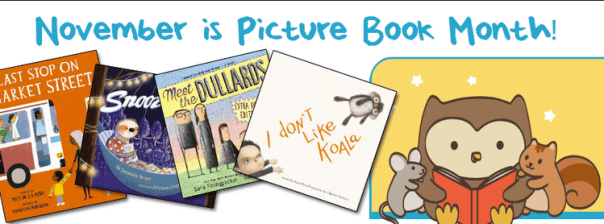
 It’s National Picture Book Month! For some teachers it is a reason to dust off or to check out picture books that they don’t normally use in their classrooms anymore. They take this opportunity to celebrate picture books in an almost nostalgic way. But it is my hope that for those teachers (and parents) that focusing on picture books this month will remind them how valuable they are in our literacy toolkit. I’ll share 7 reasons why I think they should be a regular staple in our classrooms-I know there are more and I’d love to hear yours!
#1 Picture Books Teach Visual Literacy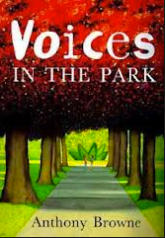
We live and work in a visual world. Children need to learn how to navigate the images as well as the words in their environment. Picture books allow them to ‘read’ visual images and infer meaning that cannot be done with words alone. Often the words and images in picture books have contrasting meanings/messages. Children can learn to interpret information through multiple lenses and synthesize their thinking in much more complex ways than with only one mode of information.
#2 Picture Books Expand Vocabulary
Picture books are shorter than chapter books. The author must tell the story with “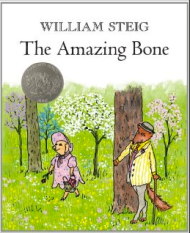 an economy of words” and so the word choice is often much more precise and exact in order to create a rich story with fewer words. Picture book authors choose words to encourage visualization – those words in conjunction with the illustrations build vocabulary more deeply than pulling meaning from words alone. With chapter books new vocabulary must be gleaned from context clues from surrounding sentences. This is often difficult and not always a reliable way to build an accurate understanding of unfamiliar words. The visual images from picture books add another layer of support for comprehending what is read and building understandings for new words and concepts.
#3 Picture Books Teach Us About the World
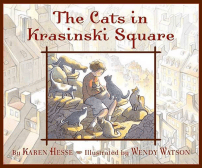 Picture books often deal with topics that are relevant and age appropriate. They deal with children’s fears, they make sense of our complex world in developmentally appropriate ways, and they teach a wide variety of topics with focus and clarity. Reading chapter books requires a much longer time commitment than reading picture books. In the time a student reads one chapter book, they could have read multiple picture books, exposing them to a greater variety of ideas, concepts, perspectives, genres and information. Children have a greater wealth of knowledge and understanding about their world when they have broader exposure to information about it.
#4 Picture Books Make Great Mentor Texts
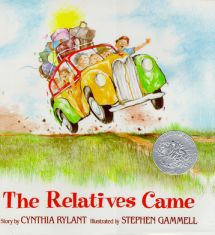 Picture books more closely resemble the type of writing that younger authors (K-6) produce. Children can look to picture books for ideas, frameworks, layouts, and word choices that authors use and imitate the author’s craft much more readily. They can construct stories with solid beginnings, middles and ends because they can immerse themselves in many examples from their favorite authors, often in a single sitting. Children can relate to the topics because picture book authors target their ideas for this age group’s interests, experiences and understanding.
#5 Picture Books Encourage Complex Thinking
 Picture books actually require a great deal of higher order thinking skills from young readers. Because they are often shorter, they require a great deal of: inferring (reading between the lines), synthesizing prior knowledge (making connections to their own lives), and predicting (using what they know to predict what will happen). They often have unexpected endings which challenge the reader’s thinking. They require a synthesis of visual and written information to comprehend the story completely. Because students can read more picture books in the same time frame as a chapter books, students are exposed to many more opportunities to use a variety of strategies.
#6 Picture Books Are an Art Form
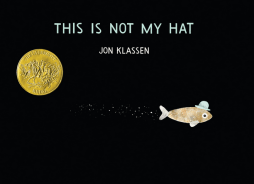 Look at the wide variety of media and approaches illustrators use in their picture books and you can begin to appreciate the enormous resource that picture books can provide for teaching about art. Students can “unpack” the style, the intentional choices, the interpretation, the visual elements, and the choice of media used to create the images. For some students this may be the only constant exposure to art that they have in their lives. We can do a lot with picture books to help them appreciate the importance of art and the contribution it makes in our lives.
#7 Picture Books Are Pleasurable!
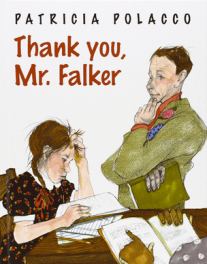 Let’s face it…the #1 motivator for engaging in an activity is often pleasure. Picture books can be a lot of fun for readers because they are very often humorous, but they can also be fun because they offer readers success. It is FUN to feel like an accomplished reader-it brings pride and joy to so many students. It is also very satisfying to read an entire story in one sitting-there is a completeness that is gratifying. Because their message is so “compact” we can experience a range of emotions in a short time and often end up with feelings of joy, relief, or determination. We can experience the gamut of our humanness in a small package, and sharing that experience with others is part of what makes us human.
So as we celebrate National Picture Book Month, I encourage you to think purposefully about how you might incorporate more picture books into your K-12 classrooms. (Yes, high school is a great place for picture books, too!) I’d love to hear how/why you use picture books in your classrooms. Post to twitter using #PictureBooksBecause and share your thinking!
What’s On My Book Radar?
This month I’ll focus my radar on picture books! I can’t think of a better pair of books to start with than these two by Ryan T. Higgins! Ryan is not only talented, he happens to be one of the nicest author/illustrators you could ever meet. His Bruce stories are fantastic!


Bruce is a bear that liked to keep to himself. Some might even call him grumpy. But when he finds himself the unlikely mother of a gaggle of goslings, his world is turned upside down. I have read this book from kindergarten to fifth grade with so much success. Kids can predict, infer, make connections, discuss theme and simply enjoy a well told and beautifully illustrated story (with both of these). If you haven’t checked out the Bruce books I encouraged you to get to your favorite bookseller ASAP!
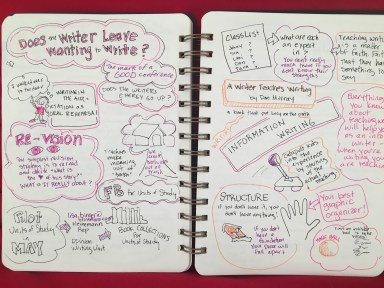
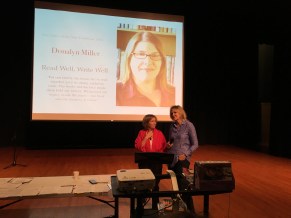 by the gurus and peeps that I admire, and I don’t want to divide my attention between writing and listening. So I pull out my iPhone and just start clicking. I choose slides that are meaningful and take a picture so that I can reflect on it later. Occasionally I make short video clips that I can review and reflect on. I am very mindful that this is the intellectual property of the presenter so I keep it for personal use only. Generally, I create a google photo album and add some notes later if I want to add that information. I can then scroll through and remember much of the presentation.
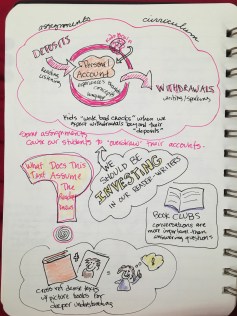 t in trouble for it in school and now it is “A THANG!” I was apprehensive to try it at first, using many of the same responses I hear now:” I can’t draw! I wish I could do that! I’m not that creative!” But I knew I needed to try something different if I ever wanted to maximize the learning and concepts from the notes I took.
 You are not creating an artists’ notebook. You never have to share your sketchnotes with anyone! But I encourage you to just try it! Do it in the privacy of your home as you listen to a TED Talk or watch a YouTube video on a topic you want to learn about. Nobody will be watching. Nobody will care! See if you notice a difference in your mindfulness, your focus, your thinking.
 This week I’ve been doing a lot of professional reading. I’ve been a big fan of Angela Watson’s


 until they learn otherwise.
 As Brave as You by Jason Reynolds
 You love books. You talk books. You share books. So what do you do when you can’t contain your booklove? You hold a book bonanza!

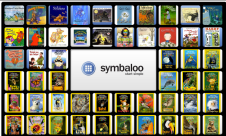
 GOOGLE SLIDES
 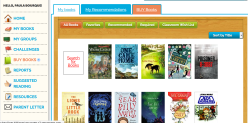 BIBLIONASIUM
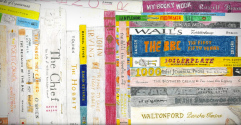
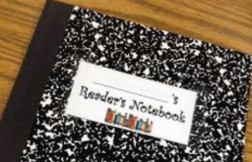 READER’S NOTEBOOKS If your goal is that students will think deeply or differently about what they read, provide them the space and time to respond to what they have read in meaningful ways. Let them design a Reader’s Notebook that reflects their unique reading identity. Collect samples and discuss purpose, and then let students make them their own. Sure we could assign questions or formats, but these self-designed notebooks can give us a lot of information about how kids see themselves as readers, how they reflect or don’t,
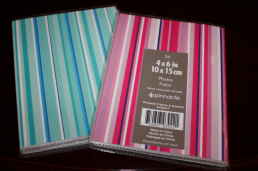 ‘PHOTO’ ALBUMS – Students use an index card or 4×6 sized paper to recreate the book jacket or create a mini-poster for their book on one side. Flip it over and rate it, review it, summarize it…on the other. They can even write the date they read/finished it. Slip the cards into a $1 4×6 photo album to keep a collection of book memories.
 BOOK BUDDIES -If you want to build a reading community that talks about books and their reading lives, build time in your day for kids to do that. One idea is that each morning kids meet with a ‘Book Buddy’ (could be same buddy each day for a week or so or rotates) for 5 or 10 minutes to discuss what they read outside of school or the previous day in school. Readers could mark places in the book or jot ideas they’d like to share. Some suggested sentence stems: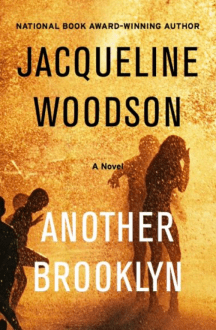


 Fans of





 litcoachlady