Category Archives: Uncategorized

Virtual Summer Camp 2015

When you live in an amazing state like Maine, “Staycations” are a favorite, especially in the summer.  Winters are long here, and we often don’t want to give up a single day of our Maine summers.  Though there were several conferences and camps I would have truly enjoyed going to, I elected to attend them virtually.  Thanks to social media it’s not only possible, it’s easy!

1538725First up is nErDcampMI.  I am determined to roadtrip my way across the coun1621704_667566729951571_1638043617_ntry for this one someday, but the next best thing is following the tweets of my favorite nErDy campers (Katherine Sokolowski, Donalyn Miller, John Schumacher, Cindy Minnich, Teri Lesesne, and Lesley Burnap -among others. Another way to learn along with these campers is by visiting the IDEA BOARD where participants brainstormed topics to explore and archived their notes/resources. Colby Sharp is the amazing educator who organizes this camp and one of the founders of The Nerdy Book Club.  If you love books you can follow the blogs of these nerds and get your nerdy on!

You can see a complete listing of EDcamps at: EDcamp Calendar 2015

summit-logo_0Next up were the Scholastic Reading Summits scattered across the country from Boston, to Austin, to Birmingham and more. Featured speakers included:

Again, I could follow along on twitter with the hashtag #readingsummit or check out these RESOURCES on the website.


ILA_keyhole

Last week was the first summer conference for the newly renamed International Literacy Association  (formerly International Reading Association).  Previously they have held this conference the first week of May, but this year it was summer in St. Louis.  Having grown up in the Midwest, I knew that could be H-O-T!  Twitter was again my go-to entrance ticket to this event!  Following the hashtag #ILA15 I was able to see photos, read quotes, and link to videos. Still looking for notes and resources from this one!

As you can see, you don’t have to go far for professional development. Sure, it’s great to go in person, to experience the camps and conferences with other passionate educators.  But when you can’t, there’s no reason to be left out!  We can be as connected as we choose to be.  I’ll be at NCTE 15, but this summer I chose virtual PD-fun and free!

What’s On My Book Radar

My #bookaday challenge is going great! You can follow my daily reads on Facebook: Book-a-Day Summer 2015. One book I have been recommending to many is The Iron Trial by Holly Black and Cassandra Clare.  Harry Potter fans will find many similarities, as we follow three young mages (gifted with magic) who enter the Magisterium when they turn twelve.  I worried at first it would be too much of a copycat series, but those worries vanished as I was pulled into this adventure.  First of five, I highly recommend this Maine Student Book Award nominee!

11742682_10207434121030917_7611032766984276164_n

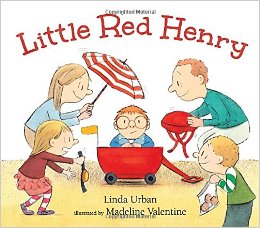
My new favorite picture book is Little Red Henry by Linda Urban!  I love this twist on a familiar story.  Rather than looking for help, Henry is looking for independence…something his family doesn’t seem ready to offer! This will be a fun read aloud for classrooms and livingrooms!

51Hn4CnnKgL._SX258_BO1,204,203,200_


Summer (a.k.a. My Genius Hours)

images
-Jose Popoff

I saw this quote on Twitter this morning  – it sums up my approach to teaching so perfectly.  Even though it is technically vacation, I just can’t turn off my passion or my ‘job’.

For years I heard some very talented and dedicated teachers bemoan, “We never have time to learn about what we want.” It is true, that during the school year professional development is often  aligned to federal, state, district or even school initiatives- that may or may not ignite our passions. This year in my district, we offered EDCamp models during two of our  workshops.  The teachers shared their passions, explored their interests, and were completely engaged.  While there are certainly professional responsibilities, learning, and requirements that must be addressed during school-based workshop days, I will always advocate for more “Genius Hour” opportunities for everyone in our schools.

If you are unfamiliar with the Genius Hour-the approach came from an idea at Google.  They allowed their designers to spend 20% of their time to work on any project they wanted. Because of it we have Gmail and many other innovations. The idea is simple: allow employees to focus on their own passion products and productivity will go up.  Others have followed by offering employees 60 minutes each week to work on new ideas or master new skills.  Many schools are using this approach with their students and incorporating a Genius Hour.  You can see a brief overview of this approach here:

I would love to see my schools explore this idea as an approach for professional development during the school year.  But for now, I like to think of summer as my Genius Hour. I wake up almost every morning with ideas running through my mind.  There are so many aspects of teaching and learning that I am curious to learn more about.  There are so many others that I had never thought of until I had this time to explore!

Creating my Genius Hours

I surround myself with books that inspire and engage me.  I keep them in my car, by my bed, in my beach bag.   I voraciously read picture books, chapter books, YA books, novels, professional books, magazines and articles.  There are post-it notes tacked to dozens of pages that may never be revisited, but those significant ideas are now a part of my collective knowledge.

I use social media to follow passionate educators and authors.  I set aside some time to peruse Twitter and Facebook for posts that inspire thinking and curiosity.  Because I only use Twitter professionally-it is a treasure trove of ideas within a supportive community.  With more “free time” I feel no guilt about random browsing.  Randomness offers opportunity for serendipitous ideas-these can often be the most mind-expanding!

I write!  My blog is one way I write to learn.  This final post actually looks nothing like the 11037905_10154067646782516_5750329657918691438_noriginal. It could have gone dozens of different directions, and morphed several different times as I revised and refined my thoughts.  I keep a journal of my personal life and thinking that provides tangible evidence of my existence.  I will join Teachers Write again this summer and look forward to an incredibly supportive community of writers as I play with my own creative writing. (Click on the image  for more information).  Several teachers in my district also plan to get together and continue our own Teachers Write group that we started during the school year.

It’s a simple idea, with incredible potential.  Do what you love and you will love what you do.  Think of your summers as your Genius Hours.  What interests will you pursue?  What questions will you answer?  What ideas will you explore?

Here’s to many hours of living, loving, and learning!  Summer Genius Hours!

What’s on My Book Radar?

59-reasons-to-writePerfect for any Genius Hour!  This book by Kate Messner is an amazing resource that I find myself revisiting again and again.  This book grew out of Messner’s online summer writing camp, Teachers Write (see link above).  If you are looking to develop a writing habit, I can guarantee you will find even more than 59 Reasons to Write with this book!  I think every teacher of writing will find this book to be one of the most helpful books in their professional library!


Page-A-Day

IMG_7965Once again this summer I am taking on the “Book-a-day” Challenge.  I am so excited to have time to read that I sometimes devour a book in one sitting.  There are so many books and so many authors that I want to explore, the book-a-day challenge helps me to do that.

However, on my run this morning I was listening to a Fresh Air podcast.  Terry Gross was interviewing Jacqueline Woodson.  They were discussing Jackie’s difficulty with reading as a child. Terry asked, “So how did you fall in love with reading and writing if it was such an effort?”

I love Jackie’s response: “You know, I read stuff over and over, and it made deep sense. It – I think what happened was the language settled in me much deeper than it settled into people who just can read something once and absorb what they absorb of it. I feel like what I was absorbing was not by any means superficial, and I think I was – from a really young age, I was reading like a writer. I was reading for this deep understanding of the literature; not simply to hear the story but to understand how the author got the story on the page. And I didn’t know any of that. And my sister, you know, just kind of sailed through reading and read – consumed book after book after book. And here I was reading the same book very slowly, slowly coming to understand it. And looking back on it, I think it was part of what brought me here.”

I thought of myself as Jackie’s sister, sailing through book after book.  It was like an epiphany, I want to take some time to read like a writer and understand how the author got the story on the page. I want to read like Jackie! Then I thought, Hey, I can do BOTH!

So now this summer I will continue my Book-a-Day challenge, but I am going to also going to treat myself to a “Page-a-Day” challenge.  It might be a page from a book I am reading, a page from the newspaper, a page of poetry, a page from a book I know I “should” read but never will. I will closely read this page the way Jackie did..very slowly, slowly coming to understand it. I will try to understand how the author got the story on the page.  I will read like a writer.

So I will take some time to savor those words that some author labored over.  An author who played with ideas, revised for clarity, worked hard to make it “just right”.  I want to take some time to notice, to appreciate, to enjoy. I encourage (challenge) you to do the same.

If you are up for the challenge, tweet out your page at #pageaday!

What’s On My Book Radar?

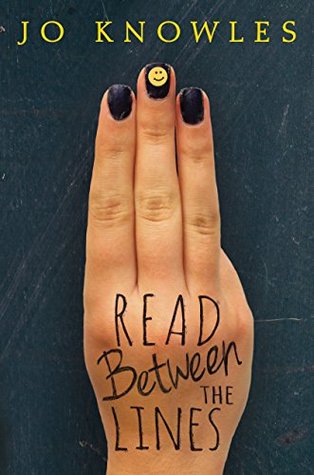
25129897Jo Knowles introduces us to several characters whose lives revolve around a local high school.  The story takes place in a single day, but the complex interactions and intersections of their lives make you feel as though you’ve known them all for a very long time.  People are not always what we perceive them to be, we can find out more if we take time to read between the lines, I’m glad I did.  This book also fits my theme this week of taking the time to slow down and notice.  This YA novel was a quick read, but the characters are still lingering in my mind.

HAPPY READING!

Don’t “Should” All Over Yourself

1338940155_1143_SummerSolstice

As we wind up another school year we often think back on the year that was, and dive into the summer that is.  These transitions are are an opportune time for reflection and planning.  But too often I hear teachers focusing so much thought and energy on what they should have done, (I should have done more with fractions, I should have had the kids write letters to next years class, I should have….)and what they should do this summer, (I should take that class, I should read more professional books, I should…)  These are all great ideas to be sure, but when approached with a should mindset, they seem more like a duty than a choice.

When we find ourselves using this verb we need to give it some thought.  Some of the synonyms for should include: be one’s duty, be compelled to, be forced to, must, and even suffer! Should often implies you’d rather be doing something else! Sometimes should is appropriate, but if we spend so much energy “shoulding on ourselves” we might be missing out on opportunities that truly feed us in more positive ways.

When we hear ourselves saying, “I really should…”, let’s ask ourselves:

  • Why? 
  • Who is this really for? 
  • How will this really make my life or my teaching better? 
  • Are there other options?
  • What would happen if I didn’t?

That might lead to other questions to help us reflect and plan ahead:

  • What worked well this year that I’d like to continue?
  • What could I try next year that would make teaching and learning more rewarding or effective?
  • What would make my summer better for me, for my family, for my community?
  • What would I enjoy doing this summer that would benefit my students?
  • What would feed my personal or professional growth?

We can’t do it all.  We are often very unforgiving of ourselves when we feel we need to do more.  We spend far too little time appreciating what do well. This leads to a shouldy attitude! The best gift we can give our students is a teacher who embraces life as well as learning.  A happy, healthy teacher can offer so much more than a tired, shouldy teacher.

So take time this summer to LIVE! Listen to the birds in the morning, watch your kids splash in the cool water, get lost in a book, stay up too late at a drive-in, roast marshmallows, drive to someplace you’ve never been, write a story, look for sea glass, watch for shooting stars, pick up a frog,  join in a twitter chat, go for walks with your loved one, buy some lemonade at a stand, unplug for awhile, close your eyes and see what you notice, try something you’ve never done before…

Not because you should, just because you can.  Life is full of choices, choose wisely.

What’s on My Book Radar?

51JGg4dJ12L._SX258_BO1,204,203,200_Every once in awhile a book comes out and you think, “What a great idea!”  This definitely falls into that category! Kids will LOVE following these steps for how to read stories, and I can just see the wheels spinning in their heads for creating their own steps!  Kate Messner has such a great range in her writing: professional books for teachers, chapter books for older readers, and picture books for younger readers.  If you aren’t a fan of hers yet, you should be. (Haaa, just kidding…you’ll want to be!!)

Join Kate and some amazing authors this summer for the 4th annual TEACHERS WRITE. As Kate’s site says, “Teachers Write is a free online summer writing camp, especially for teachers and librarians. It’s a chance to practice your own writing in a warm, supportive environment so that you can go back to your students with new ideas and (in many cases) a new sense of empathy for the courage involved in writing and sharing one’s work. We offer daily inspiration and assignments, including mini-lessons, writing prompts, and Q and A sessions with authors whose books you and your students love.

Teachers don’t join this group because they should-they join because they want to connect with some amazing authors and walk the talk!

Happy Reading (and writing)!

10 Questions We Should Ask Ourselves About Homework

1253551691_frustratedHomeworkKid_xlargeEarlier this week a good friend was messaging me on Facebook for help as her son struggled with his homework.  It was nearing 10:00 at night and he was melting down. I could totally relate to her, it was exactly one year to the day that I posted in my  blog about a similar experience with end of year overload and homework. I see this being repeated in homes everywhere and it makes me sad.  In our sincere effort to help our students with extra practice we are turning them off to learning and often poisoning their homelives.

As we wind up a school year, I think it is important to reflect on practice and see what works well, and what we may want to revise for the next year.  I’d like to offer some questions about homework to help teachers make some thoughtful decisions about why they should or shouldn’t be sending work home with students.

1. What is the learning target for this work?  This differs from the activity the student is doing (ex. read pages 55-67 and answer the questions) What are the specific strategies, skills, or knowledge the students will acquire as a result of doing this activity? Do students know the learning target or are they just trying to complete a task?  Their approach to homework will be contingent upon this question.

2. What is your success criteria for this work?  In other words, how will you know they have acquired the skill or knowledge? A completed paper is not reliable evidence since  you do not know who did the work or how it was done. Will there be an opportunity in class to demonstrate their understanding?  How do we truly measure success.  Is it engagement and learning or merely compliance?

3. How can you know who did the work? This relates to the previous question.  There will be a range of students who have no help or well-intentioned “bad help”, while some have parents, friends, or siblings doing the work, (and a wide-range in between).  How reliable is the information you get from this work?  How much weight are we giving assignments that students may or may not be doing themselves?

4. How long will this homework take? Many of us have no idea, but we should.  Some students can knock off assignments on the bus ride home, while others labor for hours.  Students have been in school for six or more hours.  Many are often ‘fried’ by the time they leave school. Some have jobs, or sports, or family commitments that make it extremely difficult to fit it all in.  We should know how long students work on assignments outside of their school day. We are aware of how much work WE do outside of the school day!

5. How does this homework impact the lives of my students? Homework sets up a dynamic in families that is rarely positive.  Parents and children are often at odds about how to do the work, and are frustrated with each other quite easily. Parents may want to help, but do not understand the approach or concepts.  Children often don’t want their parents to be surrogate teachers-they just want them to be mom or dad. Family lives are impacted by the amount of time taken away from them with homework.  Quality time together is frequently compromised because students have work that must be completed. Students are often caught in the middle when the family has plans other than working on school assignments and they stress about pleasing their teacher and their parents.  When we (educators) think homework should come first we are basically telling parents how to run their lives and manage their time.  We don’t want someone to tell us how to manage the time in our classrooms, we should be extending the same courtesy to parents  with regards to their family time. Families have different priorities -including quality of life.  We need to honor this and encourage a well-balanced life for our students. They are only kids for a short time!

6. Does homework really foster time management? I hear this argument for homework proposed frequently.  “Students need to learn to manage their time and complete work.”  This assumes the child controls time factors in their home-they usually don’t.  If assignments take hours to complete they really don’t have any time to “manage” they only have time to work. If this was an occasional task that argument may have more teeth, but if every night the student is struggling to finish their extended day work, this isn’t about management. Parents are the time managers of home life.  We can help students manage their time in school, but should not be setting these expectations for home.

7. How will I handle unfinished or incomplete homework? This is often a huge issue.  The consequence is often a loss of recess.  For some students this means they had no “free time” the previous night trying to finish work and they lose “free time” during their day.  They have no break from the stress of school and begin resenting and resisting learning as a defense mechanism.  Some students don’t care-they refuse to do homework and no amount of consequences will change that.  This sets up a perpetual cycle of punishment that does not shape behavior.  The teacher more likely feels the effect of the punishment in frustration and loss of time during the school day.  Another consequence is often a ZERO for a grade.  So the grade then becomes a reflection of compliance and not learning.  Anytime we give homework, there will be students who do not or cannot complete it.  We need to give some serious thought as to how to handle this in order to achieve our purpose, which leads me to…

8. What is the purpose of this homework? Why does every student need to do a given assignment (or assignments)?  If they don’t know how to do something, why would sending it home be helpful? If they couldn’t “get it” in the most supportive environment possible, how will they “get it” in an environment of unpredictable variables and conditions?  If they already know how to do it and can easily complete it, why did they need to spend time on it? I do not mean to be flip when I say, “Why do they have to do this?” This relates to questions 1 and 2 directly, but to all other questions as well?  Is it worth the time it takes for me to copy it, assign it and grade it?  Is it worth the students time to do something he/she can already do, or struggle with something they cannot do?

9. Will this homework increase student achievement? Homework has been around a very, very long time and yet there is no consistent evidence  to support that it positively impacts student achievement.  While some studies cite a moderate increase (one or two points) in standardized test scores for high school students (mostly in math or science) and no increase in elementary schools, does the one or two hours of work each night justify one or two points on a test? This does not mean that students will never benefit from extra target practice that is designed to meet their needs, but a blanket homework policy of one-size-fits-all is not a silver bullet for student achievement.

10 Are there more effective alternatives that can meet my purpose? Asking ourselves, “How can I best help my students meet the learning target?” Should be the first thing we do.  What happens in our school day with us is often the most effective approach.  The time we take in class to grade or go over homework might better be used for small-group instruction to reteach, reinforce, or practice with those students who need it.  Teachers in upper grades are  experimenting with a Flipped Classroom approach in which students watch lectures or read through materials and then do the “homework” in class with the teachers’ guidance.  Can I narrow my focus or lessen the number of problems to meet my goals?  Can students demonstrate understanding or mastery in a variety of ways other than homework assignments?

I know I will take some heat on this debate, but I don’t mind because my top priority is student learning.  I want students to LOVE learning and make it a life-long habit.  I have seen too many instances where homework does NOT achieve this.  I do not see homework as an “All or Nothing” debate-we need to keep all tools available in our toolbox.  I want us to use it judiciously, mindfully, and purposefully, but if we do not ask ourselves these questions and honestly answer them, I do not believe we are.

I welcome your thoughts, your questions.   Here are some resources on the “Homework Debate”

Center for Public Education

Washington Post

Educational Research Newsletter and Webinar

What’s On My Book Radar?
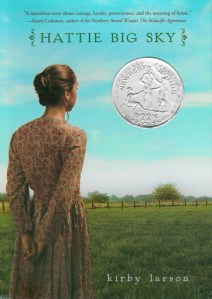
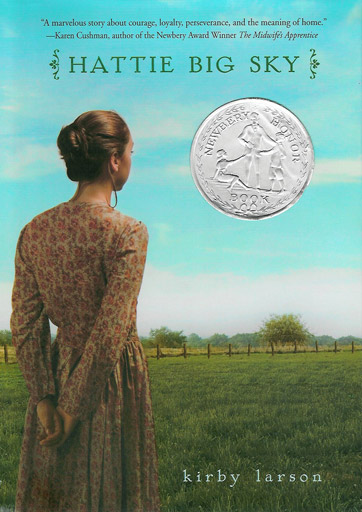
hattie-big-skyI don’t know why it has taken me so long to read this incredible book!  Kirby Larson is an amazing author, whose historical fiction is compelling and well-researched.  Both of my choices of books this week opened my eyes to the history of our country-this focus on the life of a homesteader was riveting.  I hadn’t considered homesteading during this time period (WWI) and loved how she wove the war, prejudice, technology, and human relationships into a beautiful story.  I just got Hattie Ever After from my library to follow her journey!

26childrens-1-master180I was stunned when I read this historical account of African American servicemen during WWII.  I knew there must have been racism and segregation since this was long before the civil rights movement, but this story made it vividly clear. I was surprised I hadn’t heard of this episode of history  before, but I think this is a “must read” for middle and high school students.  The irony of serving a country that does not respect you must have been agonizing for these men.  It’s a part of history that we must acknowledge and honor.

What’s on YOUR book radar?

Back in the Saddle

IMG_7046
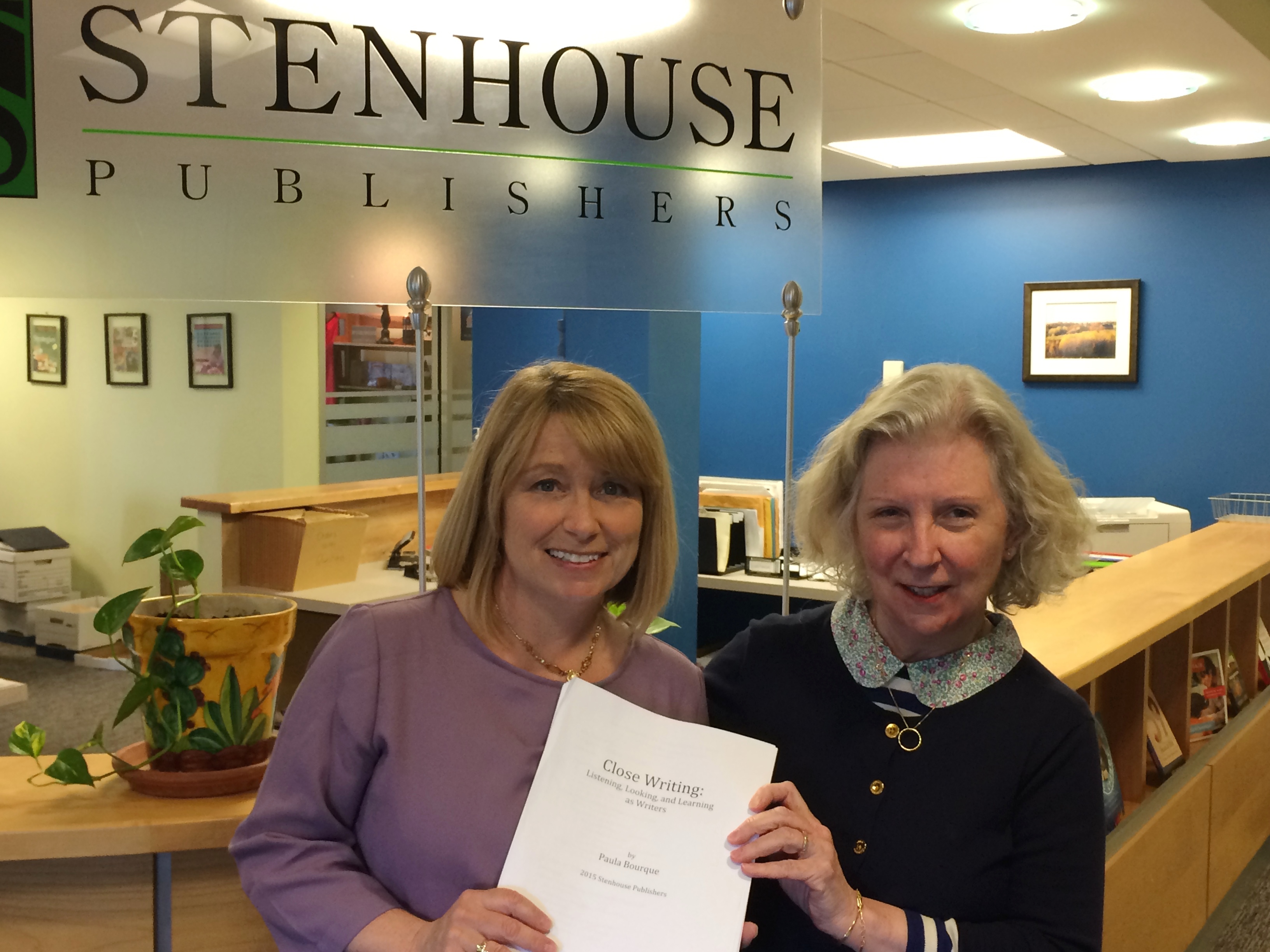
Handing off my manuscript to the most amazing editor, Maureen Barbieri

I hadn’t meant to stop blogging, but time became a premium commodity this winter as I worked to finish my first book. My priorities became my family, my teaching, and the book. So when I turned over the manuscript last week to Stenhouse Publishers, it was such an incredible feeling of relief and exhilaration. I have always believed in Donald Graves’ advice that teachers of writing should be teachers who write, but this experience was more enlightening than I could have ever imagined.  My empathy for writers has grown exponentially and my appreciation for good writing and talented authors has soared.   I cannot look at a piece of writing the same way again.  Each book, article, or text I have read recently presents itself with layers to explore.  I savor word choice, contemplate the turn of a phrase, marvel at the organization, wonder what was edited out, and imagine the writer during those moments of creation.

I watch the students in our classrooms engaging with the writing process and feel compassion for their struggles and joy for their successes in deeper ways.  I listen more openly to their thoughts about the process and their ideas with a genuine desire to understand before “teaching”.  I am much more sensitive to how feedback might resonate with a writer.  They pour a piece of themselves onto that paper and want it to be loved ‘as is’.

But I also know the satisfaction that revision can bring to a writer. It’s a bit like sculpting a piece of stone.  Each time we revisit and rework the piece it has the potential to reveal something new and more refined-sometimes things we could not anticipate. Feedback from others (editor, colleagues, friends) is like  precision tools that helps chisel and polish the work toward its final form. I want our students to experience that satisfying sense of accomplishment by embracing revision rather than dreading it. This process has helped me contemplate these possibilities more sensitively.

So for the dozen and a half people who read my blog, I am back in the saddle! Happy to “think aloud” each week on topics that are dear to my heart and my teaching.  I am also thrilled to have time to get back to another of my most favorite activities…READING!

What’s On My Book Radar?

Finishing my book was like ending a second full-time job, giving me time to devour some books!  Two that have been on my bed stand for months were finally read and LOVED!

17453187 51cV6sxJ8+L._SY344_BO1,204,203,200_

Jennifer Nielsen (The False Prince trilogy) has created another hero we can follow- Nic Calva, a slave in the mines of Rome in her latest tale Mark of the Thief.  She starts us off with an amazing escape and keeps us on the edge of our seat throughout.  Nielsen is a master at creating characters who overcome impossible odds and her writing always includes twists and turns that I do not anticipate.  This series will be a hit for kids who love adventure, mythology, and smart writing!

Liesl Shurtliff is a gifted reteller.  She takes stories so familiar that we cannot imagine anything more could entice us, and spins a tale that is incredibly engaging. Her first book Rump: The True Story of Rumplestiltskin  gave us a different perspective on a much maligned character and her new book Jack: The True Story of Jack and the Beanstalk offers us an equally imaginative version of a classic tale. The land at the top of this beanstalk will surprise you, as will getting to meet Jack’s family and neighbors.

Put these two titles on your summer reading list and you will have some ‘happy hours’ as you vacation to these distant lands.

Why We Need Snow Days

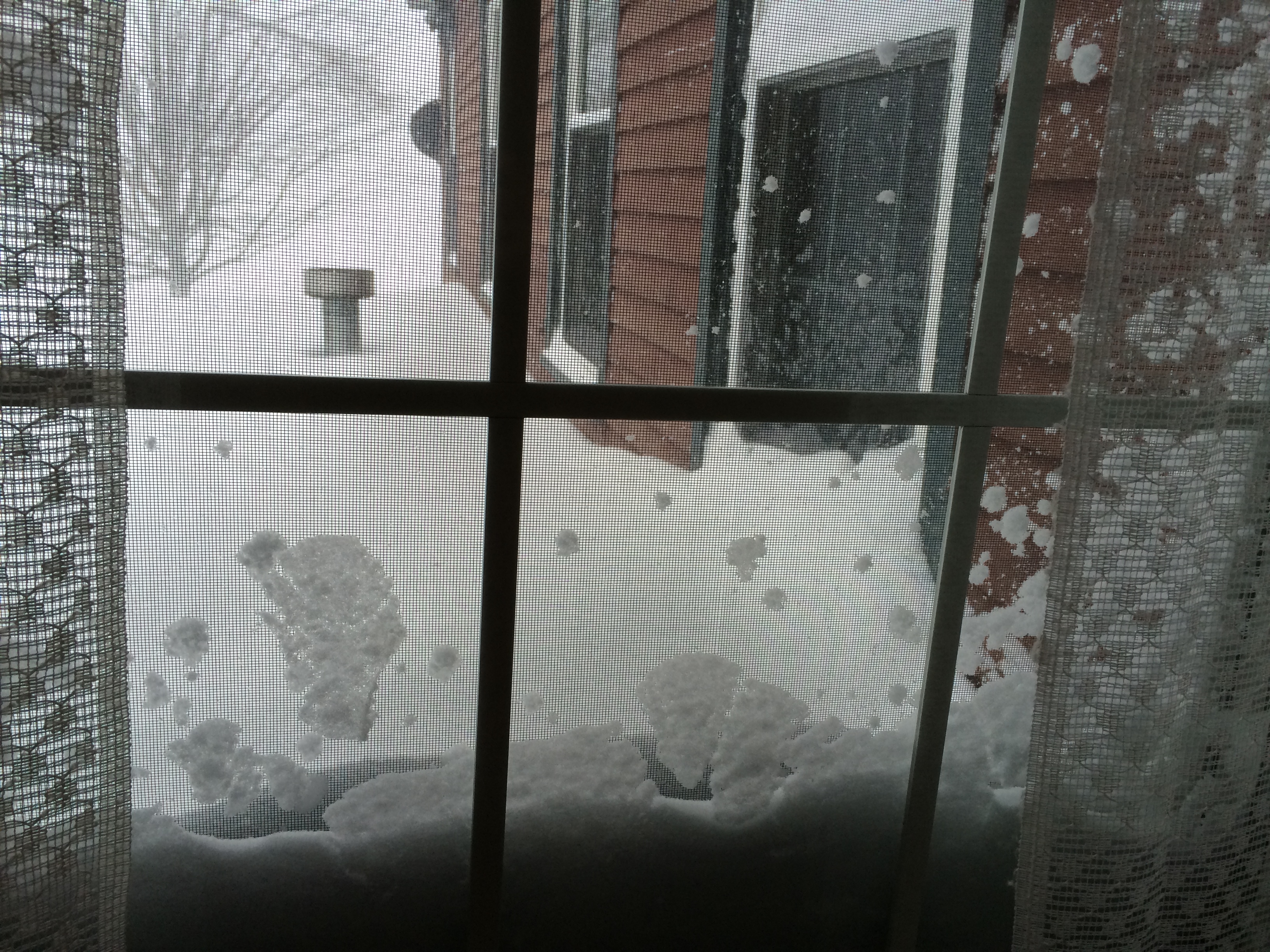
As I write this, we are deep in the midst of the Blizzard of 2015.  Everything from New York toIMG_4162 Maine seems to be shut down and waiting it out.  Our ever dependable mail and ferry service have even waived the white flag of surrender to this storm.  Since we have yet to experience our first snow day in my district, we were all excited when the call was made a day ahead of the storm. I’ve enjoyed checking in on social media to see how my friends and colleagues are spending this day off from the usual routine. Though a blizzard is nothing to take lightly and can be quite dangerous, the mood that I’ve seen has been distinctly upbeat and even giddy!

So why do we get so excited about snow days? A break from our usual routines can awaken us to new possibilities. It can remind us there is a different way of life outside of our classroom walls each day.  I can share a few that I’ve heard and experienced for myself. Maybe you can add to the conversation with your own reasons!

  • We can remember and relive the simple joy and excitement of our childhood days.
  • We can sleep through the alarm if we want or wake early to enjoy even more free time.
  • We can sit down to eat a breakfast that doesn’t need to be wrapped or packed.
  • We can see what are pets are up to when we are usually at work!
  • We can eat lunch and go to the bathroom when we want to!
  • We can stay in our jammies, skip the makeup and ignore the hairbrush… yup, appreciate our natural beauty!
  • We can surround ourselves with books and experience new lives and worlds.
  • We start to appreciate our own children’s teachers a bit more each hour!
  • We can increase our sense of guilt and jealousy when we catch up on Pinterest.
  • We can grade that pile of papers that’s been haunting us for too long.
  • We can repeatedly explain to our non-teacher friends that we really aren’t being paid for a day off.
  • We can pay bills, balance our checkbooks and organize files just for the fun of it!
  • We can take a nap!
  • We can watch a movie during the day without falling asleep.IMG_4164
  • We can binge-watch a tv series we never thought we’d have time for.
  • We can clean up our homes that are often flooded with the clutter of our busy lives.
  • We can take a bath in the middle of the day!
  • We can listen to music that isn’t cataloged as a sing-a-long.
  • We can shovel, make snow angels, ski, snowshoe or sled like a kid again.
  • We can drink hot cocoa and cover it with marshmallows or whipped cream!
  • We can join a twitter chat we’ve never tried before and follow people we never knew existed!
  • We can cuddle with our pets or snuggle with our kids and be totally present in the moment!
  • We can work on our blog and not feel like we should be doing 5 other things instead.

IMG_4169The gist of the snow day happiness is that we feel like we’ve been given the precious gift of time.  It’s okay to do any, all, or none of these things and not worry that we are falling behind.  When the world gives us pause, we feel less stress that it’s passing us by.  We are reminded to live in the moment because we are no longer on auto pilot. We feel a bit more rejuvenated and rested.  We have refilled our wells so that when we return to our classrooms we have more to give. So embrace those snow days whenever they come your way, I mean, what’s the alternative?

 What’s On My Book Radar?

I met Sarah Albee at our latest nErDcampNNE.  She is an incredible nonfiction writer who basically tells the history of the world with some unique perspectives. Have you ever thought about how bugs, poison or poop have shaped our history?  Well, Sarah has and her humorous writing style will have you laughing as you learn how POOP (yes, I said “POOP”) played such an important role in the development of modern civilization. If you think nonfiction is dry and boring…race to your local bookstore or library and check out Poop Happened!

poop-happened2-180x225

Check out her book trailer here:

Here are some great snow day books:

9780152053031_p0_v1_s114x1669781423178651_p0_v2_s114x166shopping-19781561454181_p0_v1_s114x166

9780446568265_p0_v1_s114x166

nErDcampNNE 2015

IMG_3944
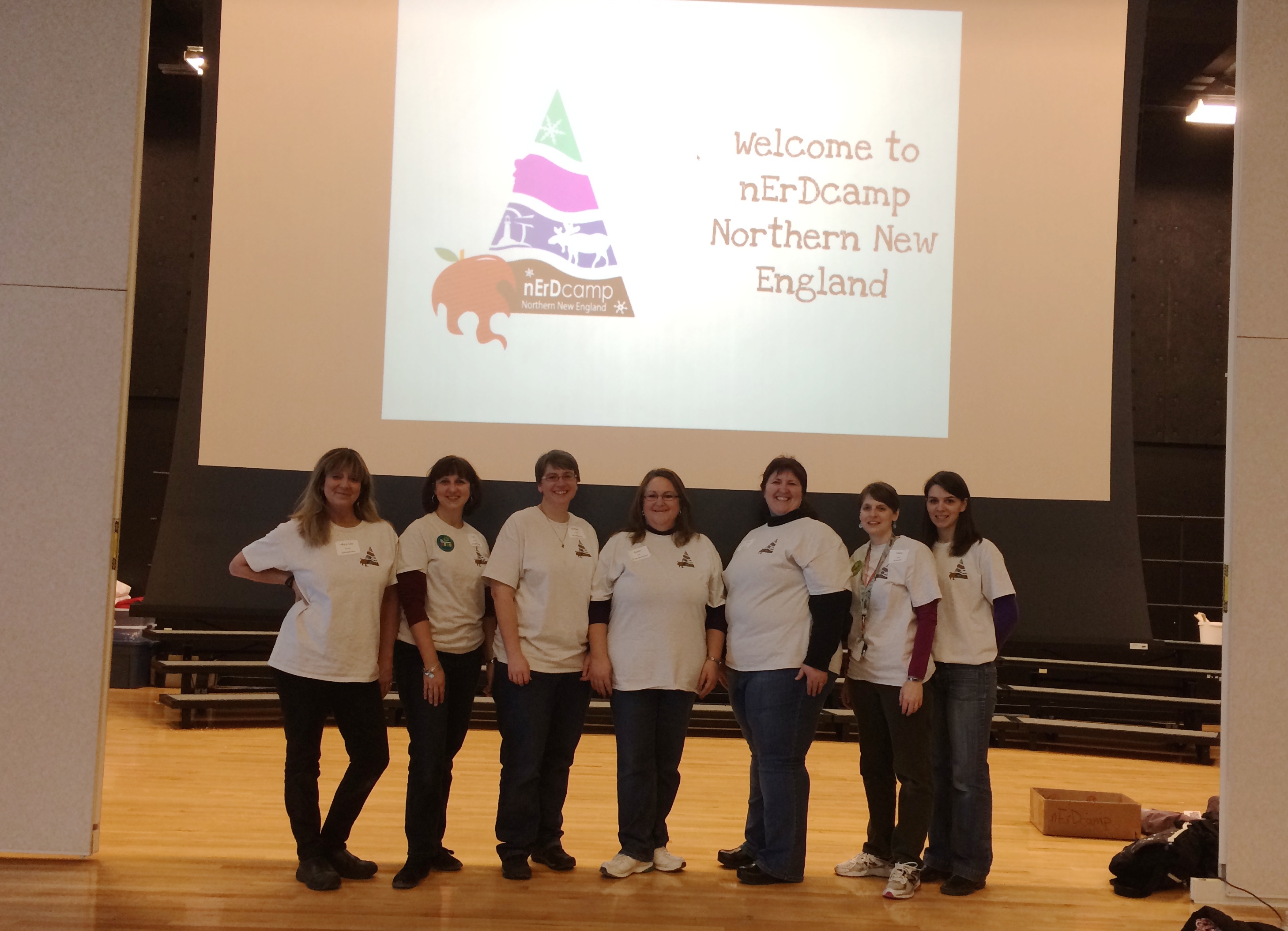
nErDcampNNE Committee: Mary Lou Schuster, Gigi McAllister, Natalie Stotz, Susan Dee, Jenn Chafin, Cathy Potter, Jenny Stahl (not pictured Chris Pirkl)

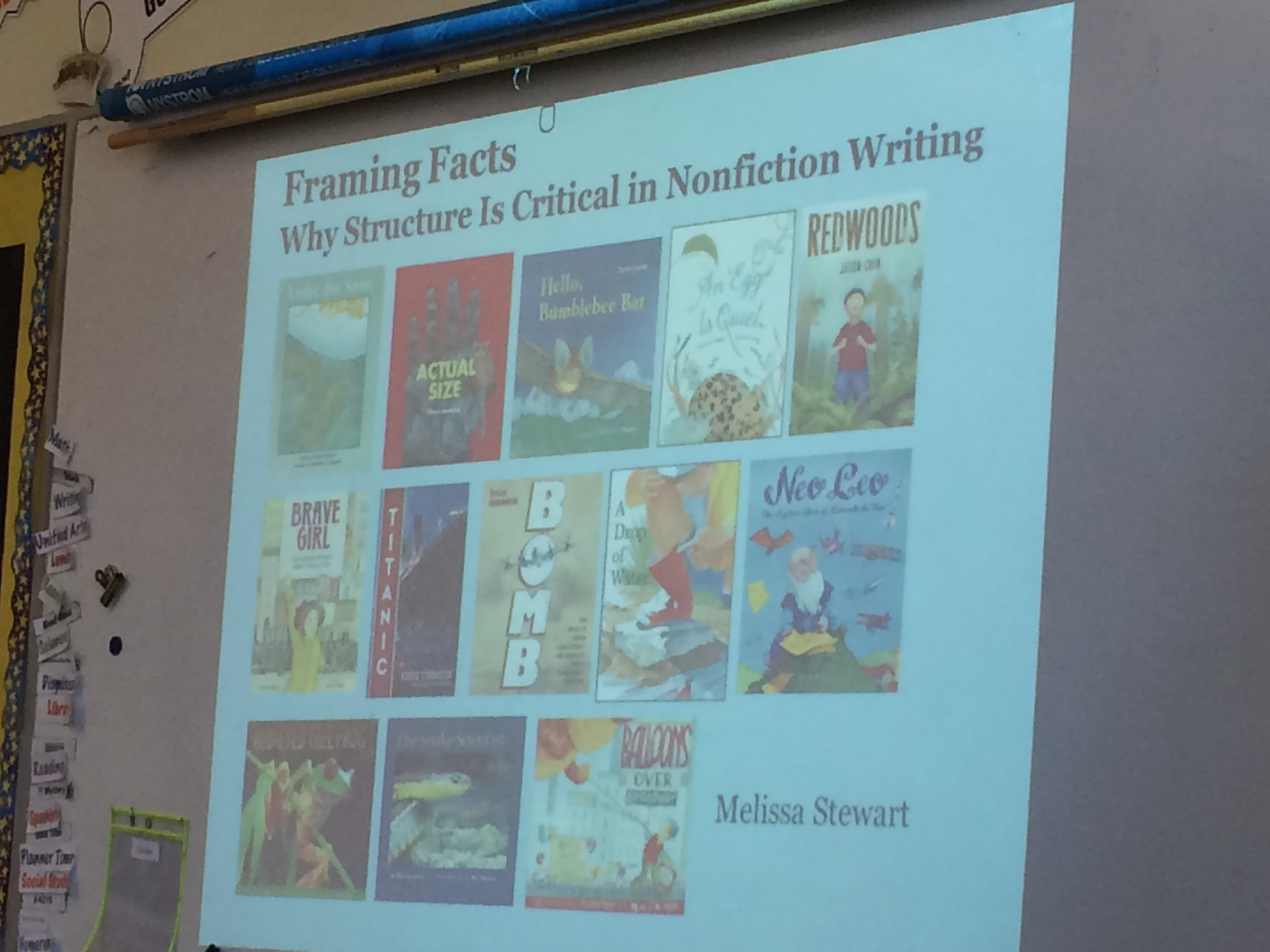
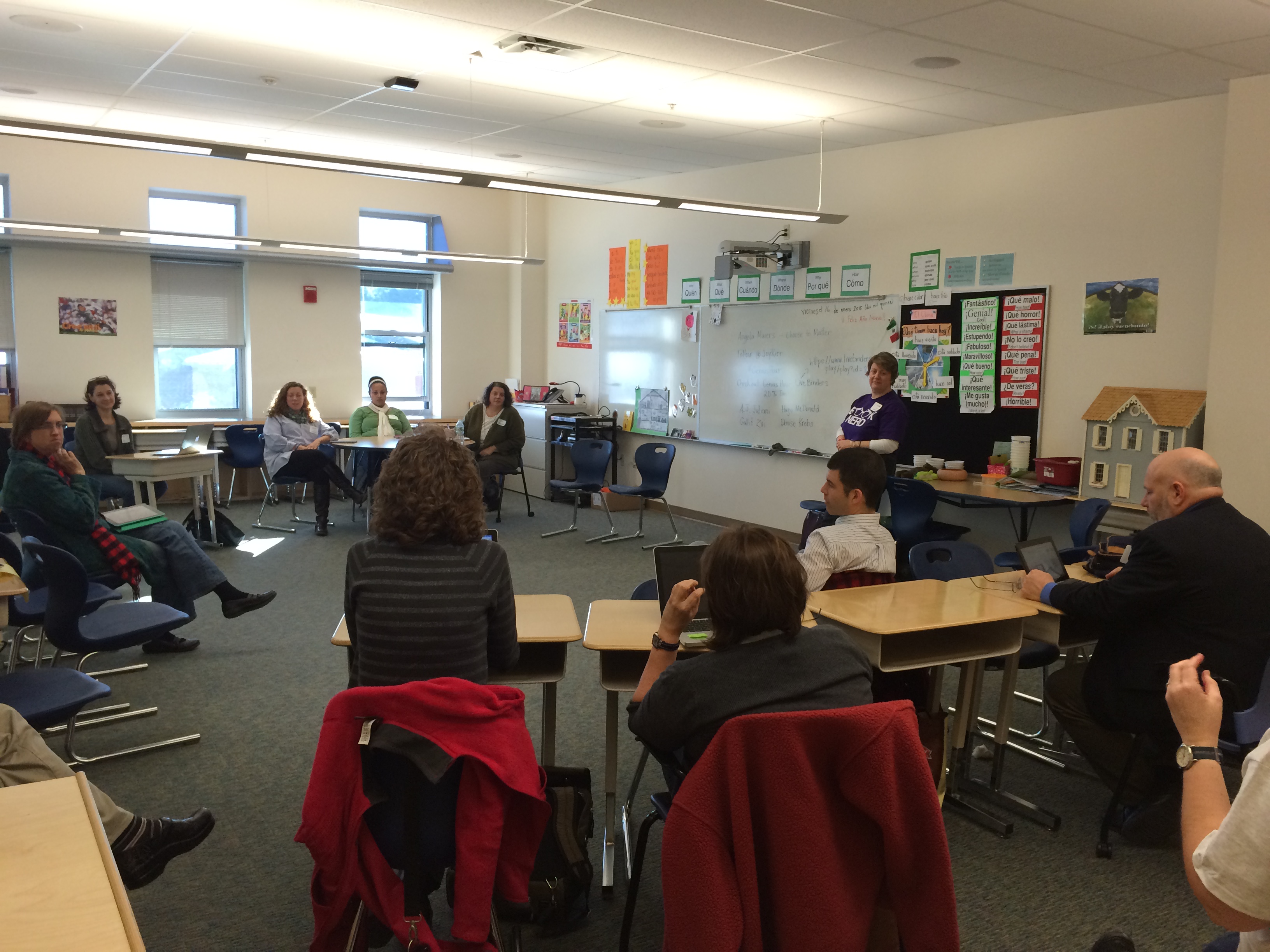
This past weekend I participated in my second nErDcamp Northern New England. I couldn’t imagine it being any better than the first, but I couldn’t have been more wrong. If you have never been to and ED camp, it is a type of ‘unconference’ in which people come together to share and learn in a collaborative, unscripted, spontaneous format.  Our general focus was literacy, but the range of topics and ideas that people wanted to explore was quite diverse. There were technology sessions in iPads, iMovie Twitter and Google Classroom.  There were reading sessions on title talks, motivating reluctant readers, interactive read alouds and differentiation.  There were writing sessions on nonfiction craft and structure, mentor texts, reluctant writers and revision.  There were also sessions on roles of literacy specialists and school librarians, ELL students, Genius Hour and connecting with authors.  The hardest part was deciding which of these amazing sessions to attend.

Luckily there were notes and resources recorded on google docs for all sessions, so even if we couldn’t be in a session we have the a record of the conversation and sharing!

IMG_3904
Authors Sarah Albee, Melissa Stewart, Megan Frazer, Joan Paquette, Lynda Mullaly Hunt and Julie Falatko share their process for writing.
IMG_3912
Participants create the schedule and agenda for the day.
IMG_3921
Authors share their expertise on writing.
IMG_3909
The swag and give aways were unbelievable!
IMG_3926
Sessions were facilitated by participants who shared ideas and expertise in a collaborative effort.

nErDy Author Night

IMG_3883The night before nErDcamp we were treated to a nErDy Author Night.  There were authors and illustrators from all over New England who came to greet readers, sign books and talk about their craft.  It was open to the public so there were children, parents, teachers and librarians all eager to meet their favorite author or illustrator.

IMG_3890We had Maria Padian, Lynn Plourde, Charlotte Agell, Jennifer Jacobson, Cynthia Lord, Tamra Wight, Megan Frazer, Amy MacDonald, Kate Egan, Joan Paquette, Hazel Mitchell, Lea Wait, Melissa Stewart, Matt Tavares, Russ Cox, Kevin Hawkes, Erin Dionne, Josh Alves, Lynda Mullaly Hunt, Mary Cerullo and Sarah Albee.  How much more talent can you pack into a cafeteria!!

A huge shout out goes to the nErDcamp NNE Committee.  Thank you for bringing this amazing professional development opportunity to the educators of Maine.  Oh, and did I happen to mention that was entirely FREE!!!!!

If you are in Maine, or close enough, there are two more opportunities for ED Camps on the near horizon.
EdCamp Western Maine on February 7, 2015.
https://sites.google.com/a/rsu10.net/edcampwme/

EdCamp Maine on March 7, 2015.
https://sites.google.com/a/waynflete.org/edcamp-maine/register-now

What’s On My Book Radar

IMG_3873There were so many amazing titles being shared this weekend.  I was incredibly excited to see Jennifer Jacobson with her new book Paper Things.  It isn’t technically OUT until February 10, but we were able to purchase copies that night!  I had to get my hands on this one and it moved to the top of my TBR pile.  Once I finish it, I’ll post it to my Facebook page (40 Book Challenge Photo Album).  Hope your TBR pile is as rich and inviting as mine has become.

Happy Reading!

The Proposal

So I just sent off my proposal for NCTE 15.  I mean, who doesn’t want to be in Minneapolis in November!? It’s hard thinking about where I might be professionally 11 months from now and what might be relevant for other educators at that time.  I’ve been immersed the past year on my writing work with teachers and so it only seemed natural that I would be ready to share this collaborative venture with others. So with great anticipation I hit the “submit” button.IMG_2481

Leap of Faith

When I was a relatively new teacher, my principal asked me if I would like to go to a national conference.  Attending NCTM in New Orleans was a life changing event.  I know the power of that experience shaped who I am today.  I am anxious to share that opportunity with other teachers. Without even knowing if our district would fund this,  I asked two ‘new’ teachers to join me in the NCTE venture.  They have worked so closely with me over the past year; willing to be coached, to collaborate, and to let me try out lessons with their classes. I know that being engaged with other educators at a national level will transform their teaching in a similar way that mine was-they are like sponges soaking up new knowledge.  I have faith that if I plan it, they will come!  We are going to make this happen!

I also took a leap of faith in asking several authors that I admire to join us on the panel.  I thought the worse that could happen would be a curt, “no” or a non response.  To my delight, most of them were eager to join the panel.  Their expertise on our topic will be invaluable to participants, and their range of experience, preferred genre and audience will make for a rich discussion.   From picture books to nonfiction to YA, these authors are truly experts in their field.  So thank you Lester Laminack, Kate Messner, Linda Urban, Sarah Albee and Selene Castrovilla for graciously joining these teachers from Maine.  We’ll know in May if the proposal is accepted.  I have faith!

So, forgive me for a shortened post this week.  I am revised and edited-out!! I am excited and exhausted.  I am anxious and hopeful.  I’m off to do more writing and to write about that writing!  If the proposal becomes a reality-you’ll all be some of the first to know!  Until then I’ll keep writing, keep working with teachers on writing, and keep our kiddos writing.  I guess that’s a pretty big hint to the topic of the session.  More details in May -when we get that acceptance letter!


What’s On My Book Radar?

9780545700276_xlgThis week Cynthia Lord sent me an ARC of her newest book A Handful of Stars , coming in May of this year.  To say I was excited is a complete understatement.  If you are a Cynthia Lord fan, I am convinced you will fall in love with this book.  She knows how to create characters that readers truly care about, develop stories that reflect real life experiences and leave you feeling more compassionate and caring for the struggles of others.  I won’t give much away since this isn’t out yet, but I’ll just say that when it hits the shelves you will want to grab a copy!


Engaged or Compliant?

Screen Shot 2015-01-07 at 1.44.24 PM  I’ve taken a brief vacation from my blog, but not from writing.  A two week vacation allowed me plenty of time for personal and professional projects as well as some much needed family time.

My mind was overflowing with ideas for blogging this week, but this tweet that crossed my home page has really stuck with me. I’ve always tried to share the “why” of what I am doing in classrooms and with teachers, but I’m contemplating how I can take it to an even deeper level.

In an Ed Leadership article   Daniel Pink talked about the difference between compliance and engagement.  When students are doing something because we ask or expect them to, it is compliance.  When they do something because they see why, they are engaged.

There’s a huge difference between compliant behavior and engaged behavior. With compliant behavior, you’re doing what someone told you to do the way they told you to do it. There’s nothing wrong with that, but it’s different from engagement. With engagement, you’re doing something because you truly want to do it, because you see the virtues of doing it….So if we really want engagement rather than compliance, we have to increase the degree of autonomy that people have over what they do; over how, when, and where they do it; and over whom they do it with.”         -Daniel Pink

He’s not advocating a “free-for-all” in which students can decide whether or not they do the work asked of them.  He considers the possibilities in allowing more choice in what students read or write; how they do their work, or projects that would demonstrate understanding.  Not everything needs this degree of discretion, but with more opportunity, comes more autonomy.  If we want motivated, life-long learners they need this valuable skill.

This level of differentiation is not always easy to manage in a classroom.  Larger class sizes, standardized grading policies, fixed homework rules, pacing guides, fidelity to programs all encourage or reward compliant behavior.  It can be messy if students begin directing their own learning and our standards of measurement are challenged. So how do we help teachers to encourage engagement and a sense of agency in their students while recognizing that they are often being asked to be compliant?

Maybe we start by going back to the question of “Why?”  Why did I want to be a teacher?  Why do I come in here everyday and work with students? Daniel Pink says we focus too much on the how rather than the why and I can see that.  Teachers and I often collaborate on how they will teach a lesson and spend very little time discussing why we would teach the lesson. When we teach something because the curriculum says to, or because it is one of the standards we need to cover, we are being compliant.  We are thinking more about how to teach it.  Maybe we need to have a few more conversations about why we will teach it.  Not to be defiant, but to be more purposeful.

So in this new year, I will resolve to think more about the why before I worry about the how.  I will encourage my colleagues to have those conversations.  I will share purpose more with students and encourage them to wonder why.  In answering that question for ourselves, we can probably find the most powerful answer to how.

You can listen to more from this interview:

http://bcove.me/hbrzo6w6

HAPPY NEW YEAR!!

What’s on My Book Radar?

I just finished a gripping YA novel by Selene Castrovilla…MELT.  The phrase “There’s no place like home.” takes on a whole new meaning in this story of domestic violence and teens coming of age. Joey is a kid from the “wrong side of the tracks”, but Dorothy can see the boy inside that shell better than anyone.  He is traumatized by witnessing his father’s daily abuse of his mother and turns to alcohol and aggression  to escape.  When Dorothy lands in his Oz of a life we begin to see the power of hope and love.  Told from the viewpoints of both characters, we can see how our lens of experience shapes what we perceive.  Beautiful and brutal.  Not for younger readers, but teens and adults will truly care for the characters in this edgy, poetic novel that will MELT your heart.IMG_3649


References

Ed Leadership  September 2014 | Volume 72 | Number 1    Motivation Matters Pages 12-17