Category Archives: Uncategorized

Summer Slip and Slide!

imagesSome of you, as you read this, may already be out on summer vacation, but those of us in Maine have a few weeks to go.  Most of us are busy gathering information and resources to address the inevitable summer slide that our students experience.  This week’s blog is dedicated to that focus.  I would really welcome any other ideas or resources, as I know they abound.

YOU CAN LEAD A HORSE TO WATER…

We all know that idiom and how it ends.  Similar to how all of our hard work at gathering and dispersing resources tends to end when students do not read or write over the summer months.  Although it is frustrating, you still offer water to your horse!  You just don’t need to lug 50 gallons of Perrier, swirl it ice and lemon slices and serve it up with a silver straw!    We don’t need to spend hours and hours of work or hundreds of dollars for resources to satisfy the thirst of our summer readers.  We can instead try to connect them to the resources already available and ready.

DIGITAL DIVIDE AND CONQUER

Sadly we are all to aware of the haves and have nots in our school communities.  It is no coincidence that the have nots (as far as technology goes) are often our most struggling students.  The correlation between poverty and achievement becomes glaringly obvious when access to technology and online resources are a barrier for student learning.  We cannot make that an excuse for not integrating technology and 21st century skills into our teaching and learning, but we DO need to be aware of access issues and think outside of the box to address them.

summerreading-300x297Knowing our population is key.  Who has access to the internet?  Who has a smart phone or cell phone?  This information can guide the type and amount of work that will go into any summer literacy program you want to implement.  However, any initiative should include non-digital resources for families and students and an assumption that there will be those without access.

This is where the old-fashioned notes home come in.  Pamphlets and handouts with ideas, resources, book lists, etc abound.  Keep them simple.  Keep them user friendly.  They could include local library programs and hours, local bookstore events and information, free museum, films, concerts, or programs to build family experiences or information on local groups that put on family friendly events.    Many libraries set up reading incentive programs that do not require a computer or internet access.  Many bookstores have authors come to visit for free or have pajama nights and read alouds.  Sharing this information with parents is leading the horse to water.

Many schools get books in kids’ hands.  Purchasing inexpensive books, holding book drives for gently used books and setting up book swaps so students can get ‘new to you’ titles in their hands are great ways to promote reading and give your horse a sip!

THE WORLD AT YOUR FINGERTIPS

For those families who do have access to the internet, the world is a finger touch away.kids-computers   We can collect dozens and dozens of resources to share, but that can often overwhelm a parent.  By judiciously choosing some resources that you, or your school thinks are worthy, you can give those families a drink without drowning them.  It can take time to evaluate all of the resources out there, so I’ll share a few with you to get you started.  You may already have all you need, in which case you can tweet them out to me @LitCoachLady on Twitter or LitCoachCorner on Facebook!

BOOKLISTS–  I rarely read a book anymore unless it is recommended.  I just don’t have summer-reading-300x198time to read everything.  I rely on word of mouth or booklist recommendations from organizations I respect.  Now, I don’t always agree with their selections, but these books have been vetted by some pretty wise people and there is a good chance they will be well worth your time.

Here are the books students in Maine will be reading and voting on for the next school year:

Maine Student Book Award Nominees 2014-2015

Here are what students in all of the other states will be reading!

Cynthia Leitich Smith’s 50 State Book Awards Compilation

Here are some recommendations and resources from the Pragmatic Mom!

Pragmatic Mom’s Summer Reading

Recommendations by grade level from Education.com

http://www.education.com/seasonal/summer-reading/

REPRODUCIBLE READING LISTS

American Library Association (ALA)

Scholastic

SUMMER READING PROGRAMS

Scholastic “Keep Kids Reading All Summer-Long”

Barnes and Noble Summer Reading Challenge

Pottery Barn Summer Reading Challenge

ONLINE RESOURCES: Books

StarWalk Kids– Free Digital Library for the month of July

Storyline Online Have great books read aloud!

PBS Kids books, games, activities galore!

Starfall  online books

ONLINE RESOURCES: Magazines for kids

Time for Kids

National Geographic for Kids

Newsela   (news articles for middle elementary and up)

TEACHER RESOURCES for FAMILIES

Reading Rockets Family Ideas

Reading Logs

RIF=Reading is Fundamental

Read Write Think

PBS-“how to tackle school summer reading lists”

 KIDS BOOK REVIEWS

Spaghetti Book Club – book reviews BY kids, FOR kids

Kids’ Book Review

Kidsreads

Common Sense Media

 WRITING RESOURCES

Journal Buddies– Summer Writing Prompts

Boys To Books– Writing Ideas for Boys

Scholastic Summer Writing

SOCIAL MEDIA

Twitter –  create a school hashtag ex. #LincolnSummerReaders to post ideas and keep in touch  Teachers can follow the hashtag #SummerReading

 Facebook– create a private group where you can send parents updates, reminders, event times, resources, etc.  Since students under 13 should not be on Facebook, I would promote this as a parent resource.

Edmodo- some teachers create Edmodo groups for their students to connect with their teacher and classmate about books and learning.  It is a free “Facebook-like” platform that ensures privacy for students to blog and connect.

 Kidblog– parents or teachers can set up kids on a safe blogging site to get them writing and blogging over the summer months and beyond

Texting- Remind 101– safe, one way texting application to stay in touch with parents about summer literacy books, events, ideas.


Whatever you or your school decides to do, keep it fun…keep it light…keep it simple.  Remember this IS a vacation for the kids, a time to be with family and make memories outside of school.  Ideally they would all read, write, compute, experiment and create all summer long.  We know that isn’t the reality for a lot of our kids, but all we can do is supply the water and then let the horses out to pasture!

540_293_resize_20131001_acdf114d7886f5ca3f7a737d6a3825d2_jpg

Whats On My Book Radar?

In case you didn’t notice all of the booklists above…THAT’S what’s on my radar! Checking though the lists, looking at recommendations from friends, lining up my personal summer reading lists.  Can’t wait to dig in!


What’s Your Metaphor?

images“The unexamined life is not worth living.”  -Socrates

I’m not exactly as bold as Socrates with my desire for self-reflection.  My life is still worth living, even as I stumble through it mindlessly on many a day.  But I do find deeper meaning in life when I take some time to reflect, examine and learn using some of the same principles and ideas that I embrace in my work with my other experiences.  So what in my day to day life would benefit from some of this reflection? How can I integrate my goal of reframing  into this process?

One way is to think more metaphorically, to help me make some meaningful connections and revelations.  Metaphors are powerful tools.  They help us to think about something familiar from a different angle, perhaps to gain a deeper perspective.  We can often discover new meaning in the common experiences -making the ordinary, more extraordinary.  How can I learn some deeper lessons and create more meaning from the ordinary in my life?

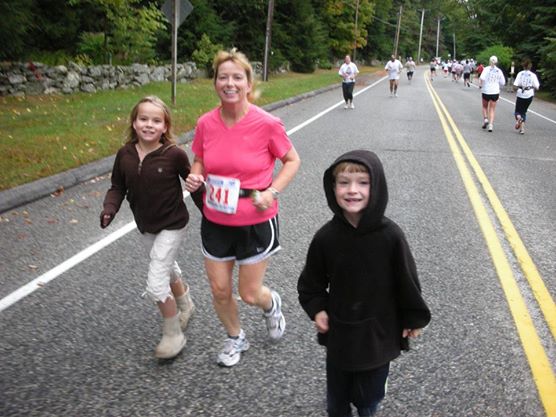
541563_4354260774408_1957174005_n
Starting line with my son in Boston.

It hit me when I was out for a run this past weekend.  (Now, I should probably clarify my definition of ‘run’.  For those who know me, I am the fabled tortoise of the classic tale.) I took the winter off from running, in Maine snowshoeing and cross country skiing are more efficient modes of bipedal transportation.  So this spring I am in the process of getting my running groove back. It could be a bit  frustrating to start from the beginning, but I decided I would focus on the process and reflect on my progress.  So I thought…

Running is a metaphor.

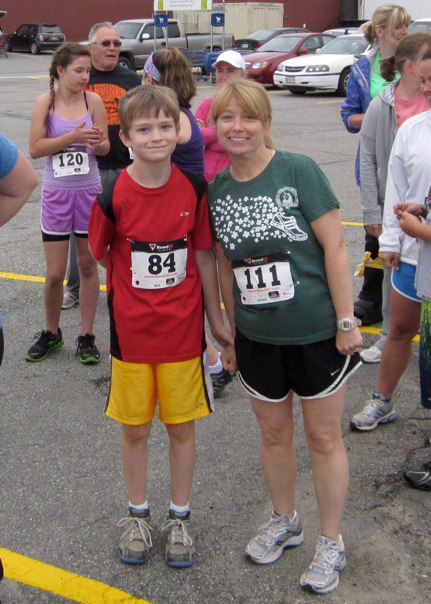
217379_10200839939813460_1105979158_n
Miles for Mills 5K in Augusta, ME

There are dozens of running philosophers you can follow, but  for me I’ve contemplated a few ideas that shed some light on deeper truths for me in life.  How is running like teaching and learning (life)? Here are a few thoughts.

“You get out of it what you put into it.” This is so true.  My results are tied directly to my efforts, there are no cheats or ways around it.  I can’t look for a quick fix.  Teaching and learning is the same way-our results correlate with our efforts.  There are no easy answers for education reform, we know it is a lot of hard work over time that will yield results. To get stronger and better you need to push yourself, out of your comfort zone.  This isn’t always pleasant, but when you can see the results and understand their direct link, the process becomes a welcome challenge. We can help our students see the reward and benefit of moving out of that comfort zone when they can see results. There is no progress without effort.

1509253_10203702591345007_7132437575831244755_n
My one and only marathon!

“Do the best with what you’ve got.”- I do not have the body of Joan Benoit Samuelson, but I did run a marathon once.  She could have run several marathons in the time it took me to run mine-but it was my best and I did it with what I had.  The pride she felt when she was the first woman to win an Olympic gold medal in the event must have been comparable to  the sense of accomplishment and pride I experienced crossing that finish line.  When we know we have done our best, THAT should be our measure of success.  Not all of our students will cross the finish line of their education at the same pace, but if we help them to do their very best with what they have-we will have been successful.

404513_10100241272749329_1678537916_n
Companionship trumps conditions!

 “If you wait for perfect conditions, you’ll never get anything done.”- We can always find excuses to avoid the hard work we need to put in.  For running, it is weather or aches or road conditions.  For education it might be kids who aren’t ready, curriculum that isn’t great, books that are outdated, students who are unmotivated, parents who don’t care, etc.  We need to realize the conditions for what they are and then do our jobs in light of those factors.  Face the conditions, prepare for the conditions and then (sorry Nike)  JUST DO IT.  We’ll never get the perfect class, the perfect assessment system, the perfect standards-they are mythical. Stop waiting, start doing.

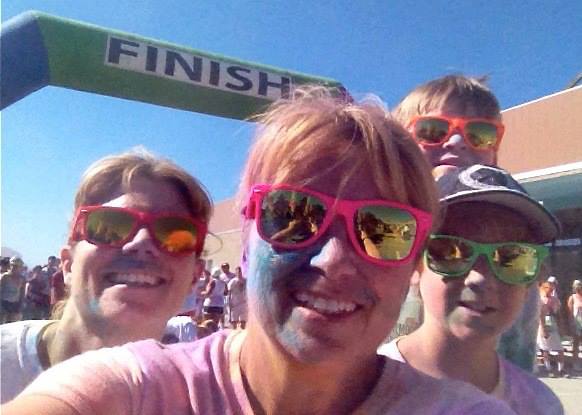
1170912_10201951619451804_488821943_n
Finishing is fun!

It never gets easier, you just get better. Sorry, for those of you who are waiting for the day when teaching becomes easier.  If you want to be the best  you can be, you never settle for easy.  To continue to grow you need to push yourself, try new things, face new challenges.  In running you move faster or run further or try new courses.  In teaching you read more books, take more classes, try new lessons-you become a leader.  Now don’t get disheartened-it shouldn’t be HARD all the time in life or in running.  But if you get to the point that you can just ‘phone it in’, you might want to hang up!

IMG_6602
Buddies help you create good habits!

Motivation is what gets you started, habit is what keeps you going.  Lots of people jump off the couch and lace up their shoes, determined that this is the year they are getting into shape.  The motivation is invigorating and exhilarating.  Sadly, motivation isn’t enough to sustain the hard work, tough conditions, injuries, setbacks and strain that can come with running. The school year is like that.  We all begin so excited with possibilities and motivation.  It’s hard, but we have the energy and we are determined to build stamina.  As the newness wears off and the year moves on, we need to draw on more than motivation to sustain us.  That’s when the strong habits we have built kick in and keep us on track.  We set ourselves up for success.  We prioritize our time and energy to make it easy to work out or create those lessons.  Creating the conditions that fosters success is critical, because we will all face setbacks, fatigue and disappointment that will zap our motivation.  I remember a quote I once heard that nails it, “If you fail to plan, you plan to fail.”  It’s as true for running as it is for life.

470672_2859115456645_749763786_o
Yeah, I just make it look easy! (haaa)

Nothing worth having comes easy.  If running were easy, we wouldn’t see so many cars on the way to work. Everyone can appreciate the effort it takes to run, whether it is a mile or a marathon. We are  in awe of those who make it look so easy.  We wouldn’t be in awe if it WERE so easy.  That’s what makes it special.  That’s what brings about an incredible sense of accomplishment when you simply finish a race and not just if you win it.  We don’t pat ourselves on the back for sitting in a chair, it’s not an achievement we take satisfaction in.  It’s the choices we make that require effort that provides us with a sense of pride and accomplishment.  Remember that when it gets hard, and take time afterward to appreciate that effort before moving onto the next thing in your busy life.

401905_4149001603057_467602120_n
Being in the moment with my son!

Step. Breathe. Step. Breathe…  Every run is a series of steps.  You can increase your pace, but you can never take more than one at a time.  That’s why there are moments when running is meditative (not to be confused with relaxing).  Runners can focus in on their breath, and the beat of a footstep to create a zen-like state.  You can focus your energy inward and truly be ‘in the moment’ at times.  Your life may seem to move fast, but it’s never more than one step at a time.  When we find opportunities to focus our attention to the step we are taking,  tasks seem more manageable, stress seems less intense, pain seems more tolerable. We don’t have to carry the burden of the entire journey in that moment. We can breathe in new air to refresh the oxygen supply to our cells.  We can breathe new ideas, energy and life into our tired bodies as well.  We can breathe out the carbon dioxide the way we can we can breathe out toxic thoughts, anxieties and perceptions.  Each breath we take refreshes and cleanses our bodies.   Don’t forget to breathe!

548194_4354263054465_337006337_n
Life is RAD!

I’m sure I could think of many more analogies for running and life/learning.  The idea isn’t to overload, but to offer up some food for thought.  Maybe your aren’t a runner.  It might not be your thing.  My point is that we often go through life without much thought on the lessons waiting for us to notice.  Running may not offer you lessons,  but there are choices you make in your life and things that you do that are waiting to teach you- to help you grow.

So to you I would ask, what IS your thing?  What is YOUR metaphor?

What’s On My Book Radar?

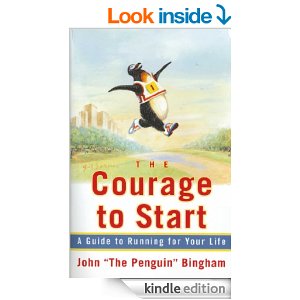
51wv0POg6lL._BO2,204,203,200_PIsitb-sticker-v3-big,TopRight,0,-55_SX278_SY278_PIkin4,BottomRight,1,22_AA300_SH20_OU01_For anyone who has contemplated running, but didn’t think it was your thing.  You might want to check out “The Penguin” (John Bingham)’s book The Courage To Start.  He writes a monthly column in Runner’s World and has been a huge inspiration for many Couch to 5K enthusiasts.  He took up running at age 43 with a simple jog down his driveway.  This book might be just the inspiration you need to try something new in life.  It could be YOUR new metaphor!


Report Cards Deserve an “F”

images-1Yesterday schools in our state (Maine) were given their grades by our department of education.  Under our current governor’s administration, a brilliant idea was cooked up to grade our schools on an A to F system.  According to our DOE website.  “All parents and community members deserve to understand how well their children’s schools are performing and what is being done to improve them.”  So all of the intense work, strategic planning, collaboration, intervention and effort of a school gets boiled down to one alphabetic symbol to represent some of the most complex work you can imagine. For most parents and community members their understanding of grades will overshadow any and all explanations of the process or analysis of the data.  A=good, everything else =not good enough.  For the staff who dedicate their lives to the children in their buildings, it minimizes and devalues effort, persistence, and commitment and instead values a tidy packaged report card.

As you might guess, I am not a fan of this system.  I am 100% for  reflection, analysis, evaluation and accountability, in education.  I just don’t think an incredibly complex system with an infinitely diverse population of individuals can be neatly deduced to such a simplified reporting system.  Rather than creating transparency, it creates confusion and frustration.  Here are my biggest concerns…

 Who defines “performing”?

If you are in education this won’t come as a surprise to you, but “performing” in grades 3-8 is defined by a single test.  ONE TEST.  Oh sure, the test is given over several days and it does cover ALL the important areas of education (sarcasm alert) Math and Reading.  So basically what you do every single day for over 175 days can be accurately captured by the bubbles a child fills in (or doesn’t) on one test.  That report card grade on a an entire school is really just a report on how well the  3rd-8th grade students in Maine did on their NECAP tests.  If parents think that report card is a reflection of the quality of their schools they are being seriously misled.  Education wonks rally behind claims of supporting multiple intelligences, differentiation, standards based education, social responsibility, arts and creativity, flexible thinkers, 21st century skills, etc and yet they narrowly reflect a schools’ approach to all of these with a snapshot of one test on one particular day in a child’s life.

Grades are outdated

It is incredibly ironic that our state has mandated standards based instruction and assessment for all students because grades do not accurately tell us what a child knows and can do.   We are teasing out the skills required to meet dozens of standards that will reflect what our students should be able to understand and how they can demonstrate that understanding in multiple ways.  So we need to move away from simplistic grades for our students because we understand how complex and multi-layered learning truly is, and yet we assess schools on the most rudimentary system available to us.  To most teachers this is a mockery of the hard work and initiatives being implemented to meet students needs.  The fact that this paradox isn’t obvious to our education department is very telling of their grasp of understanding.images-2

Simplicity Isn’t Transparency

Most parents and community members lead very busy lives.  They trust that what gets reported to them is accurate and informative.  Though the state has posted a page explaining the methodology for the grading system, it is not realistic to think that everyone who reads these report cards will seek out that information.  Even those who try and can actually find the website would benefit from a degree in education (or at least Jargonese) to decipher the process.

When the purpose of grading is explained as “All parents and community members deserve to understand how well their children’s schools are performing and what is being done to improve them.” and you don’t accurately portray what it means to ‘perform’ in a school and you in no way share what is being done to improve’ you are paying lip service to the concerns of a community who wants to support education and you are providing fodder for those who want to jump onto a teacher-bashing bandwagon.

Simplicity Trumps Accuracy

In it’s first year of implementation, many schools reported that the information the state used to calculate its grade were inaccurate.  Some schools received an “F” because they didn’t have enough students take that one test.  How reliable is the information those parents and community members receive about the performance of their school?  Others were knocked down a grade because literally one or two students did not take the test.  How does that honor the work of all of the other students or their teachers -even if you did believe that one test is an accurate reflection of a school’s performance.  Some schools actually have higher test scores but are graded lower than others!

3/4 of Maine’s schools received a C or lower.  As a parent we would be extremely concerned if our child came home with C, D or F grades.  We would think something is seriously wrong.  And yet Maine students consistently score ABOVE the national average on math and reading according to the NAEP (National Assessment of Educational Progress). In fact Maine’s scores have continued to show improvement.  So when our governor says “My mission is to make sure our education system gets the visibility that it needs to get throughout the state,” I have to ask, “WHAT are you trying to make visible?” I believe his lens is so narrow that what he chooses to make visible does not create an accurate picture for parents and communities, and that serves no one.

Schools Do Not Exist in a Vacuum

One of my biggest issues with grading schools is that it assumes that schools are 100% responsible for student performance and pretends that there are no other factors which can influence the education of a child.   When policy makers treat education like  a business, it ignores the basic philosophy of education-that we take individuals wherever they are and move them forward to the best of their abilities.  It assumes our raw materials‘ condition or history is irrelevant to its outcome.  They are so far removed from the reality of our classrooms.  They disregard the effects of poverty, abuse, neglect, hunger, depression, mental illness, cognitive disabilities, physical disabilities, or trauma on our students’ abilities to not only cope, but thrive and learn.  If only we made our lessons more entertaining, or we tested more, or we increase our expectations they would be just fine. Now, I have no problem with reflecting on what we do and strategically planning for improvement-but I also KNOW that making sure children are well-nourished, safe, cared for, healthy  and loved is equally if not MORE important to their cognitive growth. And sadly, so many of these issues are beyond the control of the school and it is no wonder that the grades schools received last year aligned perfectly with their poverty levels!

Even this approach however,  is laying all of our chips n the cognitive development “pot” and disregarding what employer are telling us are the skills they are looking for in today’s workplace. Scoring well on a test in reading or math is not the only indicator of success or the only attribute that all of those “job creators” want from their employees.  According to Forbes, employers found critical thinking, complex problem solving, judgement and decision making, active listening, and computer/electronic  to be the top 5 skills they are looking for.  Does our simple grading system help parents and community to know how ready their child is for life beyond school?images

Grades are Punitive

No one from the Department of Education has provided any evidence of how slapping a grade on a school directly enhances performance.  If shaming is confused with motivating I am even more discouraged by the decisions of our leaders.  There is a wide body of research on grades and their effectiveness (or lack of it). One of the biggest arguments for our state’s grading system came from our governor “I want the good schools to be rewarded and those that aren’t doing as well, to be able to help them. That’s really the agenda.”  The research just doesn’t support this goal.  When students receive high grades they see it as a recognition of their success and they no longer reflect on that learning.  Students who receive low grades often disengage from their learning or rationalize the scores to preserve their self-image or feel helpless in the situation.  The research does not support the notion that low grades motivate students to work harder.  Why don’t our leaders reflect on the research of the  effectiveness of these proposals before adopting them as policies??  This reinforces my belief that grades are meant to embarrass and punish schools and not support them.  It shows an incredible lack of leadership.

Brace Yourselves

Tomorrow the grades will be released to the public.  Many communities will congratulate themselves on their excellent schools, most will not.  They will either rally around their schools and their teachers or vilify the teachers and their unions depending on their preconceived notions of education.  They will use this information to confirm their beliefs and bolster their arguments.  The best that I can hope for is that once the shock and awe wears off, we can begin a conversation about what our schools and our children REALLY need.  In the meantime, I will encourage my colleagues and try to reassure them that this grade in no way reflects them as teachers.  We cannot allow ourselves to be defined by those with such little understanding of education and what it means to be a teacher in today’s classrooms.  Let’s reflect and grow together based upon the REAL information we have, let us focus on what our real mission is- nurturing this generation of children to be the best they can be in school and in life.  We got this!

What’s on My Book Radar

the-report-cardThe most fitting book I can think of for this week comes from one of my favorite authors.  Andrew Clements cleverly reveals how grades are not an accurate indicator of intelligence or ability.  His main character Nora is easily able to disguise her genius when grades seem to be the only indicator that many teachers are willing to look at. This tale reveals that perception is not necessarily reality.  Timely for teachers in Maine this week!


HAPPY READING!

25 Inspiring Acts of Teacherdom

imagesThis week is Teacher Appreciation Week.  It is a time to reflect on those teachers who have raised our nation’s children and show our gratitude for their efforts.  As a parent I help organize breakfasts, lunches and/or treats to recognize my children’s teachers.  As a union member I helped to create candy baskets for each school in our district.  As an educator, I am also the recipient of many tasty treats laid out in the staff room.  As a coach I try to recognize staff members with notes, emails or treats to let them know I notice and I appreciate the hard work they put in every single day to educate their students.

This year I want to recognize and appreciate the acts of teachers I have observed over the past year or so that make me feel proud to be considered in the same company as these educators.  Some may seem subtle or insignificant, but they reflect the deep caring, empathy and collaboration that cumulatively build a strong climate of compassion and kindness that makes coming to work a joy.  So here are 25 Inspiring Acts of Teacherdom (in no particular order) that I have witnessed and that I am appreciative of this week.

25 Inspiring Acts of Teacherdom

  1. Responding to email requests for bean bags, white sharpies, yogurt cups, curling ribbon or 20 assorted balls… no matter who asks or what the reason.  You show that hoarding has a positive side to it!
  2. Volunteering to cover a colleague’s class so they can make a 3:00 appt to their child’s school or to a doctor.  You let that colleague know that you see them as a person with a life outside of teaching-the way we all want to be seen.
  3. Running off a colleague’s photocopies for them when their planning time ends long before their planning.  You demonstrate empathy for the time constraints we all feel.
  4. Checking all the paper trays in that photocopier for a teacher  frustrated by the 43rd paper jam that morning. You share all those tricky ‘hiding places’ and build our schema around jams.
  5. Taking that student into your own class when they need a ‘time out’ and reassuring them that they just need a break without shaming them. You create more caring contacts for that child in his/her life.
  6. Meeting with a coach or colleague to explore ways to meet students’ needs.  You understand that collaboration is a strength, not a sign of weakness.
  7. Coming to staff meetings at the end of a long day with a smile and open mind.  Your positive approach establishes a precedence that being enthusiastic isn’t wack!
  8. Talking quietly with a upset or agitated student-out of the earshot of others.  You respect his dignity as much as your authority.
  9. Asking that question that everyone else was thinking without sarcasm or frustration.  You realize understanding comes from better communication.
  10. Saying ‘thank you’ to someone in front of others to acknowledge a kind act and spread that sense of gratitude.
  11. Talking about your ‘mistakes’ in a humorous and reflective way.  You humanize the teaching process and support the concept of lifelong learning.
  12. Taking an unexpected recess duty when it isn’t even your turn.  You exemplify the image of team player when the needs of the team are something you respect enough to make a personal sacrifice of precious time and energy!
  13. Making eye contact and addressing people you pass in the hallway.  You make teachers, custodians, students and parents ‘visible’ by acknowledging their presence with your attention. Your smile says, “I see you.”
  14. Laughing with your students.  You aren’t afraid that humor or joy will break down some wall of authority.  You know that laughter connects us to others in a unique way and says, “I’m with you!”
  15. Posting student work with “look fors”.  You direct our attention to the strategies and effort your students have worked on so that we can focus our attention on the learning process and by-pass all those other ‘teachable moments’.
  16. Reading to your students with passion.  You use voices and expression and enthusiasm to bring that book to life for your children. You make them want to read!
  17. Bringing a treat into the teachers room for no particular reason.  You never underestimate the power of pampering others to elevate mood!
  18. Taking pictures of your students engaged in their classwork.  You document the learning environment and celebrate the work they do by capturing and sharing it.
  19. Coming to book studies and PLCs after a full day of work. Sharing ideas and building new knowledge with others is important to your growth as a teacher.  You truly have a growth mindset!
  20. Organizing collections for colleagues facing hard times.  You don’t mind taking on a little extra responsibility to help make life a little easier for someone else.
  21. Countering  gossip with something positive.  It’s hard to speak up and be seen as “Pollyanna” but there are a lot of people who are silently grateful that you did. That takes courage.
  22. Bringing in tadpoles, or chrysalises, or hamsters into your classroom.  You know that  life cycles can be read about, but experiencing them first hand has a power all its own. (and often inspires more reading and writing!)
  23. Being a good listener.  You don’t brush off, discount, or immediately “solve” someone’s problem.  You seek to understand what is at the heart of what they are saying and what they are needing. You give them time to fill that void of silence as fully as they need to.
  24. Complementing other staff members for their efforts and accomplishments.  You can be genuinely happy for the recognition others receive without feeling left out  and you model what that looks like!
  25. Balancing competing needs in life.  You bring energy and passion to your classroom while raising your own children (or attending to the demands of aging parents). You express your feelings honestly, but don’t wallow in self pity.  You make it ok to not be perfect!  When you share your journey filled with challenges and celebrations with us, you remind us that teachers are human beings, too, not widgets in an educational system.  You remind us that we are all seeking answers to the question, “why are we here?”

I know there are many more than 25 Inspiring Acts that I have witnessed this year, and no one person embodies all of these actions.  I am lucky that I get to work with and witness so many teachers in action every week.  I can testify to the fact that we all should truly take some time to appreciate teachers this week…our colleagues, our children’s teachers, ourselves.

What Inspiring Acts have you observed that make you grateful?


What’s on my Book Radar?

6186357Am I the only person on the planet who has yet to start this series?  I bought my son a copy for Christmas and haven’t yet gotten around to starting it until this week.  Something about dystopian worlds where teens are in charge that are very appealing to me!  Love the way James Dashner peels away layers to help orient the reader through the confused eyes of the main character, Thomas.  The questions he poses to the boys of the glade mirror our own wonderings.  Haven’t yet finished, but I can tell this is going to be a very fast read as I am already devouring chapter after chapter.

Oh, and I guess it is going to be a feature film in September-so this could be a great summer reading hook for tweens and teens!


Relaxation Rx

rx_symbol_green_mortar_pestleLast week, teachers in Maine were on vacation.  April vacation falls during the week of Patriots’ Day, usually 6-8 weeks before the end of the school year.  I sometimes hear complaints from my non-teacher friends about the frequency or timing of school vacations.  “Why do you need time off?  Summer vacation is coming up.” Now I would never assume that teaching is the toughest profession that requires planned ‘down times’ and other jobs do not. That would be arrogant and inaccurate.  But the fact that other professions do not schedule breaks should not take away from what I believe is an important time for teachers and students…scheduled vacations.

We ask a lot of our schools and our teachers.  We hand them an incredible amount of responsibility for equalizing all of the challenges faced by our nation’s most vulnerable citizens, to produce students who are all expected to meet the same standards.  For those of us who take that responsibility seriously, it generates an incredible amount of stress.   Stress, is not necessarily a bad thing.  It is often a call to action, an impetus for change and growth.  But a constant state of stress is not a healthy thing, not for the sufferer, and not for those around them.

We can often find our most creative thinking comes from a merging of intense critical problem solving followed by periods of relaxation.  Researcher Robert Epstein asserts that when we place ourselves in situations in which we feel challenged-situations in which we are likely to fail to some extent, that it forces our brains to assess which behaviors are effective and extinguishes those that are less effective.  This can lead us to trying out new ideas when frustrated by older, less efficient ones.  I think this can adequately describe daily life inside a classroom of 20+  individuals with differing needs that we are trying to address.  So after weeks on end of hard work and problem solving, can scheduled breaks/vacations help make us more creative in our thinking towards teaching?

Author Jonah Lehrer suggests that, “People are more likely to have a big breakthrough when they’re relaxed… That’s when you turn your attention inward and maybe hear the voice that’s been there, but you just haven’t taken a moment to notice it.” In his book Imagine: How Creativity Works, he shares examples of people who gain creative insights when periods of hard work were followed by periods of relaxation.  He shares some research on how different parts of the brain are activated by each activity and compliment the creative process.  (Though his book was pulled out of publication for some fabrication of quotes and plagiarism of quotes-it is still a fascinating exploration of the creative process.)

IMG_6795Scientists call that relaxed time following a period of problem solving the “incubation period” for ideas.  This time actually distracts our subconscious mind from the fixation on problem solving and allows your mind to wander and experience new insights.   As Lehrer asserts, “When our minds are at ease–when those alpha waves are rippling through the brain–we’re more likely to direct the spotlight of attention inward, toward that stream of remote associations emanating from the right hemisphere. In contrast, when we are diligently focused, our attention tends to be directed outward, toward the details of the problems we’re trying to solve. While this pattern of attention is necessary when solving problems analytically, it actually prevents us from detecting the connections that lead to insights.”  So our brains need periods of distraction to direct new patterns of thinking-we relax some areas of our brains and activate others when we allow our minds time to relax.

IMG_1962
Being ‘in the moment’ at a sunset.

Neuroscientist, Alice Flaherty suggests that levels of dopamine are increased with relaxed and pleasurable activity and that higher levels of dopamine leads to more creativity.  She claims, “People vary in terms of their level of creative drive according to the activity of the dopamine pathways of the limbic system.”  So our bodies need a break from work and need to engage in recreation, exercise and pleasurable activity in order to increase dopamine.  We need our ‘down time’.

Sure this can come in short bursts of evenings or weekends, but we often have other responsibilities that demand our attention outside of the classroom.  We don’t often schedule relaxing breaks or give ourselves some much needed “me” time. We often have families or other jobs that require our attention.  It is often easier to relax when we have prolonged periods of time that aren’t over scheduled with jobs and tasks, when we don’t feel guilty about ‘doing nothing’!  When we break out of our ‘routines’ we are allowing our brains to work differently.  Different is good!

Researchers also note that creative ideas which spring from relaxed states are often fleeting and that it is important to capture it when it occurs.  When you are out on a run, or relaxing at the beach or lying late in bed and those creative juices are simmering, it is vital that you have some way to note or record ideas that emerge.  I keep a notebook next to my bed and in my purse for those times.  I also recently started using an app on my phone to record ideas when I am out running or walking.  I refused to let myself feel guilt during the past week of vacation when I wanted to lie in awhile longer, or just sit and listen to birds or go for long walks and let some daily tasks just wait.  I tried to do as little school work as possible and found myself ‘chomping at the bit’ by the end of break to try out some new ideas.

IMG_7746
Taking some time for birdwatching!

I’m not a scientist, and I know this is an oversimplification of the neuroscientific brain processes, but it is a start in my thinking.  It supports the common sense hypothesis I hold that to be the best teachers we can be, we need to live full, rich lives.  We cannot give what we don’t have.  We cannot think outside of the box, when we are trapped in the box.

Most teachers I know are busy, multi-taskers.  We are also purposeful in what we choose to do.  I think it is important to be reminded that relaxing is purposeful, that it is good for you, and what is good for you could ultimately be good for your students.  You don’t have to take my word for it.  Do your own reading and action research (or inaction!) and see what you find. Just be sure to keep a notebook handy when those creative ideas start flowing!  That’s my prescription for creative teaching for this week!

REFERENCES:

http://www.usnews.com/news/blogs/rick-newman/2012/04/19/why-relaxing-more-could-make-you-a-genius

http://blog.bufferapp.com/why-we-have-our-best-ideas-in-the-shower-the-science-of-creativity

http://www.creativitypost.com/science/dopamine_not_about_pleasure_anymore

Lehrer, Jonah. Imagine: how creativity works. Boston: Houghton Mifflin Harcourt, 2012. Print.

John Salamone
John Salamone

What’s on My Book Radar?

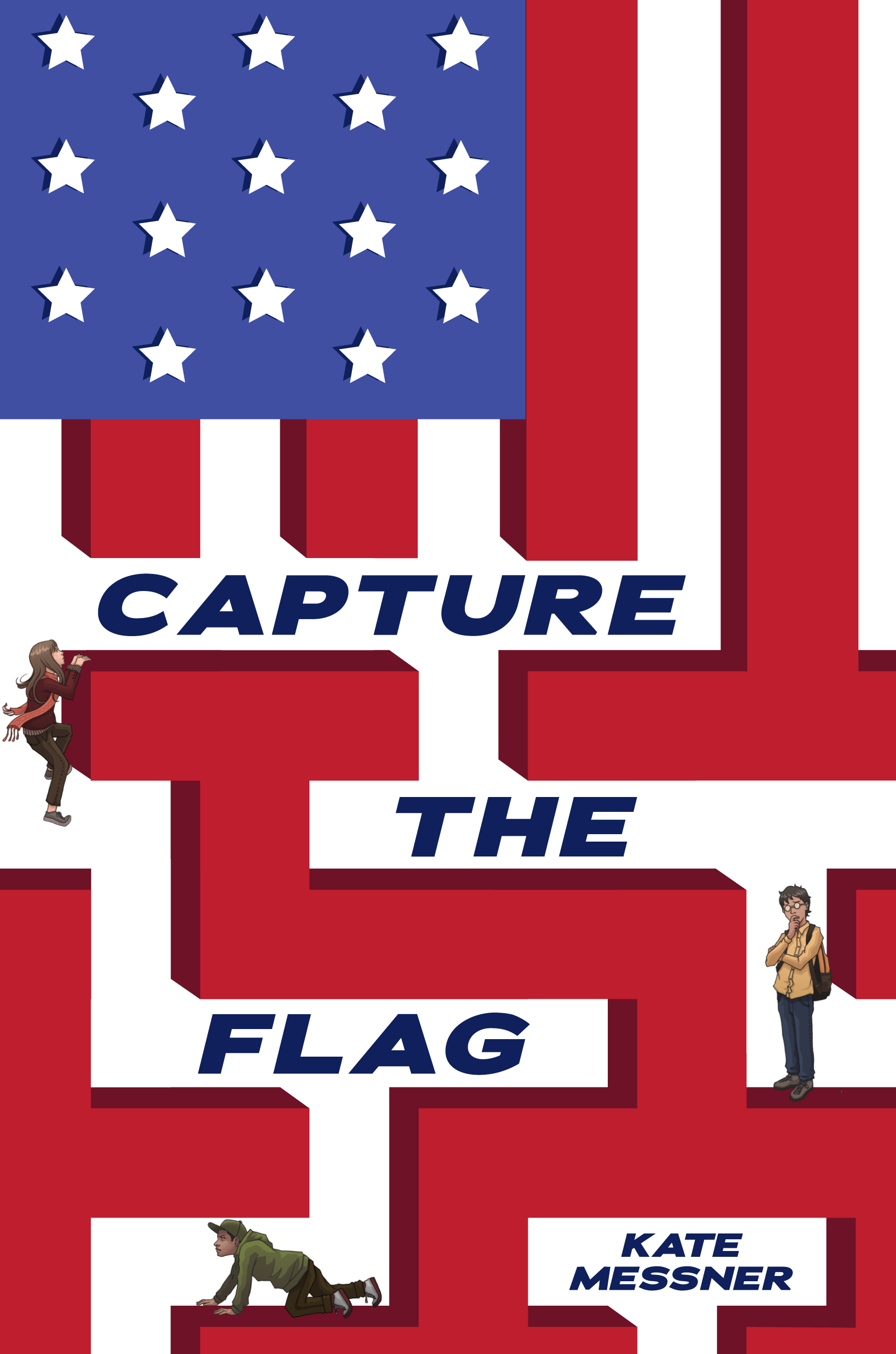
With vacation week, came some increased time for reading.   I had read Kate Messner’s book Real Revision as I looked at the writing process through author’s eyes, but I hadn’t yet read any of her works of fiction.  One, Capture the Flag, made it to the Maine Student Book Award List for last year, but I just hadn’t gotten to it.  A recent book fair at one of my schools led me to purchase Eye of the Storm, which had made it to several other states’ book award lists.  So I started reading the former by myself, and the latter with my son.  I must say, they each pulled me right in and I am anxious to see how the strong child characters she has created will resolve some immensely adult problems!

Capture-the-Flag

Watch the trailer: Capture the Flag

EyeofStorm1-198x300

Watch the trailer:  Eye of the Storm

Poet or Phoet?

It’s National Poetry Month and many schools are dusting off anthologies of poetry and kicking back with a “break from writing” to do some poetry.  With so many demands placed upon schools and teachers and a sense of urgency to demonstrate student growth in reading and writing, these will be the lucky kids.  In far too many schools, the curricula overlooks poetry in terms of writing.  The Common Core mentions it only  in the reading standards.  Ex.”Determine a theme of a story, drama, or poem from details in the text…” It is not included in the 3 major modes of writing (Narrative, Informative/Explanatory, and Argument).

Some classrooms invite poetry into their classroom beyond the border of the April calendar. There are numerous Poetry Friday resources and initiatives that teachers use and follow.  Here are a few you could check out..

http://www.kidlitosphere.org/poetry-friday/

http://poetryfridayanthology.blogspot.com/

http://readingyear.blogspot.com/

But the point of my blog this week isn’t just to encourage teachers to bring more poetry into their classrooms and lives – it’s to CREATE more poetry in their classrooms and lives. On my March 26th Blog “Teacher of Writing or Writing Teacher” I encouraged teachers to try out the writing that they are assigning to their students and to write WITH their students.  I think poetry is often one mode of writing that teachers are even more reluctant to ‘try out’ with their students than most others.

I’m not going to spend any time on this blog trying to convince you WHY poetry is a fantastic writing form that will deepen students understanding of our language, word choice, grammar, literary language, figurative language, sentence structure, punctuation, format, layout, etc  in a playful and creative format (well, maybe I just did a little).  What I would like to focus on, is encouraging you to TRY IT OUT yourself.

Most people I know (students and teachers alike) assert, “I’m not very good at poetry.” or “I’m not a poet.”  In fact, many worry that any attempt  they make will be seen as being a pretentious phony.  Some will say,  “I’m not sure what I’m doing.” or “I’m not really sure this is poetry.”  But emulating what you see and hear as poetry is exactly how we learned to write narratives and informational and persuasive types of writing.  We were exposed to many, many stories and articles and essays before we attempted to try our hand at them.  Why don’t we give ourselves the same courtesy when it comes to poetry?  If it looks like a duck and quacks like a duck…sure it’s a poem!

Following the assignments you give to your students is a great place to start.  Just jump in and play around.  They will respect your courage more than they will critique your couplets!  You will have a new found appreciation for the needs of your students when you are equally engaged.

Explore poetry outside of your classroom walls.  Play with poetry in your journal or create a private poetry notebook.  Collect poems, lines or ideas inspired from other poets.  Experiment with words and phrases without the pressure of writing a complete poem. Here are some other artistic ways to discover and create poetry that could inspire you to claim your rightful title of poet!

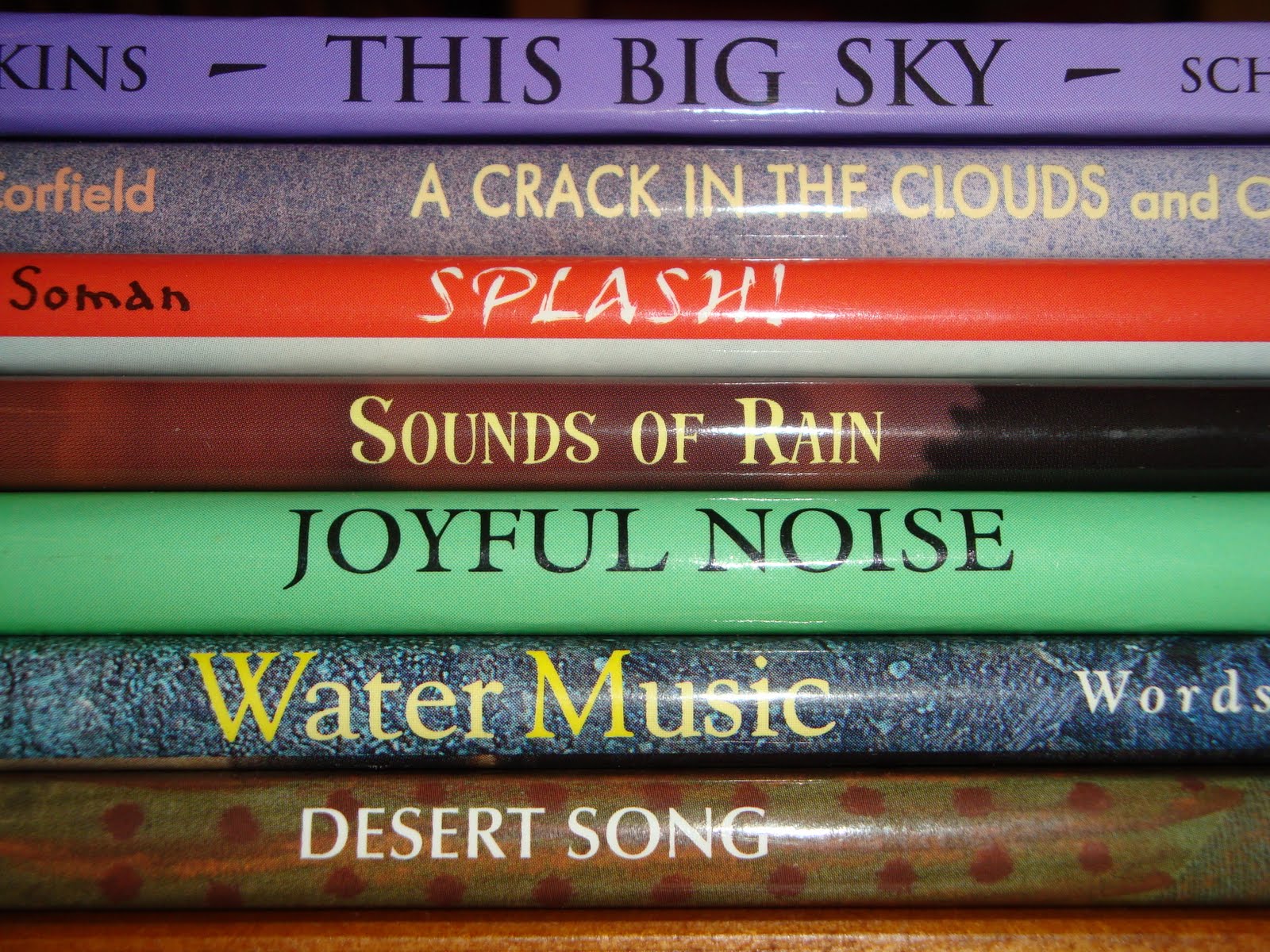
Book Spine Poetry

A fun poetic expression I’ve seen recently are posts online of Book Spine Poetry.  With this method you layout books with the titles on the spines arranged like lines of a poem.  You play around with titles and arrangements until the format represents the idea you want to convey.

Book_Spine_Poems_122

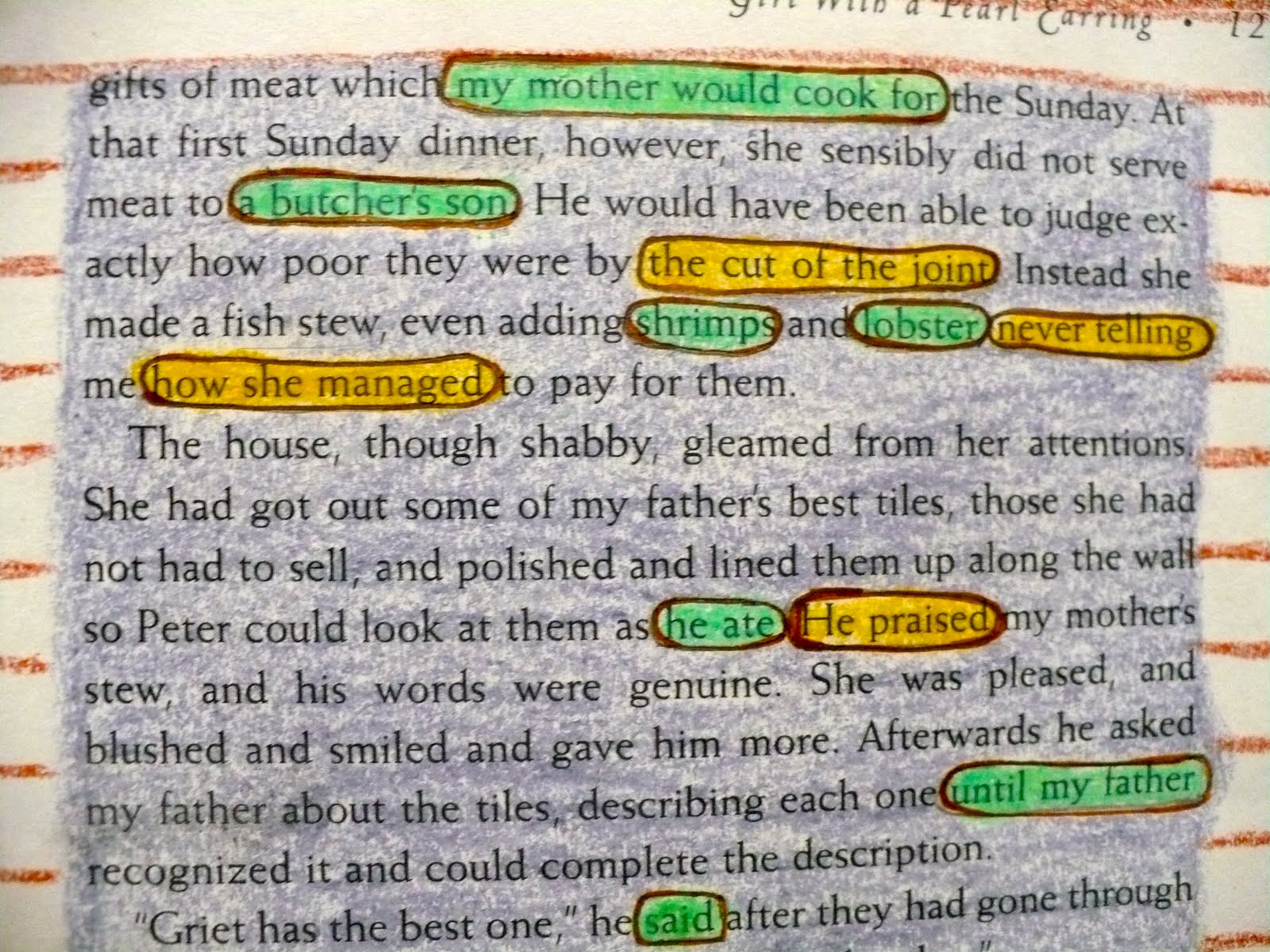
Found Poetry

Poets.org describes this as the literary equivalent of a collage.  These poets take existing text and refashion them into new poetry. You select a passage (not necessarily poetry) and highlight or cut out words, phrases, or lines that appeal to you. Then you rearrange the pieces into a satisfying format that creates an entirely new message.  Try this with the newspaper, or a magazine or even a professional text!  Feel the creativity and freedom that can come when you don’t feel responsible for conjuring the just-right words!  ReadWriteThink.org even has an online generator to help with this creative format!

images P1040166

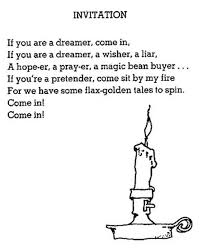
Micropoetry

How about Twihaiku?  Try out a poem in 140 characters or less on Twitter!  Some call it Micropoetry.   You can check out some up and coming micropoets here!  If you’ve only invested 140 characters into a poem and you don’t like it,  you can delete and recreate without much remorse!

stitches+poetry
tweetpoem2Magnetic Poetry

These have been around for years.  If you haven’t played with one, you should give it a try.  They have various themes and versions, but all have the same basic idea.  Choose words and arrange them until they represent an idea or concept you want to voice.  They aren’t meant to be permanent, so there is no pressure to create an ‘archivally brilliant’ poem!

images-1So, as you can see, YOU CAN BE A POET!  You aren’t being a phony if you use what you know to create something new.  It doesn’t mean it will appeal to everyone or that there is never room for revision and tweaking, but the fear of not being good enough, of being a Phoet, should be lifted from your shoulders.  Reframe what it means to be a poet and you could free yourself up to discover a creative side you never knew existed!


 What’s on My Book Radar?

51Atc9gc7GL._SX258_PJlook-inside-v2,TopRight,1,0_SH20_BO1,204,203,200_It is hard to believe that this brilliant book is now 40 years old!  If you still aren’t convinced that poetry is an important form of writing,  just look at how beloved and enduring this author’s writing has been to generations of children, teachers and parents.  You won’t see any of Shel Silverstein’s works listed in Appendix B of the Common Core, but you won’t find many schools in this country that don’t have at least one copy of his anthologies of poetry.  This week I want to flip through the book, land on a poem, and imagine reading it for the very first time.  Maybe I can recreate some of the joy I discovered when I first giggled through the lines of this masterpiece.images-2Happy Reading

FIND KIND

When given the choice between being right or being kind, choose kind.”-Wayne Dyer

For anyone who read the brilliant novel Wonder by R.J. Palacio, this precept is very familiar. It is one of my very favorite (of many) that Auggie’s teacher, Mr. Browne, shared with his students. Choosing kindness is just that, a choice, but it is also a principal to live by. After enough practice it becomes a habit, and habits become so ingrained that we sometimes don’t even notice.

But we do not need to wait for a situation to arise in which we are given the choice between being right or kind, we can live our life in search of opportunities to “Find Kind”. We can look for instances in which our acts of kindness would lift another person, benefit our community, or build the type of world in which we want to live.

To Find Kind, we just need to have empathy and an awareness of the struggles and challenges that those around us face.

I saw an amazing example of this precept this week. Some of us teachers were posting on Facebook about our frustration that an amazing education conference/retreat was taking place right here in our state (Maine) this summer and that the cost made it too prohibitive for any of us to attend. We were vexed by the notion of being ‘so close and yet so far’. Someone noticed that conversation and took it as an opportunity to FIND KIND!

Cynthia Lord, Maine author of Rules, Touch Blue, Half a Chance, and the Hot Rod Hamster series empathized with the frustration expressed, but moved beyond empathy to action. She responded in her own Facebook post that in part read,

I was sorry to read that some of my teacher friends would love to go to this event right in our own backyard, but it’s out of reach.

Another thing that I know about Maine is that people help each other. As a writer, I’ve been very fortunate this year. I just sold two more early readers and I figure what better way to celebrate that than to celebrate my state’s teachers who actually teach reading and writing.

This year, my family can afford this. So my husband and I want to send one of you to this amazing conference.”

From her own hard-earned money, Cynthia chose a teacher at random (from those who responded to her post) and paid for the registration and lodging for this teacher. All Cynthia asked was that this teacher share what she learned with the other teachers who also wanted to go.  Cynthia asked her to meet either online,  at a coffee shop, or in some other way to spread some of her new knowledge and learning. In that way, even more teachers and students would benefit from this act of kindness.

Needless to say, all of us were overwhelmed with Cynthia’s generosity and altruism. She went out of her way to find a way to show kindness to a group of teachers. Her husband, equally chose to be kind, to people he had never met. They weren’t asked for a donation or help…they created an opportunity for kindness. She did something as unexpected as it was generous to FIND KIND. Even those who weren’t ‘picked’ to attend the conference were changed by this act. I felt ‘lifted’ by knowing that I live in a state with such caring and compassionate people. The comments by others displayed genuine happiness for the teacher who was selected and not jealousy or resentment at missing out. I felt more hopeful and optimistic about people and life.

I didn’t write this post to encourage people to ask authors or celebrities or others to help them out. On the contrary, I wrote it to encourage people to find opportunities to offer kindness where it isn’t being solicited. To FIND KIND, you just need to notice, to observe, to listen, to care. To FIND KIND doesn’t require money either. Sure, money can help in a lot of ways, but so can a kind note, a home cooked meal, a ride to an appointment, a piece of chocolate! Random acts of kindness create ripples in our world. Many ripples can combine to create a wave.   Look around you, who do you know that could use a little ripple? Who do you know that is good at creating ripples? Your noticing and responding will help create a wave.

What will you do to contribute to a wave of kindness in your world?

How will you, FIND KIND?

What’s on my Book Radar?

Last month the Maine Student Book Award winners were chosen by students all across Maine.  Here are the top 10 and the number of votes they received.

1. Wonder                                 713
2. Cardboard                           433
3. The One and Only Ivan  365
4. One for the Murphys      308
5. The False Prince                233
6. Earthling!                            156
7. The Ghost of Graylock   139
8. Ungifted                               138
9. Capture the Flag               125
10. Island of Thieves            114

Students had to have read at least 3 of the nominated books in order to vote.  I was able to read 20 of the 40 titles.  There were 4 of the top 10 I missed, but rather than reveal them, I will quietly put them on my book radar and get them read by summer’s end. I’m happy to say I have a good start on next year’s nominees!!

MSBA Book Nominees 2014-2015

Welcome to My Reading Life

I wasn’t going to blog this week.  Whatever nasty virus that has been making the late winter circuit finally caught up with me.  I was out of school for two days, and my workload kept piling up.  It would  have taken something pretty special to inspire me to carve out some time for my blog this week.  That something special walked over to my desk yesterday afternoon.

At the end of the day, I was back at my desk in my glassed-in cubicle at school.  In walked one of the most timid 4th graders, looking a little nervous, as though she was afraid to bother me.

“Do you have a book recommendation?” she breathed.  So quiet was her voice I couldn’t quite make out the words.  “Do you have any book recommendations?” she repeated.  Now, I have met kids in hallways and classrooms all year long inquiring as to what they were reading and recommending books on the fly.  Kiley was the first to come to me and ask on her own.  I had several books in mind I knew she would love.  Cynthia Lord’s Half a Chance and Natalie Lloyd’s A Snicker of Magic were two of my recent favorites, that I was confident Kiley would dive right into.  Unfortunately neither were there at my desk, having been loaned out to others.

I asked Kiley if she’d like to read one of my new books that I hadn’t yet read and then tell me her review of the book.  I had a signed copy of The Waffler by Gail Donovan.  I told her that it was just announced as a nominee on the list for next  year’s MSBAs  (Maine Student Book Award) We read the book jacket together and she eagerly nodded her head notifying me that she’d like to try it. As she left, I found myself smiling.  I felt honored that she thought I  knew her well enough as a reader to recommend a book that she’d enjoy.

Well, that good feeling got even better today when Kiley walked over to my room after lunch   “I’ve got a book recommendation for you.”  she beamed.  From behind her back she pulled out a paper back and handed it to me.  “My mom got me this at the book fair.”  I looked down at a copy of The Power of Poppy Pendle by Natasha Lowe.  She looked so happy as I flipped through the book.

“Have you already read all of this?” I asked her.

“Mmm hmmm.  I read it as soon as I got it.”

“So you think I’ll like this one?”  Nod.  “Then I definitely have to read this.”  I asked her if I could keep it for the weekend  since I didn’t think I could finish it in one night.

“Yeah, sure!”  she smiled at me.    I thanked her profusely as she headed back to class. “Oh, and I’m half way through The Waffler.   It’s good!”

Now my pile of must-reads, gotta-reads, need-to-reads,  should-reads and wanna-reads is massive, but  you can bet I am carving time out of my weekend to read The Power of Poppy Pendle.  Not because I can’t wait to see the power Poppy is imbued with, but because of the power steeped in that gesture by Kiley and my eagerness to talk with her about it next week.

She saw reading as a way to connect with others. She recognized that reading experiences can be shared.  She had confidence in herself as a reader to make recommendations to others-even teachers.  She welcomed me into her reading life  and she knew she was welcome in mine.

That kind of medicine got me feeling pretty good again!

Teacher of Writing or Writing Teacher?


I had the good fortune to participate in a fantastic #engchat on Twitter this week. How We Write: Learning from the Process of Writing with Kelly Gallagher and  Penny Kittle,   Joining in were Meeno Rami, Georgia Heard and countless other educators with thought provoking tweets.  What made this chat so meaningful was that it wasn’t just about student writing, but encompassed teacher writing as well.  It really got me thinking about teachers and writers in a more profound way.

“You can’t call yourself a writing teacher if you are not writing yourself. “-Donald Graves

Occasionally I run into teachers who claim “I’m not much of a reader.”  Luckily that is a pretty rare occurrence.  In fact, the teachers in our district (Augusta, Maine) even have a 25 Book Challenge club going for the second half of the school year.  We have conversations about books we love (or hate) and recommend books to one another based upon our knowledge of teachers preferences as readers. We created a Facebook page to stay linked and up to date with our progress. It has created a community around reading.  We feel connected to other readers, we can appreciate what reading means in our lives and we share that passion with our students.

Now shift the conversation to writing…the declaration “I’m not much of a writer.” is something I hear teachers say all the time.  Maybe we need to look more closely at why this is so prevalent. More importantly, I believe,  we need to examine the question, “Does it matter?”   Does our lack of confidence in our own writing influence our approach writing instruction?  Does it shape how we respond and coach students to grow in their own writing?  Does the perception of our own abilities reflect in the perception of our students’ abilities?  How could it not?  Our reality is shaped by the prism of experience and beliefs through which we see our world.

When we are writers we can empathize with the act of putting our thoughts, ideas, and words on paper and waiting for a reader to judge their quality.  We can experience the vulnerability of receiving feedback that may be less than beaming praise.  We can understand how sometimes the ideas don’t flow, the right words don’t come, or the moments don’t explode the way we want them to.

When we are writers we can appreciate how much stamina it takes to stick with a piece you are sick of rereading.  We can see how someone’s’ “suggestion” just sounds like criticism.  We can see that coming up with ideas isn’t as simple as making a list of things we like.

When we are writers with our students we can make that mysterious process more visible.  We can show our students that not everything that is written is good (yet)! We can show students the moves a writer makes; the countless decisions that are made on the fly in the creation of even a single sentence.  We can show them the intention that is present in word choices, line breaks, sentence length, punctuation, repetitions, alliteration, figurative language, etc.  We can show them how WE struggle, how all writers struggle from time to time. We can help to build GRIT into the writing process.

When we are writers we can appreciate the joy that comes from completing a strong piece of writing.  We can understand what it feels like to hear people laugh at the parts that are supposed to be funny or cringe at the parts that are supposed to be creepy.  When we are writers we can experience the feeling of satisfaction when our revised pieces really  do look and sound better after our efforts.  When we are writers with our students we can celebrate those successes together.

When we are writers we can help our students to trust the process, to trust us. We can provide instruction and not just instructions.  When we do the same writing assignment we ask of our students, we can better see where those scaffolds might need to be created, what parts might be trickiest, where more patience might be required. When we take risks in front of them, they may have more faith that we really do honor risk taking.   Our credibility as a writing teacher takes on a whole new meaning.  We build stronger relationships with our students that go beyond the writing lesson.

If we aren’t writers ourselves how can we do this? Do you believe what Donald Graves said? “You can’t call yourself a writing teacher if you are not writing yourself.”

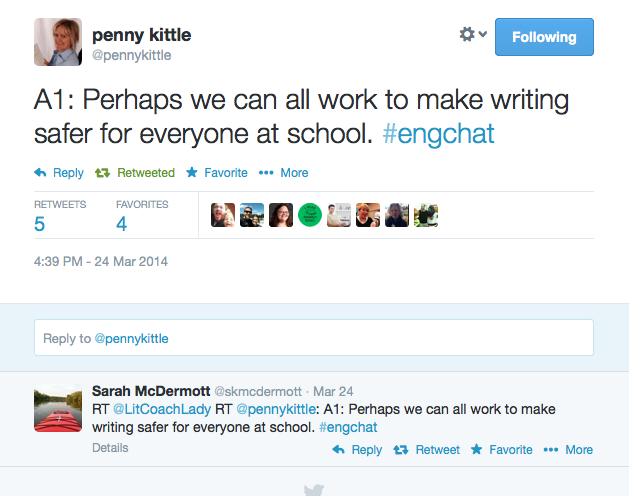
One tweet from Penny Kittle provoked some thinking about the environment in our schools around writing.

https://twitter.com/pennykittle/status/448242773401935872

So how CAN we work to make writing safer for everyone at school? How can we encourage teachers of writing to become writing teachers? How do we create a climate that supports writing and risk taking?  I’m sure there is no one right way, but I am sure it will require someone to be the impetus.  Someone will need to ask the question, “Do you think writing teachers should be writers?”  Someone will need to reach out to teachers to start the conversation.  Someone will need to take the lead in sharing their writing life with others. Someone will need to listen to their concerns and anxieties.  Someone will need to suggest some ideas.  Will you be that someone?

If you are interested in learning about what some other teachers are doing you could check out:

The 100 Words for 100 Days #engchat Challenge

TeachersWrite! with a new date  for 2014 from Kate Messner

The National Writing Project (NWP)

Edutopia Blog

The Atlantic

I’d love to hear how you are supporting writing in your schools and making it a safer place for writing to thrive.  Leave a comment or  find me LitCoachLady on Twitter.

What’s On My Book Radar

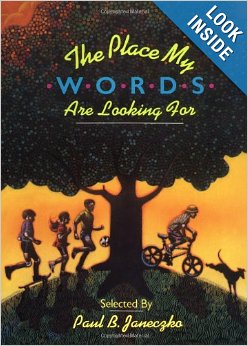
51hmVecabsL._SY344_PJlook-inside-v2,TopRight,1,0_SH20_BO1,204,203,200_The Place My Words Are Looking For is not new, but when Georgia Heard recommended it during the #engchat I knew I had to get my hands on it.  If you have ever wanted some insight into what poets thought process, inspiration or method for writing might look like, you need to check out this book.  39 poets share poems and their process.  What a great book to tie into the theme of teachers as writers.  We can learn so much from these authors as they teach us about writing and allow us a peek into their literate minds.

HAPPY READING (and WRITING!)

Got Grit?

If you aren’t familiar with the term Grit, you might want to look up so you don’t get run over by the bandwagon!  Seems the phrase and the topic pops up quite frequently of late.  Ironically I started writing this post and then tuned in to hear NPR run a segment this morning Does Teaching Kids To Get ‘Gritty’ Help Them Get Ahead? and another this afternoon On The Syllabus: Lessons In Grit.  I highly recommend giving them a listen.

Angela Duckworth is a psychology professor at the University of PennsylvTrue_Gritania who coined the term “grit” (yes, based upon the novel and/or movie True Grit)  She received the MacArthur “genius grant” for it in the fall of  2013. According to Duckworth, “Grit is passion and perseverance for very long-term goals. Grit is having stamina. Grit is sticking with your future, day in, day out, not just for the week, not just for the month, but for years, and working really hard to make that future a reality. Grit is living life like it’s a marathon, not a sprint.“-Angela Duckworth TED Talks April 2013

The concept of Grit goes hand in hand with Mindset, in particular with a  Growth Mindset.  People with a growth mindset believe brains and/or talent are a starting point, not the only point.  They believe that with passion, practice and perseverance (Grit!) goals can be achieved and talents can be developed.  With a Growth Mindset (and Grit) students can learn from struggles and even failure more successfully.  They embrace the notion that FAIL = First Attempt in Learning and the word yet follows most “I can’t” statements.

The work of researchers and educators at this point is to see whether Grit or even Mindset can be taught to students in schools.  I think over the next few years we will see some compelling studies and some supports for schools interested in fostering these traits with their students. Certainly the work of Carol Dweck and her Brainology program is gaining traction in many schools.

But focusing on students alone is not where my thinking has coalesced on the topic, what about the teachers? If a profession ever needed Grit, teaching would surely be one.  There are struggles and failures on a daily basis when one is tasked with the education of dozens of very distinct and unique individuals.  There are parents with whom we need to communicate, administrators we need to please, curricula we need to master and a public that often views us as social welfare recipients.  Teachers (especially elementary) are often expected to be experts at everything!  Talk about a recipe for failure some days!

I work with new teachers every year and often wonder who will not only make it, but who will thrive and excel.  I work with veteran teachers who have been presented with ever changing reforms, initiatives, standards and evaluation systems.  I marvel at those who face every challenge with tenacity and a positive attitude and I look for ways to support those who are frustrated and exhausted.  Most of us lie somewhere in the middle of this spectrum.

mindset-sphere-hi-res-original-d-rendered-computer-generated-artwork-31936958-1Maybe one way to build our Grit and that of our colleagues is to first be aware of our Mindset and our level of Grit.  Understanding how we approach challenge and/or failure could be a first step in learning new strategies for dealing with  them and help us shift our thinking more successfully.   You can check out the  GRIT SCALES here.

Another way might be to cultivate a climate of Growth Mindset with our colleagues.  We can celebrate and be inspired by the success of others without feeling threatened or judgmental. We can seek out and learn from feedback without seeing it as a criticism of ourselves as people, but rather as a tool for stretching our abilities and understandings. We can recognize and acknowledge effort.  The teacher who always lucks out with the “good class” isn’t just lucky.   We can examine what it is that she/he does to create those conditions year after year.  We can embrace challenge and spend less time resisting the inevitable changes that come each year.  Lean on one another, problem solve together, encourage, praise and coach each other.

We can model Grit for our students.  Let them see us struggle with something and not give up.  Show them how we work through problems.  Don’t be afraid to make mistakes.  Show them what stamina looks like in ‘the real world’.  Help them set long term goals and not just seek instant gratification.  Let them feel some discomfort in grappling with new and unknown and resist the urge to jump in too quickly.  Let there be silence as students endeavor to comprehend ideas, formulate thoughts and solve problems. Teach them the power of the word, YET by using it often.

I think we can all agree that success comes from talent, hard work, perseverance, and passion (and occasionally some luck).  How we help our students and ourselves achieve success will depend upon the grit we display as we grow and learn.  The mindset we espouse may very well determine how ‘true’ our grit really is.

Share your own ideas for teaching grit. 

I welcome your feedback as an opportunity to continue to grow and learn!

What’s On My Book Radar?

51gNghE+NvL._SY344_PJlook-inside-v2,TopRight,1,0_SH20_BO1,204,203,200_I finally got my hands on Natalie Lloyd’s Snicker of Magic.  I couldn’t wait to read the book I have been hearing so much about and I must say it has been worth the wait.  In fact, I have not yet finished reading it, I am totally savoring this one.  Felicity Pickle is a 12 year old girl who can see words as an aura around people and objects.  I am fascinated by the entire cast of characters who live and pass through Midnight Gulch, the town with just a ‘snicker of magic’ left in it.  Layered with compelling back stories of the history of the town and Felicity’s own family- this story is woven with a special magic from the first page! This will be one of those rare books I don’t want to leave, so I am in no hurry to finish. Oddly, I’m finding my ice cream craving has returned as well!!