Category Archives: Uncategorized

Let’s Look Beyond That Level

screen-shot-2017-02-04-at-12-33-20-pmThis is the time of year when many schools and teachers are assessing students to look at progress and recalibrate teaching to meet end-of-year benchmarks and goals.  This data can provide us important information for supporting our learners, but I also notice that it can cause some undo anxiety that I would like us to avoid or lessen. I want us to reframe our perceptions around these formative assessments and instead of dreading them, embrace them for how they can help us help kids.

In our district we do a writing prompt (cold write from a prompt) and we use the Fountas & Pinnell Benchmark Assessment for reading. These are not standardized tests with outside scorers, they are administered by teachers with various levels of expertise, experience, and investment in the outcomes. This is by no way an implication that we are incompetent, far from it. I am merely reminded  that we are humans and not machines who administer and score objectively.  This can have implications for the scores that students receive.  We need to be cautious not to take these scores as absolutes or statistically significant.  They give us a ball park idea of how our students are doing in relation to norms.

The levels themselves are not scientifically exact.  Human beings created and evaluated the benchmark texts to meet certain criteria represented by each level.  We know levels are often revised on books when we receive updated lists in which books are reassigned higher or lower levels. It is imperative to remember that books are a transaction between the reader and the text.  The background knowledge and schema a child brings to the text plays an incredibly important role in their ability to access and comprehend the information. A single book should never be the determining factor for the success (or failure) of a reader.

Arguably, the best purpose of these assessments is diagnostic. It is not the score that will help students moving forward, it is the observations and the expert teaching we can contemplate with next-steps to scaffold student learning.  A child may be “stuck” on the same level of books in two consecutive benchmark periods but may have become much more independent, fluent, flexible, and strategic in their reading.  This will not show up on a spreadsheet, but it is growth. It is success for that reader. If too much emphasis is placed on the level, it will be all about that level and not the observable and actionable behaviors or growth.

We cannot emphasize this enough to others…a child is not a level.  Johnny is not a level P. Johnny may be successful at books leveled P because they have the right mix of supports and challenges, but Johnny may read books at level S if he is interested, invested, and engaged with the subject.  He may feel more comfortable choosing books at an easier level for independent reading. Johnny should never think of himself as a level, or have limits placed on his choices that are tied solely to a level.

Finally, I see the expected benchmarks associated with these assessments as risk indicators.  Reaching a certain level should not be construed as SUCCESS or FAILURE. If a child attains success with the expected benchmark, they are at a lower risk of failure than a student who has not yet achieved that expectation, but that is not the same as failure. These scores can help us rethink who is at risk, and who may need more complexity so that we can plan for the growth of all learners. Many of us know stories of students who have ‘passed’ levels in one classroom or program but could not in another context. This should remind us that it is not an exact and statistically absolute score. Students who luckily pass a level may lose valuable services that they no longer qualify for, but still need. Not really lucky there! When passing a single text or writing a single story is the goal for success we are creating a high-stakes (high stress) test rather than a formative assessment.We have plenty of high stakes tests already imposed upon us.  Let’s not self-impose even more.

Assessment is not a dirty word.  It actually stems from the Latin “assessus“, which means seated beside. So let’s sit beside our students in the next month or so and assess what they bring to the table as readers and writers. Let’s not observe from a deficit model and focus on the errors. Let’s notice and build on their strengths, plan ways to support their needs, and look beyond that score that we log into a spreadsheet.  Let’s use the assessments as the teaching tool it was designed to be. Let’s reclaim our assessments as something positive for teaching and learning.

What’s On My Radar?

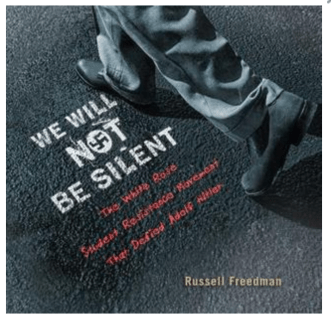
We Will Not Be Silent: The White Rose Student Resistance Movement That Defied Adolf Hitler by Russell Freedman
screen-shot-2017-02-04-at-12-23-34-pm

This text was just named an Honor Book for the  Robert F. Sibert Informational Book Award (for most distinguished informational book for children). I find it incredibly timely as we see a new generation of people who are building resistance to what they find unjust or unacceptable in their lives.

In this beautifully written text, Freedman tells the story of Hans Scholl and his sister, Sophie who were members of the Hitler Youth, but began to question the actions and beliefs they were required to embrace. Together with some friends they formed the White Rose movement in which  members distributed leaflets urging Germans to defy the Nazi government. They risked imprisonment and death to stand up for what they believed.  The archival photographs and prints help us to visualize the world at that time and see just how much resistance the White Rose would need to build to change the minds of their countrymen who could not resist the influence of the Nazis. Powerful story.


Democratic Literacy

Spoiler Alert-if you need a break from political discussion you may want to keep surfing the web! This post may contain images that are offensive to some-they are not intended an endorsement of any position, but used to demonstrate the the variety of messages/images readers may face.

This past weekend I joined millions of women, men, and children in marches that exemplified one of the rights and privileges of our democracy.  As I was packed into the National Mall in Washington D.C. I was surrounded by signs that held significant meaning to their creators.  As a teacher, I couldn’t help but think about the literacy skills that I used to interpret the messages as intended. To be an informed citizen in our democracy I think it is imperative that we recognize those skills our students will need to interpret the information coming at them. Sometimes we assume that the simpler the text, the easier to comprehend, however it can actually make it more difficult. We cannot take for granted that our students possess a proficiency with these skills.

There are so many inferences that need to be made, background knowledge that needs to be referenced, context that needs to be understood, bias that needs to be recognized, and connections that need to be made to read and comprehend the intended message from a “simple sign”.

Consider these…

What visual literacy skills would help them to understand these signs?

What vocabulary would students need to have to understand the intended message?

What cultural references might readers need to understand these signs?

What language references might readers need to comprehend these signs?

What literary references would help readers appreciate the message of these signs?

What analogies or play on words would support readers interpreting these signs?

What historical context would help to make these signs relevant?

We cannot assume that students can identify bias or recognize the context when comprehending the text. Many of these signs do not make sense or take on unintended meaning if read literally. They require the reader to bring experiences and knowledge to the reading task.  It is our job to help our students do this.

Our democracy depends on a literate society.

What’s On My Book Radar?

screen-shot-2017-01-25-at-9-16-45-pm

Freedom Over Me: Eleven Slaves, Their Lives and Dreams Brought to Life by Ashley Bryan

Author Ashley Bryan used real documents from an estate appraisal dated July 5, 1828 in which 11 human beings were being sold as slaves after their owner had died. Bryan tells the stories they couldn’t tell with gorgeous paintings that portray the people she envisioned behind the property lists, and imagines the lives they may have lived with poems that give voice to their experience.

This important book just won a Newbery Honor award at this week’s ALA Youth Media Awards-so glad it was recognized as an outstanding contribution to children’s literature. It is also an incredible contribution to the historical understanding of a terrible time in our nation’s past.

I Wish People Knew…

We know teaching is a difficult profession. (Well you do if you are in it!) One of the things that makes it difficult is when we feel invested and  truly care about the children we work with.  This week I witnessed just how difficult it can be as I watched no less than than three teachers reduced to tears by their circumstance.  Difficult parents, reluctant students, and an inability to fix everything.

We can’t expect to get a lot of empathy from people outside the profession who think our job is easy, or that we aren’t working long enough or hard enough, or that they know more about teaching than we do. We can’t expect help from people who pass mandates that ask us to do more with less, who cry “more money won’t help” and “class size doesn’t matter”, or who think the quick fix (and only fix) is simply opening charter schools and passing out vouchers for ‘choice’.

Sure, there are many parents, friends and family members who support us but it can still be overwhelming and at times we feel alone. The thing is, we aren’t. I think it is increasingly important that we seek and give support to those who walk in our shoes everyday. I saw it when I witnessed other teachers rally to comfort the tearful teachers. They knew. They empathized. They had been there.

These distraught teachers were not “whiners’. They were genuinely stressed by circumstance and demands and I thought they displayed courage by reaching out for support. I think we need to do more of this. I also know that it isn’t just the circumstance of the day that can be the tipping point for us. We carry our entire lives into our classrooms with us that acts as a base layer for our days. We don’t shed our personal stresses, concerns, health, or hopes at the door. We are humans, not robots.

At a workshop I facilitated yesterday, I wanted to bring that sense of empathy and community to our large staff. We all know each other, or think we do. Yet each of us sitting there brought  all of our ‘outside life’ into the room. It is unavoidable, it’s as much a part of who we are as our DNA is. So before we began, I wanted us to approach our learning together with open hearts and a genuine caring for one another, our profession, and the work we do as we live our lives.

I asked each teacher to anonymously fill out a slip:Screen Shot 2017-01-14 at 7.26.13 AM.pngThen we mixed up the slips and shared them at different tables to protect the anonymity of the writer. Here are some of the responses we read:
I wish people knew…

  • How difficult it is to take care of my mother.
  • How much I miss my babies.
  • I struggle to find nice things about myself that I like.
  • That I have social anxiety.
  • How much I work to make things less stressful for others.
  • That mornings are hard for me.
  • I’m dealing with a parent whose health is declining.
  • That if feel nervous in big crowds.
  • My anxiety controls me.
  • I was pregnant.
  • Sometimes I feel guilty that other people’s kids and not my own get the best parts of me because I’m so exhausted by the time I get home.
  • That I have a hard time showing emotions.
  • I worry about my adult children.
  • That it was my birthday.
  • That at school I feel very alone teaching.
  • How much the school means to me.
  • My dog is getting really old and it is breaking my heart.
  • That I grew up in a low income project in a city and that we lived off state welfare.
  • How discouraged I am due to the variety of student levels in my room.
  • I am always exhausted.
  • That the financial stress of planning a wedding is killing me softly.
  • I am still dealing with the death of my dog.
  • I have a horrible memory.
  • The heavy heart I carry.
  • How much I worry about my students’ home life.
  • I have a baby on the way.
  • Both my boys are in the military. That’s scary
  • How insecure I can be about my teaching.

There were dozens more. Each were equally touching and honest.  I can’t help but think differently about my staff now.  When I look into their faces, I have so much more empathy for the human beings they are, not just the teachers they present as. I thought I knew them all well, but there are so many levels of knowing!  As teachers, we acknowledge and grieve that our kids have struggles.  Let’s try to remember our colleagues do,too. Let’s continue to lift one another and be a light when things are dark.

What’s On My Book Radar?

screen-shot-2017-01-14-at-7-47-26-amSCAR ISLAND by DAN GEMEINHART

I have loved every one of Dan Gemeinhart’s novels and not a one is in any way similar! He creates such strong characters, exquisite settings, and edge-of-your-seat plots! Each one I read I find myself saying, “This is my favorite!” In this couldn’t-put-down middle grade novel, Jonathan Grisby is sent to Slabhenge Reformatory School for Troubled Boys, but it’s more like a dungeon on an island. He’s done something so terrible, he cannot bring himself to tell anyone about it. When something bizarre happens on the island, the children find themselves free, but then they must grapple with what freedom really means. It’s not what any of them expected. This book is like Dickens meets Lord of the Flies! Do yourself a favor and get a copy …NOW!

Secure Your Own Mask First!

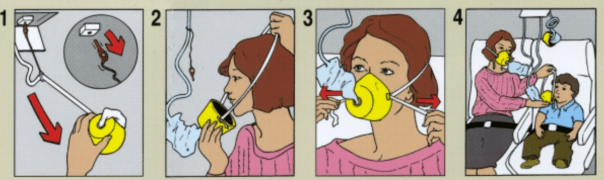
screen-shot-2017-01-02-at-9-14-20-pmThere’s a reason airlines advise their passengers to “Secure your own mask first before helping others.” It may sound harsh, but they know you can’t help others when you are incapacitated. It’s advice we need to take to heart more often.

We’ve just come off some much needed down time from teaching.  For some, spending the holidays with friends and family was restorative and relaxing. For others, the opportunity to travel was exciting and enjoyable. For a few of us, the days may have been hectic and stressful.  But for all of us, it was time to focus on personal needs and choices- we received a little much needed oxygen.

As we transition back into our working lives, it is important to make sure we keep that oxygen mask secure when the pressure changes.  That oxygen mask is teacher self-care that will help us thrive in 2017.

So what can that self-care look like? It looks like kindness. It looks like patience. It looks like nurturing.  It doesn’t look like sh*#%d.  One of my mantras is “Stop “shoulding” all over yourself!” So as I offer some suggestions for self-care, try to avoid turning them into “shoulds”. That just leads to guilt and stress.  Rather, think about the care, nurturing, and advice you would give your child or any child and offer that same kindness to that child you see in the mirror each day!

BREATHE.  Seriously.  Most of us BREATHE shallow breaths that  leads to a poor exchange of oxygen and CO2 in the bloodstream, depriving our bodies of both vital gases. It’s like we are in a constant state of hyperventilation. We sometimes hold our breath when we are stressed or upset.  We are rarely aware of our breathing unless we are ‘out of breath’ or have a cold.  Watch how babies BREATHE, deep relaxing breaths from their abdomens. When you feel stressed, anxious, or tired check in with your BREATHING.   Before the kids walk in the classroom take a few deep, cleansing breaths. Feel the oxygen filling your lungs and nourishing your body. BREATHE out the stress and anxiety. When tension levels peak during a lesson, take a few deep breaths before reacting. When the kids walk out the door take time to BREATHE deep and be grateful for the day. When we take time to focus on our breathing we are present in that moment and focusing on the gift being alive. Isn’t that really the most important gift we have?

SLEEP.  This is a tough one for me.  Life seems so short and there is so much I want to do, (so many books I want to read!) SLEEP sometimes seems like a waste or a luxury.   But researchers are finding an increasing relationship between SLEEP and health; both physical and mental.  Lack of SLEEP is related to weight gain, high blood pressure, heart and kidney disease, memory loss, depression… A more recent study shows a 20% higher risk of car accidents when people don’t get enough SLEEP. There is no lesson plan, no grading, no studying that will offer you the health benefits that SLEEP will.  Think about it!

MOVE.  Most of us aren’t going from Couch to 5K, but we can all MOVE a little more each day.  One of the best things I did to monitor my movement was investing in a FitBit (or pedometer). I notice a huge difference in the way I feel on the days when I get very few steps in.  The health benefits for our bodies are well documented, but our brains also thrive when we MOVE. A recent study involving 120 people found that walking briskly 30-40 minutes a day three times a week helped to “regrow” the structures of the brain linked to cognitive decline in older adults.

If you find yourself sitting a lot at work, try to stand up every 30 minutes.  Walk around your classroom to monitor student work or vary where you address your students. Park further from school, walk to talk instead of sending email, make more trips to your car instead of carrying large loads. Try to get outside and walk before/after school, during lunch, or planning periods.  You can “work and walk” or you can take a brain break and MOVE.  Have walking meetings with colleagues! This isn’t leisure, it isn’t frivolous, it’s serious self-care. Encourage others to join you and think kindly of others who do it. They aren’t slackers-they are nurturers!

EAT.  But do it consciously.  I will never be successful with a restrictive diet-for long.  I EAT for more than nutritional reasons and I get that. It’s social. It’s festive. It’s fun.  If dieting was easy, I’d be Twiggy! What I can start to do, is EAT more mindfully.  I can think about whether a food is ‘calorie-worthy’  or ‘me-worthy’ when I choose to EAT it, and if it makes the ‘cut’,  I want to enjoy it-NO guilt.  Taste it, savor it, sit with it! If I slow down and really notice how it tastes and makes me feel, I’ll probably eat less more naturally. If I decide I really want something,  I can think about portions and pace and stop making myself feel guilty-robbing me of some of the joy that food was intended to give me! Stop thinking about deprivation, and focus more on appreciation!

STOP. We all have had that experience when we are driving someplace and realize we don’t remember going past something. We are on auto-pilot.  We do that during our workday as well.  The day is almost over and we realize we didn’t get everything done, or we feel stress as the day goes on, finding little things setting us off that normally wouldn’t.  If we just STOPped periodically to check in with ourselves we might find we can change the trajectory of our day and choose a direction that is helpful.

Transitions are a great time to STOP.  We can invite the kids to join us. “Ok, before we start (next lesson) let’s stop for a minute and think about (previous lesson) and how that went for you and what you need to be successful next.” Or “Let’s just stop and take a couple deep breaths to get our minds ready for (whatever is next)”

We can just check in with ourselves as well.  Ask yourself, “How am I feeling right now?  What do I need? What’s going well?”  Too often we only reflect on our difficulties and not successes. STOP to notice and then celebrate, too!

LOVE.  Before you find yourself getting bogged down in the minutiae of teaching and working, think about what you LOVE about teaching and try to give that the bulk of your energy and time. Find something to LOVE about each of your students (and colleagues) remember that when the going gets tough.  LOVE what you do. LOVE those you do it with. LOVE yourself and self-care will be a focus of all your actions!  “Where there is LOVE, there is life.” –Gandhi

So grab that oxygen mask, take a deep breath, and then you’ll be ready to help others!  Happy 2017, my friends!

What’s On My Book Radar?

screen-shot-2017-01-07-at-8-51-42-am

All We Have Left  by Wendy Mills

There have been several wonderful books about the September 11th tragedy on the 15th anniversary (nine, ten: a September 11 Story, Towers Falling, The Memory of Things, Eleven,and  Just a Drop of Water, to name a few.  I’ve just added Wendy Mills’ beautiful novel to my list.

Two girls’ lives intersect 15 years after the terrorist attacks of September 11th. This YA novel tells the story of 16 year old Alia, a Muslim who finds herself in the World Trade Center on that fateful day-she shouldn’t have been there. It also tells the story of Jesse, now 16 years old, whose brother Travis also should not have been in the tower and was trapped with Alia. Wendy Mills weaves these stories together beautiful and surprisingly as we see how hatred and love walk such a fine line in our lives. For older readers. Mills doesn’t hold back on the tragedy of that day as she seeks to share the heroism and humanity that still impact our lives today.

My One Word

On this last day of 2016, many of us will spend time reflecting on the year that has been, and contemplating the year that will be. For me, I am happy to be leaving 2016 behind. Sure there were many wonderful moments personally for me; my book Close Writing was published, my daughter graduated as Salutatorian of her class, we took my son to NYC for a belated birthday gift, we were all blessedly healthy, and I have the best husband a woman could ever hope for.  Still, beyond my small circle, there was a darker presence that haunted 2016…anger, fear, and bigotry. It was hard to witness and many of us were stunned by its repercussions.

So rather than make a series of personal resolutions (that have little chance of success) I want to focus my energy on one thing. I’m sure many of you have heard of My One Word. The idea is to ditch the long list of resolutions and narrow your focus to a single word. When I thought about the kind of person I want to be in 2017 and the impact I want to have I kept coming back to one word:

love-paula

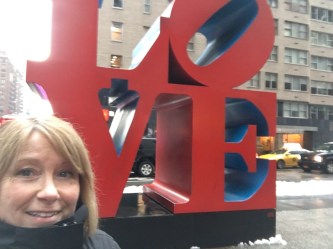
I know LOVE can seem like a frivolous, saccharine, and often hollow word that gets tossed about. It can be a feeling people hope and wish for, but I believe it is more importantly an action. It is a choice. It is a stance.

So how will this ONE word guide me in 2017?  Will I have to love everything everyone does? NO! Quite the contrary. There is so much I have witness that I do NOT love. But with each witnessed event, I have felt compelled to put more LOVE into the world to counteract the hate. I know I am not alone in the quest! (I mean, this certainly was prevalent in 2016.)

screen-shot-2016-12-31-at-8-08-37-am

But it must continue beyond a campaign season, in fact it is even more important after this campaign season.  If we think about how to generate more LOVE I believe we will find ourselves choosing to be more:

  • Kind
  • Patient
  • Helpful
  • Empathetic
  • Compassionate
  • Fair
  • Passionate
  • Progressive
  • Forgiving
  • Open
  • (add your own here)

These are all acts of LOVE. We can focus it outward to our families and friends with physical and emotional kindness and assuming best intentions when we disagree.  We can focus outward to our communities, country, and world with charity and actions that benefit, protect, and stand with others. We can also focus it inward to LOVE ourselves when we make choices that are healthy, joyful, and enriching.

So that is my word for 2017. I know I won’t be perfect, but part of LOVE is forgiveness and reassurance.  LOVE can be a very powerful action, especially when it gathers its force together…latest

Wishing you more LOVE in 2017…What is YOUR word?

What’s On My Book Radar?

I’ve read several KidLit books over vacation, but I also was blown away by my “grown up” book choice this week.

THE UNDERGROUND RAILROAD by Colson Whitehead
screen-shot-2016-12-31-at-8-35-28-amThis book held me in its grip from page one. Colson Whitehead has written a brutally revealing story of the ‘business’ of slavery in the pre Civil War south, but he pulls us into a literal Underground Railroad where engineers and conductors operate under the southern soil. We escape with Cora, who is coming of age on a particularly cruel plantation, and witness the tortuous treatment of human beings inflicted by those ‘privileged’ to be born with less melanin. I was biting my nails and turning the pages furiously to follow Cora and pray for her delivery-and yet cringing at the fate of those who tried to help or love her. I would LOVE for everyone to read this book when they are thinking about making America great again, and asking themselves what ‘great’ means to whom.

My “Best of” Kidlit 2016

One of my favorite things about this time of year (other than Christmas and a vacation from work, obviously) are the BEST OF lists that proliferate social media. It’s a great opportunity to reflect on the year that was and think about wishes for the upcoming year. I’ll keep mine short and sweet so you can have time to read others, bake (and eat) some cookies, visit with friends and family, or dive into a good book (or ten).

My BEST BOOKS of 2016

Kidlit is my preference when I bookshop. There were SO many this year that I loved, just follow me on Goodreads to see them all. Here are a few that I just can’t stop thinking about: (in no particular order)

Picture Books:

Nonfiction

Middle Grade

YA Novels

I’m sure I’ve forgotten a few so for those of you who can’t get enough LISTS…here is a compilation of other “BEST OF” Lists to help you plan your vacation reading.

And don’t forget to watch for the 2016 Nerdy Book Award Winners at https://nerdybookclub.wordpress.com

screen-shot-2016-12-22-at-9-39-54-am

Thank you to all the authors and illustrators who put in the lonely, tireless hours creating these amazing books for us.  You are my heroes. Here’s to those future books-in-progress and those ideas coming to life that will give us another great year of reading in 2017.

How We Engage with Nonfiction Matters!

This past week I attended a Heinemann workshop with Kylene Beers and Bob Probst. I am a huge fan of their Notice and Note Signposts to help alert readers to significant moments in literature.  Though I’ve had their new book Reading Nonfiction: Notice & Note Stances, Signposts, and Strategies I honestly haven’t had the time to “unpack” it. In fact, I loaned my copy out and it’s MIA.

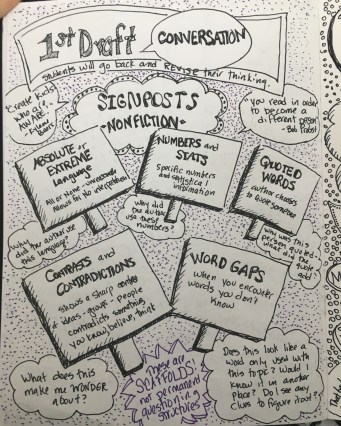
So I was excited to hear Kylene and Bob speak to it. What I particularly love is that they don’t advocate using the signposts as the goal for reading, only as a possible stance for reading.  They believe scaffolds should be temporary and fading, as the reader no longer needs them.  This is at the heart of my belief in teaching and coaching as well. So learning and teaching the signposts is not an end in itself, it is a means for engaging with texts more meaningfully as needed.

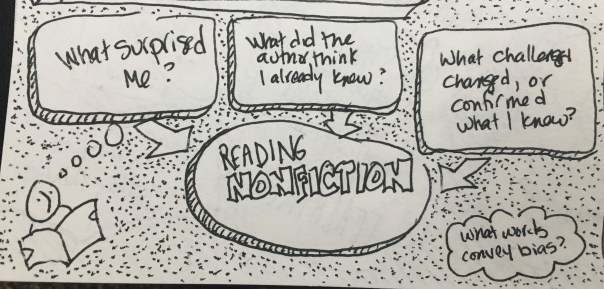
Very often our students read nonfiction, but aren’t “engaging” with it.  By that I mean, they aren’t asking themselves “so what?” or “what does this mean for me?” They read it to recall important facts and supporting details.  Maybe that’s fine sometimes, but I think we’ve seen in the past year just how important it is for people to become more critical consumers of information.

So using these 5 Signposts for Nonfiction can help our students tune in to what they are reading more critically:

  1. Contrasts and Contradictions
  2. Absolute or Extreme Language
  3. Numbers and Statistics
  4. Quoted Words
  5. Word Gaps

img_6152

But my biggest take-away from the day was to encourage our students to:

ADOPT A QUESTIONING STANCE AS YOU READ!img_6151

Even if our students just started doing this more often, I believe the level of engagement would be raised and the depth of thinking would increase.  So don’t feel like you need to wait until you teach all of the signposts to your students before you can get started with closer reading of nonfiction.  Invite them to take a questioning stance as they read NOW. Then weave in specific signposts to help guide their analysis and interpretation of what they read.

How we engage with nonfiction matters.  If we want our students to be more critical thinkers, we need to teach them to read more critically.

What’s On My Book Radar?

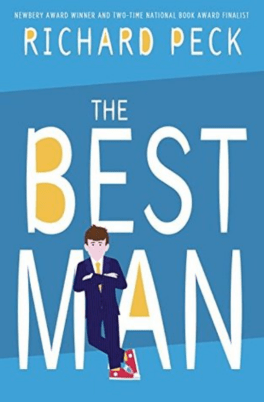
screen-shot-2016-12-12-at-10-39-45-am

Wow, I had this book on my TBR stack for awhile and it kept getting passed up for some reason. So glad it finally made it to the top…it is FANTASTIC!
Richard Peck has written a hilarious and yet thoughtful book that I wish everyone would read. It is about growing up both physically for the main character, but also emotionally for the readers of this powerful story.

Archer is a 6th grader who recounts his elementary school years with a touch of naivete and nostalgia and a huge dose of humor! He seems to be the last to know his beloved uncle Paul is in love with his teacher, Mr. McLeod!  With a loving family and role models to guide him, Archer learns to be the BEST MAN he can be!


I cannot recommend this book enough. You will laugh, you will cry, you will THINK about what it is that makes us who we are as humans. Love is love. And I love this book!


The Homework Message We May Want to Rethink

screen-shot-2016-12-02-at-6-36-54-amThis post is going to be brief.  Anyone who follows me on social media knows my position on homework. I’ve shared research on its efficacy and effects. Today I just want to focus on one aspect, and I believe it is THE most important.
We just had Thanksgiving, and for a month I was immersed in the gratitudes of others and learned what they valued in life. It was uplifting and inspiring. People listed friends, family, trips, nature, fun and games, and health.  I have to believe these are the blessings that they wish for their own children as well.  So for the month of November, those were the messages they were giving their children.

Sadly, for many children, those are not the messages they are given the rest of the year. The message they are presented nearly every day is:

The most important thing in your life is WORK.

That message isn’t delivered in those exact words, so much as it is in actions and reactions.  Think about a child’s life.  They go to ‘work‘ (because school is the child’s work) 7 hours a day, and then they are often given several more hours of work to work on after work. Homework is expected to be a priority after working all day-which was also a priority. For many, if they don’t prioritize homework first and complete it, there are negative consequences…failing grade, loss of recess, detention… shame.

The message many of them are receiving is that your friendships aren’t the priority (play with your friends if and when you get your work done), your health isn’t a priority (deal with that stress, anxiety, illness, or sleep-loss and get your homework done), your experiences aren’t a priority (it doesn’t matter that you went to your sister’s soccer game-you need to get your homework done), nature isn’t a priority (going for a hike with your dad isn’t an excuse), play isn’t a priority (no recess because you didn’t work enough), family isn’t a priority (your parents can be tutors and you, their student-instead of engaging in ‘normal’ family activities).  I know these may sound extreme to some, but I also know that my kids have experienced every single one of these messages. They are often very subtle…but they are pervasive.

I earnestly want us to have conversations around this topic. (I haven’t even addressed the efficacy or other aspects of homework that warrant discussion) I want us to think about what we really want for our children.  Yes, we want them to succeed, but I think we need to define what success in life REALLY is.  What kind of life do we want for our children? What do we want them to value?  What priorities do we truly want them to make for themselves and their own children?

What message do we really want to send to our children about our values and priorities? What role do we want WORK to play in our lives?

Screen Shot 2016-12-02 at 6.57.47 AM.png

What’s On My Book Radar?

screen-shot-2016-11-30-at-8-50-27-pm

FINDING PERFECT by Elly Swartz

Molly’s mother leaves the family for a year to take a job in Canada. In trying to deal with this loss, she hatches a plan to bring her mother home: win the Lakeville Middle School Slam Poetry Contest. Molly finds herself trying to perfect her chaotic world, but her desire for perfection is turning into habits she can’t control. She’s not sure who she can turn to for help or advice. This is powerful story that can shed a light on a problem (OCD) that afflicts many people and bring some empathy and understanding for others’ struggles.  If you are trying to offer more windows and doors for the students in your classroom, I would encourage you to bring this gem into your libraries. This debut novel from Elly Swartz is nearly perfect!

3 #NCTE16 Takeaways To Impact Teaching and Learning

If you’ve ever been fortunate enough to attend a large national conference, you know that you can often come away feeling exhilarated, but overwhelmed.  So many ideas, so little time to reflect and then implement them all.  I have found 2 approaches to be helpful in supporting my learning and assisting me in coming away with actionable ideas and I believe they could help you, too:

  • Sketchnoting
  • Synthesizing

Sketchnoting

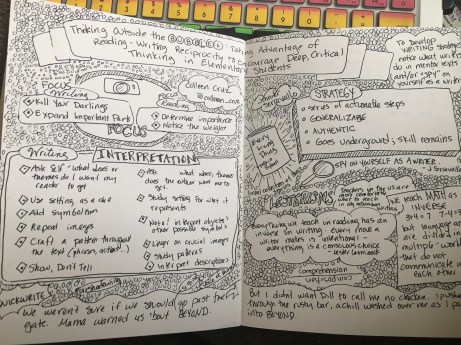
I’ve been doing this for a few years now, and it has really shaped the way I think about new information coming in.  As presenters share their ideas, my brain is thinking about what does that mean for ME and MY STUDENTS/STAFF?  What are the big ideas I want to be able to remember and take back?  What words resonate with me?  What resources do I want to seek out? What quotes will inspire me to act? If I don’t think it is something I would intentionally use, I don’t jot it down. If it doesn’t inspire me to grow, it doesn’t go in my notebook,  I just listen and absorb it.

img_5287

These are a few of my #NCTE16 Sketchnotes. You can see them all by CLICKING HERE.

Synthesizing

During the conference, I start thinking about how the sessions relate to one another. How could this presentation, support that presentation? What do many of these have in common? What is a theme I could extract from these? That helps me to categorize sessions by topics such as: writing strategies, teaching inspiration, book/author love, power of reading, etc. I often find myself choosing sessions that fit into themes I want to explore more deeply rather than sampling a huge variety of topics.

On the trip home, I continue synthesizing these ideas. Sitting with my sketchnote book, I begin to pull my takeaways-the big ideas I want to hold onto. Here are 3 of the biggest for me.  I’d love to hear what yours are!

#1 Reading/Writing Reciprocity

This isn’t new to most of us, but a renewed emphasis on the correlations is helping me to think about how to scaffold my students more effectively.  When we asked our students about what they have read (comprehension) we can invite them to ask, “What did the writer do to make you think that?” (composition). Everything we do as readers is because of something the writer did. Helping them to understand that purposeful connection as seamless can help them reflect on their own process for composing and comprehending.

We teach inverses in mathematics that help our students develop numeracy. If we think about teaching inverses with literacy we can help them to become more literate. Rather than teaching writing workshop and reading workshop separately, how can we make them more seamless? How can we help those worlds communicate with each other more effectively rather than dividing them up?

  • How can YOU help students use these literacy inverses to help them grow as readers and writers?

#2 Students as Learning Partners

The key to encouraging students to become more self-directed in their own learning is to cultivate engagement rather than compliance.  Too often our classrooms are structured to ensure compliance to our rules, our expectations, our instructions. If we shift our focus toward increasing engagement, we will have students invested in their learning for themselves, and not just to please us.

First, we need to understand and cultivate the 3 Dimensions of Engagement

  1. Behavioral (the quality of students’ participation in the classroom and school community)
  2. Emotional (the quality of students’ sense of belonging and degree to which they care about learning)
  3. Cognitive (the quality of students interest, ownership, and strategies for learning)

I’ll examine these dimensions in a future blog, but we can begin by creating relationships with students that don’t just foster a more positive classroom climate, but that establish a dynamic in which students feel invested and included in the design of the classroom. These relationships are essential for understanding the complex identities of our students in order to partner with them in their learning.  Building strong relationships says, “I see you.   I hear you.   I am here for you.”

We can then develop “partnerships” with students by:

  • Using students’ writing as mentor texts
  • Asking students to teach/lead “expert” groups if they have a desire and strength in a particular area.
  • Inviting students to create the anchor charts in which to teach/learn
  • Asking students to weigh in on planning lessons and assessments
  • Encouraging students to give the book talks/recommendations to classmates
  • Helping students create FLIPPED lessons that can be taught to others

There are dozens more ways, but you get the idea.  We don’t need to be the gatekeepers of learning in our classrooms when we can energize and encourage students to be our allies in this journey.

  • How can YOU partner more with students to create engaged learners in your own classrooms?

#3 Books Save Lives

img_5260
Paula Bourque Sketchnotes #NCTE16

Literally. I can’t tell you how many stories I have heard from authors and speakers who tell of the influence of a book on their lives-even to the point of saving it. But more often than preventing someone from taking their life, books save lives in ways we may not see or be aware of for years. They can save someone from a life of:


  • isolation
  • prejudice
  • ignorance
  • loneliness
  • fear & bigotry
  • anger and hatred

We need to have books that act as mirrors (in which we can see ourselves) and windows (in which we can see into the lives of others) now more than ever.  The fear of “otherness” has done great harm to people throughout history, and those who fail to learn from history are, as they say, doomed to repeat it. We need our students to see that ALL children have hopes and fears, dreams and aspirations, friends and family just like they do. We need to get those books into the hands our children and into our read alouds and lit groups. Not because they are ‘politically correct’ but because I really do believe that they save lives from being intolerant, fearful, and angry from a lack of understanding. We can prevent those beautiful children in our classroom from growing up with prejudices and biases that close off a wonderful world to them and harm the world for the rest of us.

  • How can YOU find and use books that could save a life?

What’s On My Book Radar?

GHOST by Jason Reynolds

Castle Crenshaw (a.k.a. “Ghost”) can run…fast.  He needed to the night he and his momma escaped from his daddy who tried to kill them.  But now he finds himself running for an elite track team and trying to figure out how or if he belongs.  He finds that he can’t screen-shot-2016-11-25-at-4-16-15-pmrun from his anger and pain, but with the help of his coach and his new team mates, Ghost is learning to trust again and maybe become a great runner. Jason Reynolds writes with such passion and raw voice, you are immediately drawn into this world and walk in the shoes of another.
Winner of the 2017 NCTE Charlotte Huck Award for Outstanding Fiction and a National Book Award Finalist..for GOOD reason-this book captures the truth and trials of many of our youth today who are marginalized and traumatized. A story that NEEDS to be told and it is told so brilliantly by Reynolds. As Jason Reynolds said at the NCTE keynote, “Magic is in the mundane. One of the greatest forms of advocacy is in the mundane.” The everyday stories of people trying to live their lives in the face of adversity may seem mundane, and that is why they are so powerful. Check out GHOST, you will be so glad you did.

screen-shot-2016-11-26-at-7-55-29-am

A Poem for Peter  by Andrea Davis Pinkney (illus by Lou Fancher & Steve Johnson)

For Picture Book Month, I chose this amazing book. The story of The Snowy Day began over 100 years ago with the birth of Ezra Jack Keats.  This beautiful biography told in verse by Pinkney shows us the incredible story of the man who brought Peter to life and how he never gave up until his dream was realized. I always loved Ezra Jack Keats’ work, and now I have grown to love the man as well.  This book is a MUST for every classroom or home for children who are fans of Peter and his family/friends. Inspiring and illuminating!!

How We Can #DoTheWriteThing

screen-shot-2016-11-12-at-8-57-30-am

(CAVEAT: If you are a Trump supporter who is celebrating, you might not find much in this post that speaks to you)

It has been a week. A week I hope our country will never, ever see again. Roughly 76% of eligible voters did not vote for the candidate who will be our next president. That makes for a great deal of shock, fear, and frustration in many Americans right now. So what can we do to deal with the emotions and thoughts we are struggling with?  I propose we #DoTheWriteThing!

WRITE.

One of the best ways to process what you are going through is to WRITE about it! WHY?

Writing is naming. It helps us to name the feelings and face them and maybe learn something about ourselves. Is it fear? Is it anger? Is it grief?  Writing helps us clarify those emotions, and provides an outlet to take the anxiety off of your mind/shoulders and transfer them to paper. When we don’t name and acknowledge what we are feeling, it runs as a background noise in our lives that distracts and irritates us. Writing helps us to contemplate and identify the emotion so that we see that elephant in the room.

Writing is meditative.  We slow down, breathe, and sit with our thoughts. Our brains have to choose the words our hearts are feeling, and it can be such a discovery to see how this unfolds. Those thoughts are part of who you are right now-connect with it, be present with it. It allows us to be in the moment without multi-tasking. It is Zen.

Writing is discovery. Once we lay out thoughts and ideas, we can revisit them in a day or two to see how they may have changed or intensified. When we can reflect on our thinking it might lead us to prioritize and problem solve what we DO have control over. It might help us to discover our own biases that keep us from connecting with others and help us to find productive ways to react that help us reach our intended outcomes and purpose.

Writing is documentation. We can chronicle our experience in this unprecedented moment in time. Think about reading the diaries or letters of people from history who are relating moments in real time, we have incredible insights into the human experience. What will our children, grandchildren, and great grandchildren wonder about the America who made this decision? What will they wonder about you? What would you like them to know? Write it down. Create a piece of history.

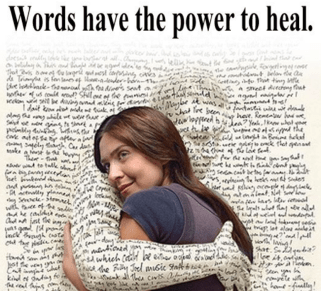
Writing is healing. Researchers are discovering that writing can be good for our health by relieving stress. But the key finding is in the way people are using writing to interpret their experience, including in the words they choose. Venting alone is not enough, the writer must use it to better understand and learn. Studies have shown writing can boost the immune system  or even speed wound healing.  Writing can lower stress hormones and allow for greater sleep in many people. So if translating events into language can affect the brain,  immune function, and healing we might want to try it.

Writing is revision. We know there is never a single story. The story we were telling ourselves the night of the election probably changed the day after the election.  It is probably changing day by day.  In an article in Psychology Today author Sharon Bray suggests “The greatest health benefits of writing occur when we write a story with structure, causal explanation, repetition of themes, a balanced narrative, and awareness of a listener’s perspective.” James Pennebaker added, “repeatedly confronting an upsetting experience through writing allows for a less emotionally laden assessment of its meaning and impact. Once organized, events become smaller and smaller and therefore easier to deal with. Writing moves us to resolution; it becomes psychologically complete and therefore there’s no need to ruminate about it. beyond the trauma.” So don’t hold onto a single story of grief and frustration.  Allow your story to be revised. Let it reflect your thinking AND let it shape your thinking. Keep writing your story and living your story!

Don’t think you  have time? How much of your day is consumed by anxiety right now? Don’t think you know what to say? Trust your heart-it knows, it will help your head put it into words.  Don’t know what to write? I’ll share some ideas:

  • Keep a journal. Put those thoughts and feelings to paper for all the reasons I mentioned above. Keep it as long as you want or need it.
  • Document with a diary for future generation to share your current thinking and emotions. Add clippings of newspapers, magazines, webpages that will give a context to these musings.
  • Write a letter.
    • Write your congress people to share your concerns and express your hopes. No one man holds the power, remind them of “We the people” House =http://www.house.gov/representatives/find/   Senate=http://www.senate.gov/senators/contact/
    • Write to Hillary. Imagine what she must be feeling. If you were “With Her” let her know you still are. Send it to Hillary Clinton: PO Box 5256, New York, NY 10185-5256
    • Write to Donald. Express your concerns and remind him he is the president for ALL people, not just the 24% who voted for him. Donald Trump 725 5th Avenue New York, NY 10022
    • Write to your friend/family member who supported your opponent and try to connect. This election has divided us deeply. Writing can be an olive branch.
    • Write a letter to yourself for a year from now.  Put in writing what you will DO in this next year to make the world a better place. Hold yourself accountable.
  • Write poems.  Sometimes our thoughts are not linear stories, they are a jumble of intense emotions and reactions. Poetry is a place to explore those ideas with less constraint and structure. Think of it as verbal art-abstract expressionism or surrealism!
  • Write on social media. Connect with others with thoughtful, hopeful, uplifting dialogue.  Try to avoid vitriolic posts that only serve to ramp up hate and fill an echo-chamber of despair.  Don’t become what you rallied against. Be a light in a very dark time.
  • Write on community platforms.  In New York City sticky notes were being posted on subway tiles. If there are places in your community, check it out.
  • Write your own book. It’s still NaNoWriMo, but if you don’t have a novel in you, try a short story, a picture book, a series of essays. Give a creative outlet to your experiences, thoughts, and feelings.

I’d love to hear other ways that people can #DoTheWriteThing.  Just use the hashtag on Twitter or reply here.  (And don’t forget STRONGER TOGETHER!)

screen-shot-2016-11-12-at-10-08-18-am
from author Dan Gemeinhart

What’s On My Book Radar?

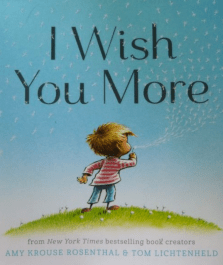
screen-shot-2016-11-12-at-9-19-54-amIt’s still Picture Book Month, and I cannot think of a better book to encourage hope and goodness for our future. I WISH YOU MORE by Amy Krouse Rosenthal and Tom Lichtenheld is filled with love.   If you are a parent or a teacher, you could use this as a mentor text to write your own book to your children.  What would you wish for them? Read it, then write it!!

I wish you all more hope than fear, more peace than stress, more light than dark in the coming days.