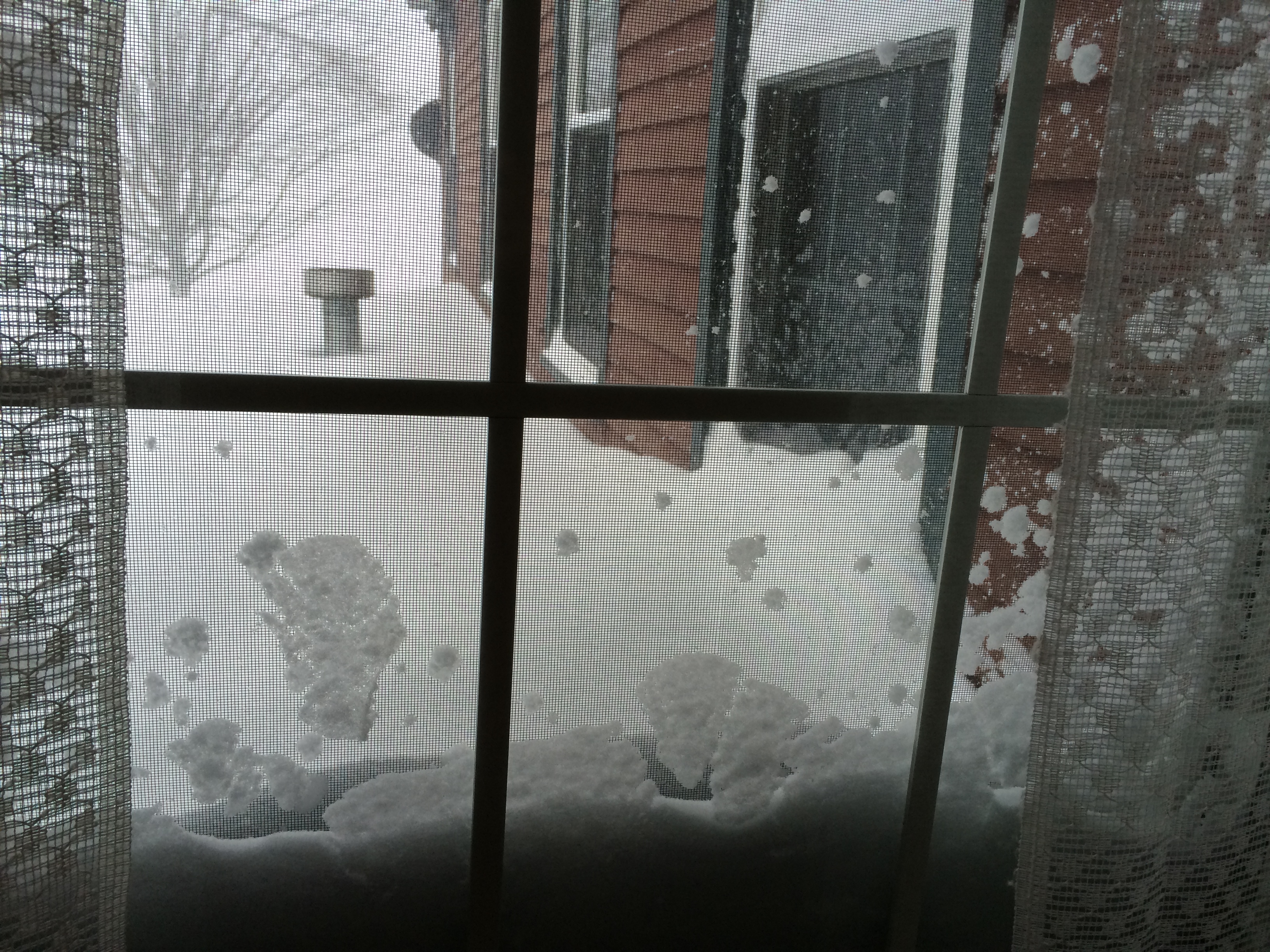
As I write this, we are deep in the midst of the Blizzard of 2015. Everything from New York to Maine seems to be shut down and waiting it out. Our ever dependable mail and ferry service have even waived the white flag of surrender to this storm. Since we have yet to experience our first snow day in my district, we were all excited when the call was made a day ahead of the storm. I’ve enjoyed checking in on social media to see how my friends and colleagues are spending this day off from the usual routine. Though a blizzard is nothing to take lightly and can be quite dangerous, the mood that I’ve seen has been distinctly upbeat and even giddy!
So why do we get so excited about snow days? A break from our usual routines can awaken us to new possibilities. It can remind us there is a different way of life outside of our classroom walls each day. I can share a few that I’ve heard and experienced for myself. Maybe you can add to the conversation with your own reasons!
We can remember and relive the simple joy and excitement of our childhood days.
We can sleep through the alarm if we want or wake early to enjoy even more free time.
We can sit down to eat a breakfast that doesn’t need to be wrapped or packed.
We can see what are pets are up to when we are usually at work!
We can eat lunch and go to the bathroom when we want to!
We can stay in our jammies, skip the makeup and ignore the hairbrush… yup, appreciate our natural beauty!
We can surround ourselves with books and experience new lives and worlds.
We start to appreciate our own children’s teachers a bit more each hour!
We can increase our sense of guilt and jealousy when we catch up on Pinterest.
We can grade that pile of papers that’s been haunting us for too long.
We can repeatedly explain to our non-teacher friends that we really aren’t being paid for a day off.
We can pay bills, balance our checkbooks and organize files just for the fun of it!
We can take a nap!
We can watch a movie during the day without falling asleep.
We can binge-watch a tv series we never thought we’d have time for.
We can clean up our homes that are often flooded with the clutter of our busy lives.
We can take a bath in the middle of the day!
We can listen to music that isn’t cataloged as a sing-a-long.
We can shovel, make snow angels, ski, snowshoe or sled like a kid again.
We can drink hot cocoa and cover it with marshmallows or whipped cream!
We can join a twitter chat we’ve never tried before and follow people we never knew existed!
We can cuddle with our pets or snuggle with our kids and be totally present in the moment!
We can work on our blog and not feel like we should be doing 5 other things instead.
The gist of the snow day happiness is that we feel like we’ve been given the precious gift of time. It’s okay to do any, all, or none of these things and not worry that we are falling behind. When the world gives us pause, we feel less stress that it’s passing us by. We are reminded to live in the moment because we are no longer on auto pilot. We feel a bit more rejuvenated and rested. We have refilled our wells so that when we return to our classrooms we have more to give. So embrace those snow days whenever they come your way, I mean, what’s the alternative?
What’s On My Book Radar?
I met Sarah Albee at our latest nErDcampNNE. She is an incredible nonfiction writer who basically tells the history of the world with some unique perspectives. Have you ever thought about how bugs, poison or poop have shaped our history? Well, Sarah has and her humorous writing style will have you laughing as you learn how POOP (yes, I said “POOP”) played such an important role in the development of modern civilization. If you think nonfiction is dry and boring…race to your local bookstore or library and check out Poop Happened!
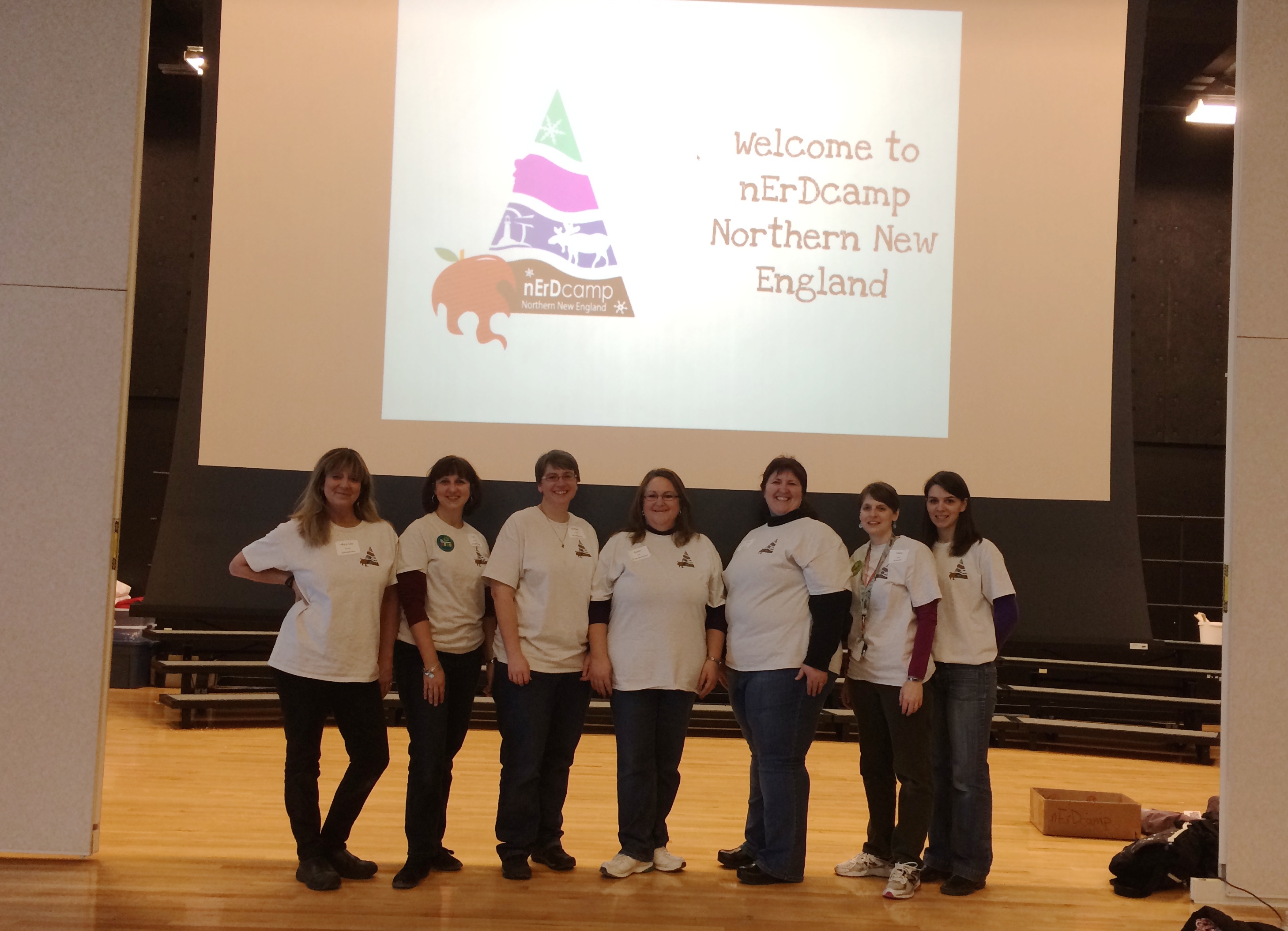
nErDcampNNE Committee: Mary Lou Schuster, Gigi McAllister, Natalie Stotz, Susan Dee, Jenn Chafin, Cathy Potter, Jenny Stahl (not pictured Chris Pirkl)
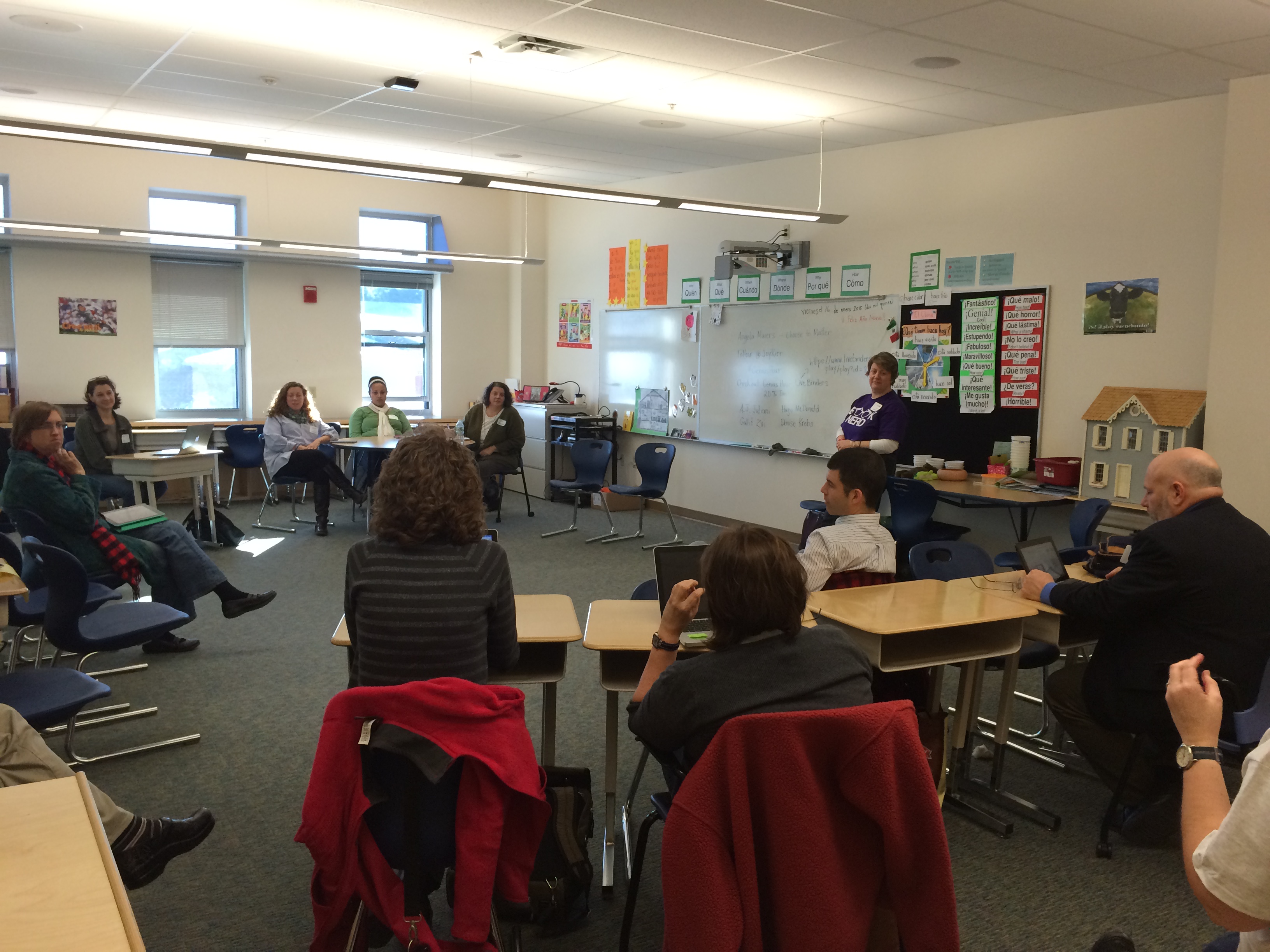
This past weekend I participated in my second nErDcamp Northern New England. I couldn’t imagine it being any better than the first, but I couldn’t have been more wrong. If you have never been to and ED camp, it is a type of ‘unconference’ in which people come together to share and learn in a collaborative, unscripted, spontaneous format. Our general focus was literacy, but the range of topics and ideas that people wanted to explore was quite diverse. There were technology sessions in iPads, iMovie Twitter and Google Classroom. There were reading sessions on title talks, motivating reluctant readers, interactive read alouds and differentiation. There were writing sessions on nonfiction craft and structure, mentor texts, reluctant writers and revision. There were also sessions on roles of literacy specialists and school librarians, ELL students, Genius Hour and connecting with authors. The hardest part was deciding which of these amazing sessions to attend.
Luckily there were notes and resources recorded on google docs for all sessions, so even if we couldn’t be in a session we have the a record of the conversation and sharing!
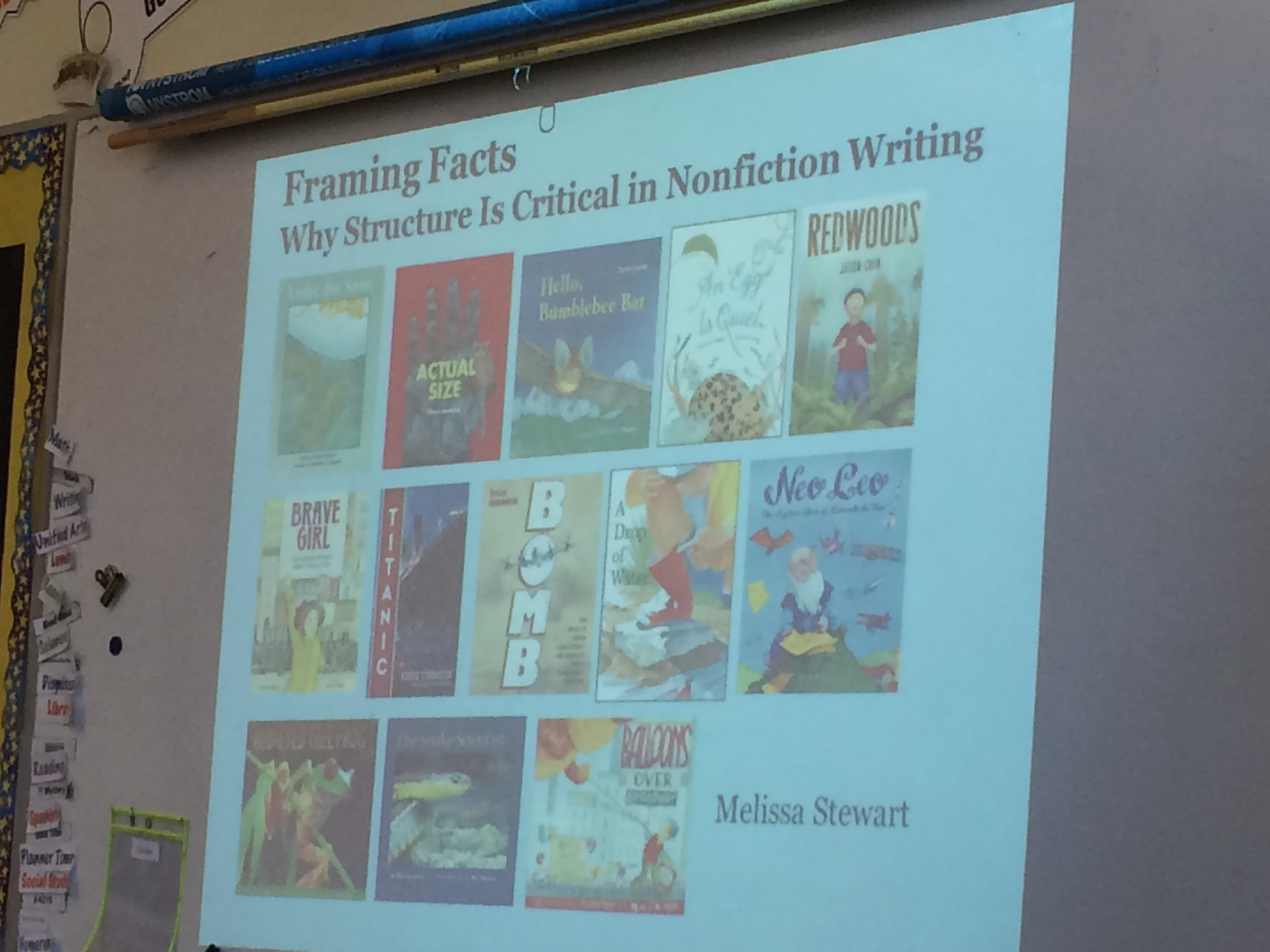
Authors Sarah Albee, Melissa Stewart, Megan Frazer, Joan Paquette, Lynda Mullaly Hunt and Julie Falatko share their process for writing.Participants create the schedule and agenda for the day.Authors share their expertise on writing.The swag and give aways were unbelievable!Sessions were facilitated by participants who shared ideas and expertise in a collaborative effort.
nErDy Author Night
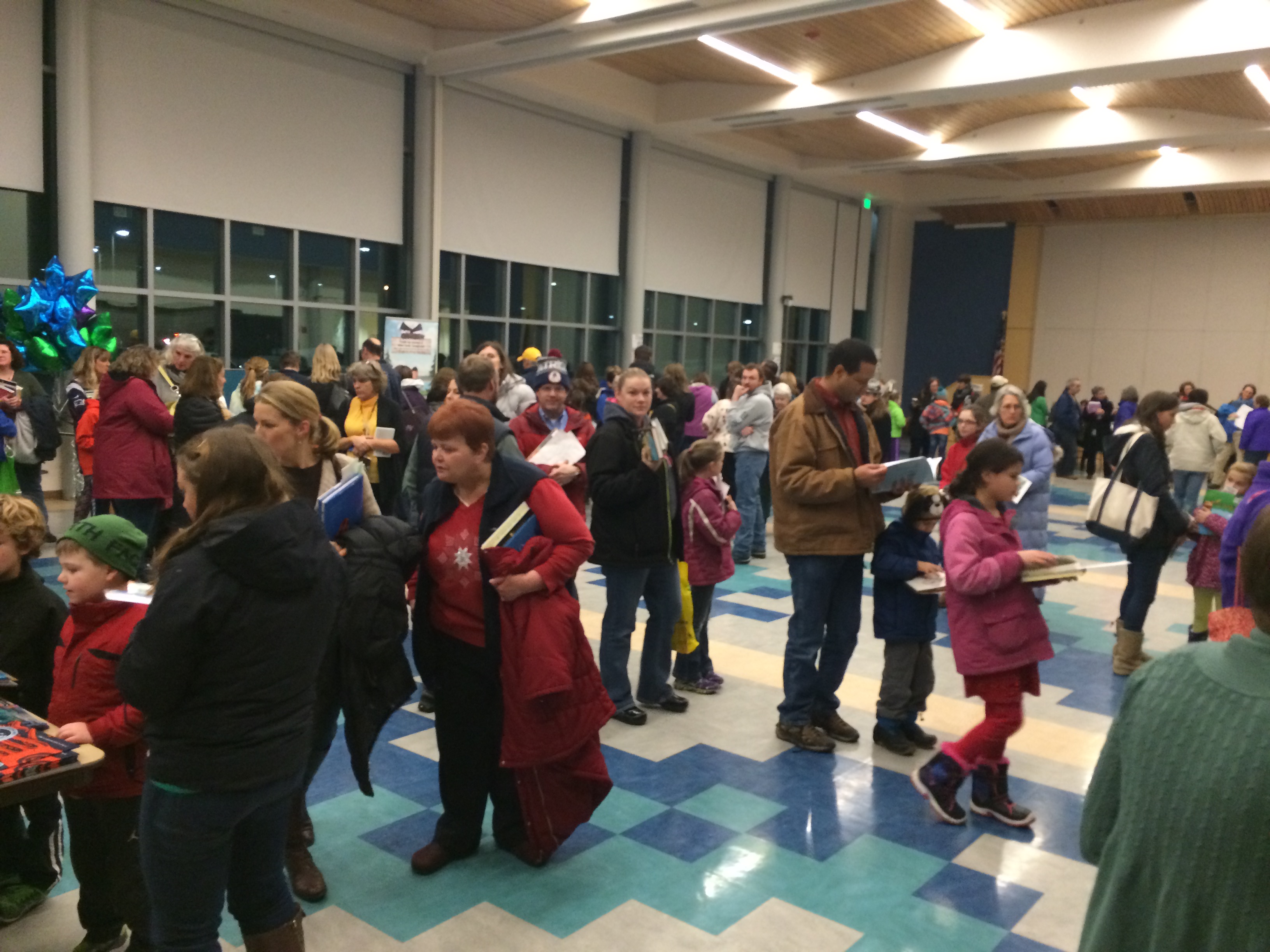
The night before nErDcamp we were treated to a nErDy Author Night. There were authors and illustrators from all over New England who came to greet readers, sign books and talk about their craft. It was open to the public so there were children, parents, teachers and librarians all eager to meet their favorite author or illustrator.
We had Maria Padian, Lynn Plourde, Charlotte Agell, Jennifer Jacobson, Cynthia Lord, Tamra Wight, Megan Frazer, Amy MacDonald, Kate Egan, Joan Paquette, Hazel Mitchell, Lea Wait, Melissa Stewart, Matt Tavares, Russ Cox, Kevin Hawkes, Erin Dionne, Josh Alves, Lynda Mullaly Hunt, Mary Cerullo and Sarah Albee. How much more talent can you pack into a cafeteria!!
A huge shout out goes to the nErDcamp NNE Committee. Thank you for bringing this amazing professional development opportunity to the educators of Maine. Oh, and did I happen to mention that was entirely FREE!!!!!
If you are in Maine, or close enough, there are two more opportunities for ED Camps on the near horizon.
EdCamp Western Maine on February 7, 2015. https://sites.google.com/a/rsu10.net/edcampwme/
There were so many amazing titles being shared this weekend. I was incredibly excited to see Jennifer Jacobson with her new book Paper Things. It isn’t technically OUT until February 10, but we were able to purchase copies that night! I had to get my hands on this one and it moved to the top of my TBR pile. Once I finish it, I’ll post it to my Facebook page (40 Book Challenge Photo Album). Hope your TBR pile is as rich and inviting as mine has become.
So I just sent off my proposal for NCTE 15. I mean, who doesn’t want to be in Minneapolis in November!? It’s hard thinking about where I might be professionally 11 months from now and what might be relevant for other educators at that time. I’ve been immersed the past year on my writing work with teachers and so it only seemed natural that I would be ready to share this collaborative venture with others. So with great anticipation I hit the “submit” button.
Leap of Faith
When I was a relatively new teacher, my principal asked me if I would like to go to a national conference. Attending NCTM in New Orleans was a life changing event. I know the power of that experience shaped who I am today. I am anxious to share that opportunity with other teachers. Without even knowing if our district would fund this, I asked two ‘new’ teachers to join me in the NCTE venture. They have worked so closely with me over the past year; willing to be coached, to collaborate, and to let me try out lessons with their classes. I know that being engaged with other educators at a national level will transform their teaching in a similar way that mine was-they are like sponges soaking up new knowledge. I have faith that if I plan it, they will come! We are going to make this happen!
I also took a leap of faith in asking several authors that I admire to join us on the panel. I thought the worse that could happen would be a curt, “no” or a non response. To my delight, most of them were eager to join the panel. Their expertise on our topic will be invaluable to participants, and their range of experience, preferred genre and audience will make for a rich discussion. From picture books to nonfiction to YA, these authors are truly experts in their field. So thank you Lester Laminack, Kate Messner, Linda Urban, Sarah Albee and Selene Castrovilla for graciously joining these teachers from Maine. We’ll know in May if the proposal is accepted. I have faith!
So, forgive me for a shortened post this week. I am revised and edited-out!! I am excited and exhausted. I am anxious and hopeful. I’m off to do more writing and to write about that writing! If the proposal becomes a reality-you’ll all be some of the first to know! Until then I’ll keep writing, keep working with teachers on writing, and keep our kiddos writing. I guess that’s a pretty big hint to the topic of the session. More details in May -when we get that acceptance letter!
What’s On My Book Radar?
This week Cynthia Lord sent me an ARC of her newest book A Handful of Stars , coming in May of this year. To say I was excited is a complete understatement. If you are a Cynthia Lord fan, I am convinced you will fall in love with this book. She knows how to create characters that readers truly care about, develop stories that reflect real life experiences and leave you feeling more compassionate and caring for the struggles of others. I won’t give much away since this isn’t out yet, but I’ll just say that when it hits the shelves you will want to grab a copy!
I’ve taken a brief vacation from my blog, but not from writing. A two week vacation allowed me plenty of time for personal and professional projects as well as some much needed family time.
My mind was overflowing with ideas for blogging this week, but this tweet that crossed my home page has really stuck with me. I’ve always tried to share the “why” of what I am doing in classrooms and with teachers, but I’m contemplating how I can take it to an even deeper level.
In an Ed Leadership article Daniel Pink talked about the difference between compliance and engagement. When students are doing something because we ask or expect them to, it is compliance. When they do something because they see why, they are engaged.
“There’s a huge difference between compliant behavior and engaged behavior. With compliant behavior, you’re doing what someone told you to do the way they told you to do it. There’s nothing wrong with that, but it’s different from engagement. With engagement, you’re doing something because you truly want to do it, because you see the virtues of doing it….So if we really want engagement rather than compliance, we have to increase the degree of autonomy that people have over what they do; over how, when, and where they do it; and over whom they do it with.” -Daniel Pink
He’s not advocating a “free-for-all” in which students can decide whether or not they do the work asked of them. He considers the possibilities in allowing more choice in what students read or write; how they do their work, or projects that would demonstrate understanding. Not everything needs this degree of discretion, but with more opportunity, comes more autonomy. If we want motivated, life-long learners they need this valuable skill.
This level of differentiation is not always easy to manage in a classroom. Larger class sizes, standardized grading policies, fixed homework rules, pacing guides, fidelity to programs all encourage or reward compliant behavior. It can be messy if students begin directing their own learning and our standards of measurement are challenged. So how do we help teachers to encourage engagement and a sense of agency in their students while recognizing that they are often being asked to be compliant?
Maybe we start by going back to the question of “Why?” Why did I want to be a teacher? Why do I come in here everyday and work with students? Daniel Pink says we focus too much on the how rather than the why and I can see that. Teachers and I often collaborate on how they will teach a lesson and spend very little time discussing why we would teach the lesson. When we teach something because the curriculum says to, or because it is one of the standards we need to cover, we are being compliant. We are thinking more about how to teach it. Maybe we need to have a few more conversations about why we will teach it. Not to be defiant, but to be more purposeful.
So in this new year, I will resolve to think more about the why before I worry about the how. I will encourage my colleagues to have those conversations. I will share purpose more with students and encourage them to wonder why. In answering that question for ourselves, we can probably find the most powerful answer to how.
I just finished a gripping YA novel by Selene Castrovilla…MELT. The phrase “There’s no place like home.” takes on a whole new meaning in this story of domestic violence and teens coming of age. Joey is a kid from the “wrong side of the tracks”, but Dorothy can see the boy inside that shell better than anyone. He is traumatized by witnessing his father’s daily abuse of his mother and turns to alcohol and aggression to escape. When Dorothy lands in his Oz of a life we begin to see the power of hope and love. Told from the viewpoints of both characters, we can see how our lens of experience shapes what we perceive. Beautiful and brutal. Not for younger readers, but teens and adults will truly care for the characters in this edgy, poetic novel that will MELT your heart.
References
Ed Leadership September 2014 | Volume 72 | Number 1Motivation Matters Pages 12-17
This year I invited the teachers in my district to join me in a writing group. I have always encouraged new teachers to keep a journal or jot down vignettes from those hectic first days, months and years in the classroom. I have worked with teachers who share their joys and struggles with parenting and urged them to pen some of those memories to keep them preserved. I have colleagues whose aging parents’ memories and health are growing frailer each year, and hope that they will write the stories of their lives before they fade away. But our constant struggle with limited time seems to be our biggest enemy. It can be hard to justify carving out some to write about life when we are so busy trying to live it and deal with it. I hoped that the peer support or pressure, would be our ally in this endeavor.
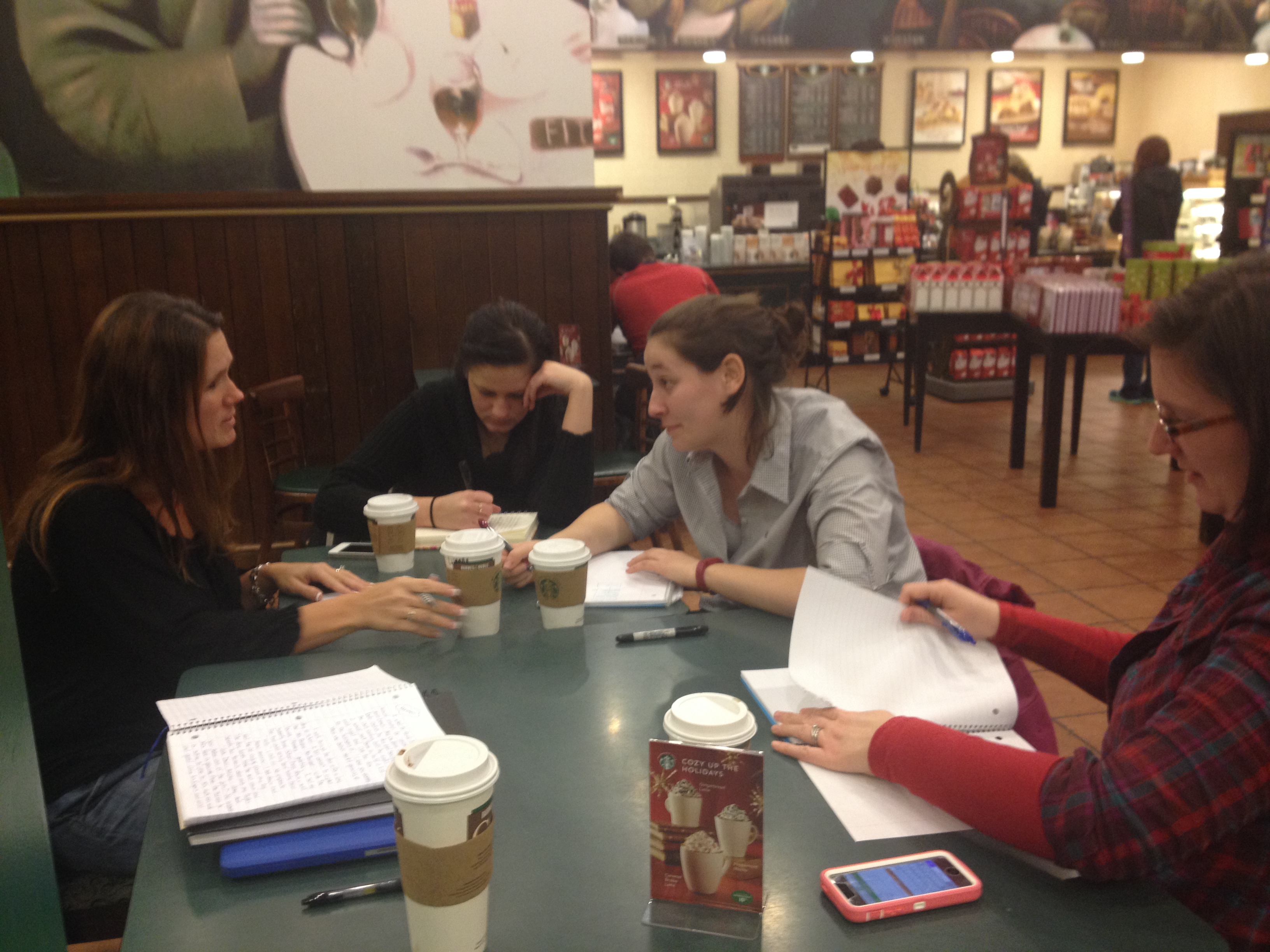
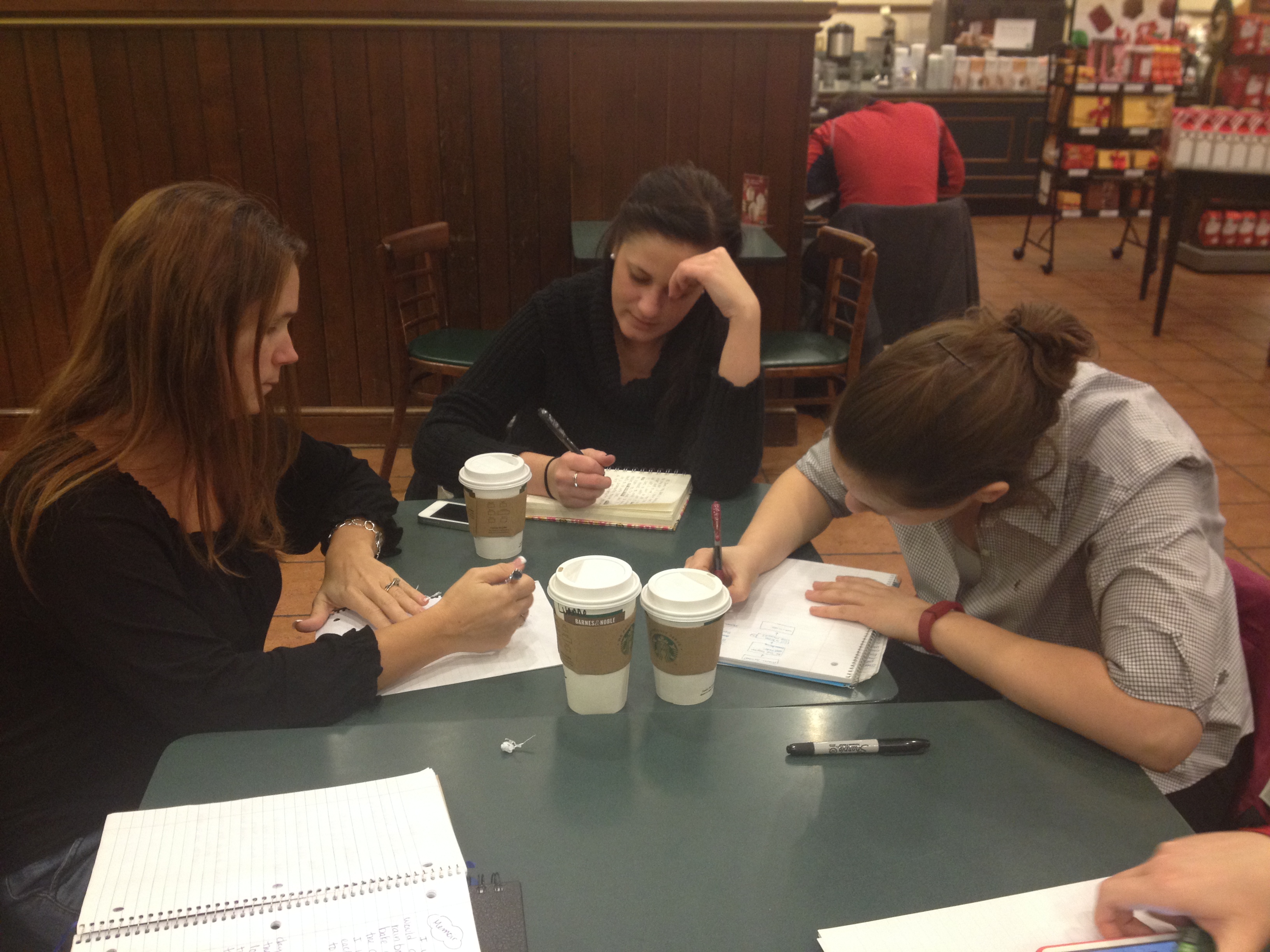
Our first ever group met this week at a local bookstore. It’s a rainy December afternoon. The five of us are all at different points in our careers and family lives. We each grab a seasonal coffee or cocoa, find a table in the cafe and look at one another. “Now what?” one giggles. We each pull out our writing books; there are beautiful new journals, spiral notebooks, and even scrap paper.
“What should we write about?” one asks.
“Whatever it is you want to capture, remember or create.” I respond. “I really want teachers to collect those stories in their classrooms that they think they’ll never forget but they do. You could write a book for your students. You know what they love.” I add. “Write what you enjoy reading. You don’t have to worry about it being good, just write whatever comes to you. Write about your life. Capture a little slice of your life.”
One plucky teacher starts us off, “Were we supposed to bring something to share? I’ve got something I could read.” She shares with us a poignant fictional Thanksgiving tale that left several of us with watery eyes. Here in our midst was writing with the power to move us. I could hug her; I wasn’t expecting such a beautiful launch to our group.
There was a unanimous, “Wow.” We ask her how she came up with her idea and why she wrote that story. She talks about wondering what Thanksgiving would be like without her mom and how sad she would feel. It opens up a conversation about family. We all share ideas about relationships or events that would be topics for writing. With that we pick up our pens, look at each other with a shrug and dive right in. Occasionally one of us thinks aloud or draws another into conversation about an idea, and then retreats back into the writing. I look around at these four with their heads down and their pens flying. I am so inspired. I have goosebumps. Here is a moment I my writing can capture that I will always treasure.
I know they will see their young writers a little differently tomorrow. I am already seeing them a little differently. I have always respected these teachers so deeply, but now I also admire their courage and willingness to take a risk like this. I know as we continue this journey we will grow with admiration for the writers in our rooms. We will empathize with their struggles and celebrate their successes more fervently.
We are writing teachers who write. We are what we teach.
What’s On My Book Radar?
This book is magical, both in content and composition. Author Kelly Barnhill can spin an enchanting tale that you won’t want to put down-at least I didn’t. We follow the journey of Ned, who the villagers are convinced was the wrong boy to survive a tragic accident with his twin brother. His mother (The Witch) uses magic in a desperate attempt to hold onto her surviving son, but there is always a price to pay.
We meet Aine, the daughter of the Bandit King and a mother whose last words were “The wrong boy will save your life and you will save his life.” The two are destined to meet up and we follow their journey as they try to discover who or what is an enemy or an ally. It’s not always as easy as you might think. An entire kingdom is relying on them to make the right choices.
Clear your schedule for a few days…you’ll want to check this one out!
Christmas is one of my very favorite times of year, but it is also one of the very busiest. I’m not complaining. There are so many festive and fun activities that can fill my free time and I feel very blessed to have these opportunities. This year I have even less free time as I am engaged in writing a book and I’m ever aware of my self-imposed deadlines.
I find I can no longer carry on a conversation about the tv shows or series my friends look forward to. My family, my kids’ activities, and my writing are my priorities outside of work. But after that I carve out time for my books. Reading is something that is just for ME. I can slip into a book and immediately be somewhere else, experiencing a range of emotions, and making new friends. I can return any time I wish. I can be gone for as long or short a period of time as I desire. I can’t imagine my life without books. It is why I have dedicated my career to creating literate lives for so many children. I want everyone to have these experiences.
Christmas is a wonderful time to give books as gifts. As my children were growing up, our collection of Christmas books grew each year and our traditions of reading them together are some of my most cherished memories. I would wrap 25 books and place them under the tree. Each day Bailey or Casey would choose one to unwrap and we would read it together. Some were old favorites, some were new gifts. I still can’t read Patricia Polacco’s Welcome Comfort without remembering my kids snuggled up beside me near our twinkling tree.
I love seeing posts from friends showing pictures of their families creating their own reading traditions around the holidays. Books have been such an important part of my family’s life, I wish it were so for every boy and girl. If you have friends with children I encourage you to share your traditions and ideas for making books integral to their lives and memories. Give books as gifts. Read to a child. Read to yourself.
If you are looking for book gift ideas, I would recommend some titles that I think are contenders for the American Library Associations Newberry or Caldecott Awards. I’ve created a padlet for each to share these great books.
According to the ALA, the Caldecott Medal was named in honor of nineteenth-century English illustrator Randolph Caldecott. It is awarded annually by the Association for Library Service to Children, a division of the American Library Association, to the artist of the most distinguished American picture book for children. Here are my “picks” for contenders of the 2015 award.
The Newbery Medal was the first children’s book award in the world. It is awarded annually by the American Library Association for the most distinguished American children’s book published the previous year. The books are usually middle grade level.
So if you are looking for gift ideas, I would recommend starting with some books from these lists. You won’t be disappointed. Tis(always)the season(for reading)!
What’s On My Book Radar?
After meeting several of my favorite authors at NCTE, I wanted to go back and read some of their work. Gae Polisner’s The Summer of Letting Go was one of my favorite books of this year and so I sought out The Pull of Gravity, her first novel. I LOVED it. She has a way of taking the ordinary and weaving in the quirky to give her characters depth and to tug at your heartstrings. This coming of age road trip is less about the adventure and more about the discovery that everything is not always as it seems.
So while I try to get my hands on all the newest books being talked about, its always kind of cool to discover a book I missed my first go around that satisfies so nicely!
I just got back from the National Council of Teachers of English 2014 national conference in Washington D.C. (technically National Harbor, MD). If you can overlook the fact that technology/internet was an issue with the facility, it was a beautiful venue near the heart of our nation’s capitol.
It is an experience I wish each teacher I work with could have. I have already contacted my administration to begin brainstorming ways to make it happen. We all need those opportunities to connect in a more global way with teachers and educators that can influence practice and enhance our lives.
You meet the people who are your “heroes” when you are immersed in books and texts and writing. You hear from those who can speak what is in your heart better than you can begin to do. You finally connect with the tweeps who have fed your professional soul for the past year (if you can recognize them from their teeny profile picture).
Rather than go on and on with how enriching the entire experience was, I put together a short video to share some images from my days at NCTE14. I want to thank everyone who came up to say “hi”, signed my books, listened to my ideas or recommended some new titles. Our interactions are what made the event profoundly meaningful and a powerful professional development opportunity.
When I sit down this Thanksgiving, here is something that I am incredibly thankful for…
I finally got my hands on an Advanced Uncorrected Galley of this gem at a book signing this week! If you thought One For The Murphys was a great book, you are in for a real treat! We get to meet substitute teacher, Mr. Daniels as he shows his students that great minds don’t think alike. He celebrates the achievements of all his students, no matter how small and helps them to appreciate the uniqueness that makes them special. Lynda has become one of my biggest heroes and I can’t recommend her latest offering enough.
Democracy cannot succeed unless those who express their choice are prepared to choose wisely. The real safeguard of democracy, therefore, is education. –Franklin D. Roosevelt
Sometimes as teachers, I think it is important to step back and think more existentially about what we are doing in schools. Why do we do what we do? Why does it matter? On a personal level, we are improving lives one child at a time. On a global level, we are safeguarding our democracy.
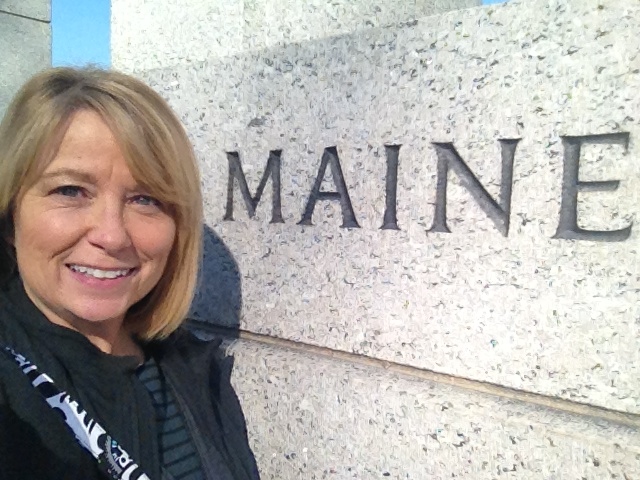
That thinking really hit home with me today as I began my NCTE (National Council of Teachers of English) Annual Conference here in Washington D.C. My colleague and I took a tour of the nation’s capital; a three hour excursion to visit our treasured monuments and memorials. Some were inspiring, some were sobering, all were deeply meaningful. Each represented the lives and accomplishments of Americans that were not born great, but rose to greatness. Their acts created, defended or extended democracy to the citizens of America. My job as a teacher, is to honor their acts and to ensure the way of life they worked so hard to define as American.
“An educated citizenry is a vital requisite for our survival as a free people.”-Thomas Jefferson
I felt an enormous sense of responsibility as a teacher today, wandering around these monuments. This country is depending upon us to educate our children who will grow to create, interpret and defend our laws. They are depending on us to perpetuate the ideals of a free and democratic society, to question authority and solve problems with tenacity and ingenuity.
As I attend the conference sessions this week, and then go back into my schools, I want to carry that sense of responsibility with me. I want to keep the big picture in mind as I am knee-deep in the muck and mire of tedious ‘non-education’ aspects to working in schools. I want to reflect on it as I prioritize where my energy and attention will go when teaching. I want to remember WHY it is important to teach critical thinking skills, and WHY I want our students to question what we say and teach.
So I will endeavor to look beyond picking up some tips for classroom instruction. I will celebrate the task and responsibility for educating our young citizens with some of the best and brightest in the country. I will rededicate my efforts to creating an informed citizenry that will grow to take the reins of our democracy for generations to come. As I look around at this conference, I am surrounded by those who take this responsibility as seriously as I do and strive to create engaged, active and educated young citizens, ready to take the reins one day. I am confident we are in good hands!
What’s On My Book Radar?
One of the best sessions I attended at NCTE 14 was how authors themselves use mentor texts when they write. Featured here:
When you hear an author talk about their process and the thinking behind the words, you can’t help but become intrigued and anxious to get your hands on the books! I can’t wait to get these books on my bed stand for some night time reading!! These are definitely on my radar now!
“Get a real book.” “That’s not real reading.” What are the chances that some student in your classroom has heard that remark from some well-intentioned adult in their life? There is a common perception that comics are the equivalent of our trashy novels or beach reads, something to be read for fun or escape but not to be taken seriously. I think it is easy to understand that analysis if your evidence is a limited to noticing a small amount of text in relation to pictures and an audience that includes a large amount of reluctant readers.
But for anyone who has looked closely or studied some of the creative process that goes into creating a comic, a different perception emerges. Recently I have developed a deep appreciation for the intentionality and design of comics and think we can use these elements to help our readers and writers build stronger literacy skills. Entire books have been written to help with this, but I’ll just mention a bit of my latest thinking.
Comic authors get to the heart of the story.
Because space is limited in a comic, authors need to make purposeful decisions about what to include and exclude in their comic. Their word choice is often quite precise and concise. Their dialogue is relevant and moves the story along effectively-there is little room for superfluous chit chat. What images and text they choose to include in each panel is meaningful to telling the story, rarely are they unrelated to the ‘main idea’.
How could this help your students? Imagine giving them the opportunity to write summaries of their reading in a comic format. Could they retell the heart of the story with a few panels? Imagine them planning their stories as a comic first-this story board format could help them organize a logical event sequence, focusing in on important plot points.
Comic authors force their readers to infer…a lot.
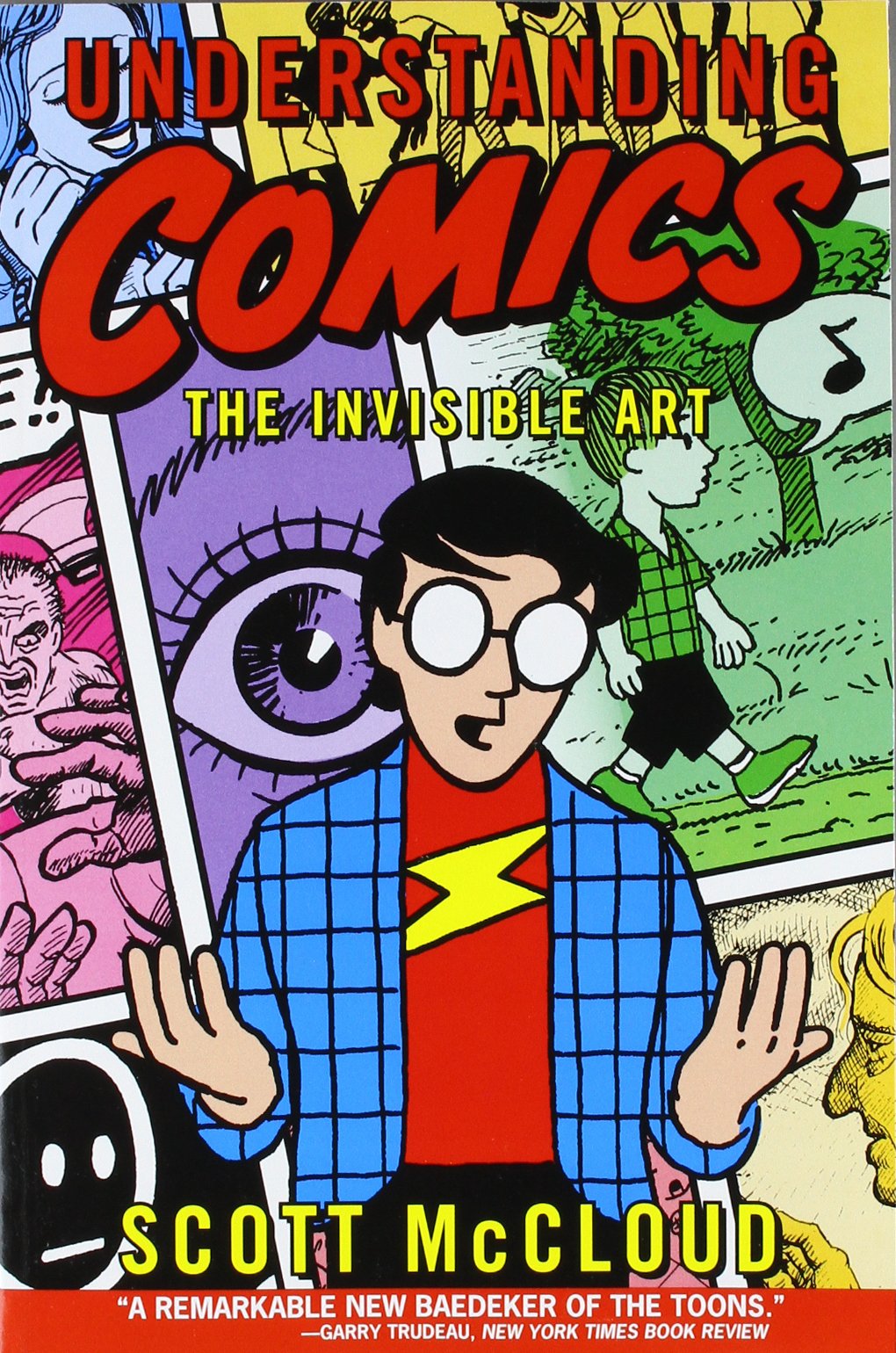
Comics are a perfect example of the concept of closure. Author Scott McCloud defines this as “a phenomenon of observing the parts but perceiving the whole”. The readers sees two panels that may seem unrelated and they piece together the story that connects them. The “gutter” is the term that refers to the gap or line between panels. Readers must infer what happens in the gutter in order to make sense of the sequence. This “filling in the gaps” is the essence of inferring. Those transitions are important parts of the story that are actually excluded from the story, forcing the reader to interact with the text more closely and collaborate with the author in telling the story.
How could this help your students? Engage students in conversations about those gutters? What do they think is going on? What makes them think that? Why do they think the author excluded that from the panels? Invite them to write those transitions for the gutters. When discussing other types of texts that have transitions in time or setting, relate these to the concrete notion of “gutters” to encourage readers to think about what happens between those transitions.
Comic authors show, don’t tell.
The concept of “Show, don’t tell” in writing is a hard one for many of our students to comprehend. We encourage our writers to share experiences in their pieces with actions, thoughts, senses and feelings rather than description. We share examples such as His hand trembled as he reached for the bloodstained doorknob, and yet students still write He was scared. He opened the door. The illustrations and icons in comics show the reader the important elements going on in the story and allow the reader to interpret them through their own lens of experience and knowledge.
How could this help your students? Being able to show, don’t tell in writing requires the author to first visualize what it is they want to say. They have to ask , “How do I convey that the character is scared? How do I show that?” They have to visualize it first and then share that image with the reader. Inviting these writers to visualize the scene in their head the way a comic author does, before they write it down could be tremendously helpful. Sometimes it is okay to tell, if writers showed everything the story would be bogged down in the minutiae of details. Discussion about what comic authors choose to show and what they choose to tell, could help clarify this concept for our writers in other formats or genres of writing.
Comic authors are artists.
For anyone who has taken an art appreciation course, the elements of design that we studied are exemplified in every panel of a comic. The level of realism or abstraction that the author chooses to use cause the readers to engage in very different ways. When realistic images are stripped down the author/illustrator is focusing our attention on what they think is important. They can amplify aspects in a way that realistic art can’t. We can often see ourselves in a more abstract, cartoonish image than we can in a realistic image of another person. We respond and connect to the image more easily if we can see ourselves reflected back at us. These choices are conscious decisions by the author.
The way authors convey movement, action, time through a series of still drawings is purposeful and effective. Their use of design elements “tricks” our brains in to seeing movement that isn’t there, hearing sounds that aren’t audible, and passing time that isn’t real. The shape and layout of the panels helps to tell the story sequence and duration. Are these design elements obvious to our students? Could raising their awareness deepen their comprehension?
For many of our students, this is as close to art appreciation as they will ever come. Taking time to discuss design elements and principles, variety of media, and style would enrich our students’ respect for art and help them see the role it plays in our lives.
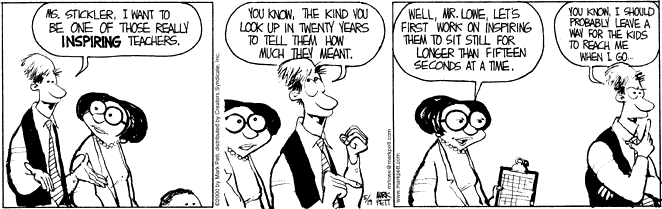
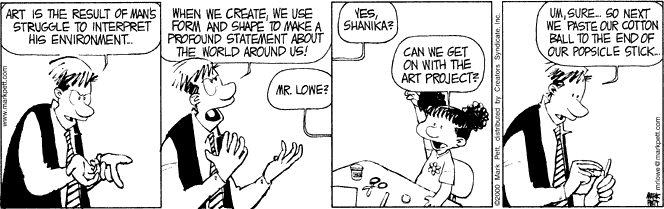
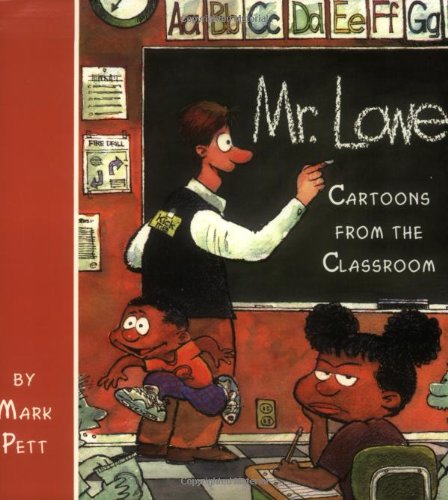
by Mark Pett. Cottonwood Press. 2000
Comics are fun.
I think the number one reason for encouraging comic reading is that it is enjoyable. Sure, we can learn a lot about art and literacy from comics, but not if students don’t enjoy them. Tapping into their natural love for the format is a great way to sneak in a little education for those who seem resistant! Don’t teach the books to death, enjoy them while you learn. When our students can appreciate them more deeply they will begin to respect the literary and artistic aspects of the work and perhaps transfer that understanding to other works. We want our kids to read. We want our kids to write. For some, comics might be that gateway drug that gets them hooked!
Scott McCloud has written a fascinating book that reveals the incredible amount of design and detail that goes into creating comics. Told in comic format, he gives explicit examples of the concepts he discusses and shares the history and psychology that has shaped this popular media. Intellectually stimulating for adults and very accessible for advanced elementary, middle school and high school students. Though written in 1993, it is timeless and priceless. I would have this as a “must read” for so many teachers!
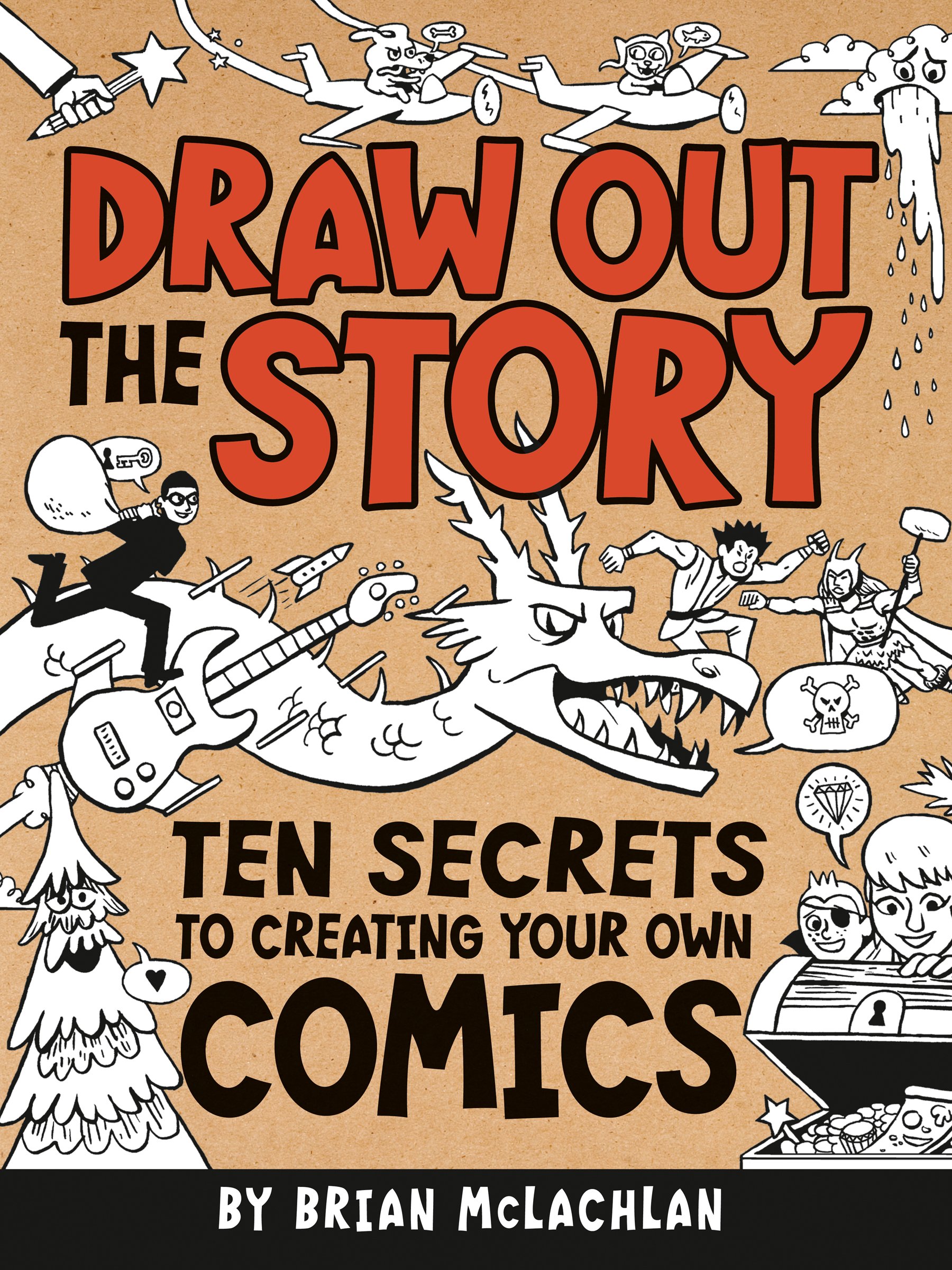
Brian McLachlan has written a fantastic “How To” book for designing and creating your own comics. He breaks down the text features and design elements he calls “Comics Grammar” to help students appreciate what decisions go into making a comic. This one is a current MSBA nominee that I think a lot of students will love. I would definitely have a copy of this in any elementary or middle school classroom library.
I would LOVE to purchase a copy of Mark Pett’s 2000 book Mr. Lowe: Cartoons from the Classroom but a new copy costs $6005.13 and a used paperback version starts at $53.76 so I might need to ask Santa for this one! For now I visit his webpage to read some of his sample comics and thoroughly enjoy his energetic and fresh perspective from new teacher, Mr. Lowe!
As I write this, the polls have been closed for an hour and election results are trickling in. Though I spent my day engaged with teachers and students, I am spending my evening waiting and worrying. Education is such a politicized endeavor. I suppose other professions can declare as much, but I find it very difficult. Schools are the pawns in political chess matches far too often. We are vilified when it supports someone’s agenda. We are heroic when it serves another. Changes in administrations at national, state and local levels cause the political winds to shift directions and inevitably new initiatives are thrust upon us. We roll up our sleeves to plan and implement only to be stopped short by the next ‘great reform’ from the victors.
We wait to see whose teacher evaluation proposal will judge our expertise and skill. We wait to see if the winner wants to inflict even deeper cuts into our anemic budgets. We wait to see if we will be stripped of collective bargaining rights. We wait to see if our retirement system will be there when we need it. We wait to see if our students’ struggling families will lose access to services they rely on.
This time tomorrow, the waiting will be over. The political ads will stop running. The phone calls will stop. We’ll sift through the results and try to figure out ‘now what’? Elections have consequences. We will begin to deal with those consequences in the morning. Tonight we wait. I hope that will be the hardest part.
What’s On My Book Radar?
Tomorrow author Suzanne Selfors will be Skyping with a 5th grade class in our district. I wanted to read her Maine Student Book Award offering beforehand. Luckily for me, The Sasquatch Escape was a fun and quick read. I think our students will love this book. The characters are quite likable, the combination of illustrations and text are entertaining and the plot is engaging. Looks like a great new series for middle grade readers. I recommend you check one out-I don’t think you’ll be disappointed! Can’t wait to “meet” the author and hear our students’ questions and conversation with her.
"How vain it is to sit down to write when you have not stood up to live! Methinks that the moment my legs begin to move my thoughts begin to flow..." -- Henry David Thoreau, August 19, 1851
In everything that my students and I do together, we strive to find ways to use reading and writing to make the world outside of our classroom a better place for all of us to be
 Maine seems to be shut down and waiting it out. Our ever dependable mail and ferry service have even waived the white flag of surrender to this storm. Since we have yet to experience our first snow day in my district, we were all excited when the call was made a day ahead of the storm. I’ve enjoyed checking in on social media to see how my friends and colleagues are spending this day off from the usual routine. Though a blizzard is nothing to take lightly and can be quite dangerous, the mood that I’ve seen has been distinctly upbeat and even giddy!

 The gist of the snow day happiness is that we feel like we’ve been given the precious gift of time. It’s okay to do any, all, or none of these things and not worry that we are falling behind. When the world gives us pause, we feel less stress that it’s passing us by. We are reminded to live in the moment because we are no longer on auto pilot. We feel a bit more rejuvenated and rested. We have refilled our wells so that when we return to our classrooms we have more to give. So embrace those snow days whenever they come your way, I mean, what’s the alternative?
















 litcoachlady