Established by Donalyn Miller (The Book Whisperer), it began as her public commitment to continue reading and sharing books with other readers all summer long. The goal is to read one book a day, each day and post about it. Sounds daunting at first, but her rules are simple…
You set your own start date and end date.
Read one book per day for each day of summer vacation. This is an average, so if you read three books in one day (I know you’ve done this!) and none the next two, it still counts.
Any book qualifies including picture books, nonfiction, professional books, audio books, graphic novels, poetry anthologies, or fiction—children’s, youth, or adult titles.
Keep a list of the books you read and share them often via a social networking site like Goodreads or Twitter (post using the #bookaday hashtag), a blog, or Facebook page. You do not have to post reviews, but you can if you wish. Titles will do.
So as you can see…ANY book qualifies. I couldn’t possibly do it without a cache of picture books on hand, books I might not otherwise check out… I learned some really fun things like: Every major league baseball is treated with something very common yet very secretive! OR A major concert artist gave a performance at a D.C. metro stop and the reaction was surprising!
I am savoring some YA books I’ve been waiting to read…
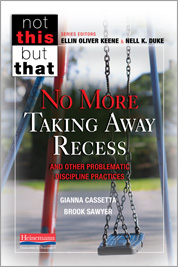
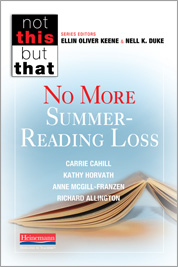
And diving into an engaging “Not This, But That” series that includes titles such as:
The only thing keeping the volume of reading down for me this summer, is a new goal of writing everyday. Immersing myself in this new venture has been exciting, exhausting and sometimes frustrating. Being able to relax and escape back into a book has taken on a whole new importance!
So I’ll throw down the gauntlet to my friends and followers. Can YOU read a book a day? Give it a try, it’s a challenge I think you’ll enjoy! If you want to post, use the hashtag #BookaDay on your favorite social media site.
The end of a school year is a celebration for many, but for some it signals the loss of learning and relationships for the summer months. Not only do many kids stop reading, writing and computing, they stop connecting with others-especially adults outside of family. Our schools have grappled with a variety of summer programs and incentives to keep kids reading and learning. As I noted in my previous blog Summer Slip and Slide there is a mix of results, primarily because the onus is on the student and their family to maintain stamina and momentum over the summer months. These students then often struggle to transition back into school routines and expectations.
One of our brilliant guidance counselors, Michelle Michaud, has watched this phenomenon over the years in her role as a building principal and counselor and felt compelled to address some of the aspects which cause students to struggle. She noticed that it often took until October for some students to settle back in to routines and expectations. She designed a SUMMER KIDS pilot for this year to address her biggest concerns.
“As I began to think about summer and all the kids who struggle with the transition out of school for the summer-that got me thinking about how students struggle to adjust back to the order of school after a summer off. So I thought about how to keep a connection, a way for them to remember that we are still around and that school is still here while they are away.”– Michelle Michaud
SUMMER KIDS
Several students from each classroom were selected by teachers and parent opt out forms went to parents so they decide if they didn’t wanted their child to participate. There are 4 basic components to the pilot
1. Personalized Postcards Each Summer Kid will receive a post card EACH week of their summer vacation to let them know we are still here and thinking of them. Keeping the school connections strong over the summer months and providing encouragement and suggestions for learning and summer fun.
2. Popsicles on the Playground Midway through the summer there is a scheduled play date at the school playground for the children and their families to come and connect with staff and enjoy a frozen treat. Staff can check in with kids and keep those relationships with students and families going strong.
3. Book Gifts Each student will have books mailed to them 2 times during the summer to encourage reading and remind them that school is still here, waiting for their return.
4. Check In Check Out (CICO) Each Summer Kid participant will have a staff member check in with them at the beginning and end of each day during the entire month of September to help the transition back into school. Teachers can praise and encourage the good work and effort of students and be available to process and problem solve any difficult situations. Any student who continues to need help/support will continue to have CICO or we will design a more appropriate support.
Michelle purchased the postcards and the staff who wished to participate could fill them out before the end of the school year. She and our fantastic principal would send them out each week of the summer and plan the Popsicles on the Playground event. The teachers were excited about helping out and connecting with kids, the students are going to be so thrilled to know that somebody is thinking about them and caring about them all summer long, and the parents will know that we are there for them and their child all year long.
I love that the focus isn’t about raising test scores or grades, but on supporting the student as a human being first. Addressing their transition issues, strengthening relationships, building positive images of schools and education, and seeing the whole child would most likely lead to stronger achievement. But showing kindness and caring will even more likely lead to healthier children-physically, intellectually and emotionally. THAT is a greater mission.
Do YOU know a Summer Kid you could reach out to?
What’s on My Book Radar?
This summer I want to participate in the 6th Annual Nerdy Book Club Bookaday Challenge. Since I am also going to try to Kate Messner’s #TeachersWrite challenge, my reading time will have to share the stage with my writing time. To be able to read a Book a Day, I am going to seriously catch up on some picture book reading. I’ll start with Maine’s Chickadee Award Nominees for 2014
Here are a few of the books I am anxious to dive into:
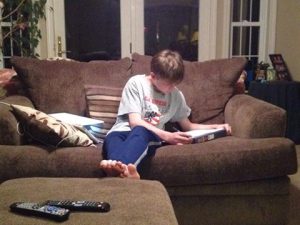
As I write this, it is approaching crazy o’clock at night and my 7th grade son is still up working on homework. He’s been at it over 3 hours after spending the previous 3 hours working on a project for a Showcase this week at school. I started to notice posts on Twitter and Facebook from other students and parents who were expressing stress and anxiety over the workloads and deadlines they were experiencing. It got me wondering how much thought went into the assigning of these tasks during the last few weeks of school. It made me wonder…
Are We Teachers Aware of Other Assignments Being Given?
When students begin to have multiple teachers, we need to find some way to increase communication regarding homework and assignments. It can be difficult enough when one teacher assigns a large amount of work, but it is excruciating when several do at the same time. The idea that “it’s just a few pages” only holds true for that one teacher, and not so much for the student who has those pages multiplied times each class they take.
Are We Teachers Aware of Other Obligations Students Have?
Sure it would be nice if we teachers knew about our students’ dance recitals, ball games, tournaments, church events or summer jobs that require them to start already, and how they might impact a student’s ability to complete projects or assignments. But students also have school based obligations and events that flood this time of the year that teachers should be aware of. Our family had 3 band concerts in 3 weeks, we have school based athletic events, we have art shows and gifted and talented showcases, we have multiple award nights for music, academics and sports-all school related!! We say we want well rounded children with multiple interests and talents, but many students are so stressed out by ‘celebrations’ and ‘culminating events’ that they do not feel like celebrating…they feel like crying. It’s crazy how May and June evenings are packed with school-based events after a full day of school for these kids.
Are We Teachers Aware of How Much Time the Assignments Take to Complete?
11:45 and we’re still not done…
When I asked a teacher recently how long she thought an assignment would take her students to complete one night she responded, “I don’t know. An hour?” Now we all know that students DO NOT work at the same pace in school, so how would they possibly be expected to work at the same pace outside of school, where the distractions can be greater and the work environment may not be as friendly? I wonder how many of us teachers actually complete the assignments ourselves occasionally, to gain some appreciation for the demands of the task. If it takes us 15 minutes, we should double that for our better students, triple it for our average students and quadruple + it for our lower students to get a ballpark idea of the time commitment we are laying on these kids.
Do We Teachers Explain the Learning Target for the Assignment? Do We Know It?
Is the homework a series of tasks that seem like busy work to students or could students actually explain what the expected outcome for the assignment would be? When I asked my son what he was learning in his ELA homework he said, “Just reading and answering questions.” Now I wouldn’t take that answer as an indicator of the teacher’s competence or a complete accounting of the needed skills, but when I looked at the reading passages and the copious amount of questions that followed I had to wonder why he wasn’t reading a book! We laughed at the ridiculousness of some of the questions and the tiny size of the boxes in which to ‘construct’ a response. My son reads all the time and has incredible comprehension as a result, what he was being asked was pure busy work, and when there are so many amazing books waiting to be read out there, I was frustrated that he needed to spend an hour with a worksheet and not diving into the pages of an amazing book!!
Do We Teachers Understand the Purpose for Homework?
These questions aren’t meant to be flip or disrespectful. Do we as teachers ask ourselves, why would I give this assignment as homework? Does this child need extra practice with this skill? Does this child need to gain automaticity or fluency with some behavior? Is this task best done without my help, supervision and feedback? Could this task confuse, frustrate or misguide the student? If so, what are the repercussions of that? Does it matter if parents help (because some will and some won’t -or can’t)? Can the child already do this? If they can’t, will sending it home be the best way to help them learn it? Does this task have application to his/her real world skillset needs? If not, would it be best done in school? What is the cost-benefit analysis for all of this work?
Over the many years I’ve been teaching the issue of homework seems to boil down to:
If the student already knows how to do something, why does he need homework to do more of it?
If the student doesn’t know how to do it, shouldn’t we be there to model, demonstrate, teach, guide and provide immediate feedback?
There are a few tasks that require subtle degrees of practice, such as reading, writing, computation that might benefit from additional practice, and some authentic practice could be accomplished as homework, but we also need to consider:
Do Schools Have a Right to Dictate What Families Do In Their Own Homes?
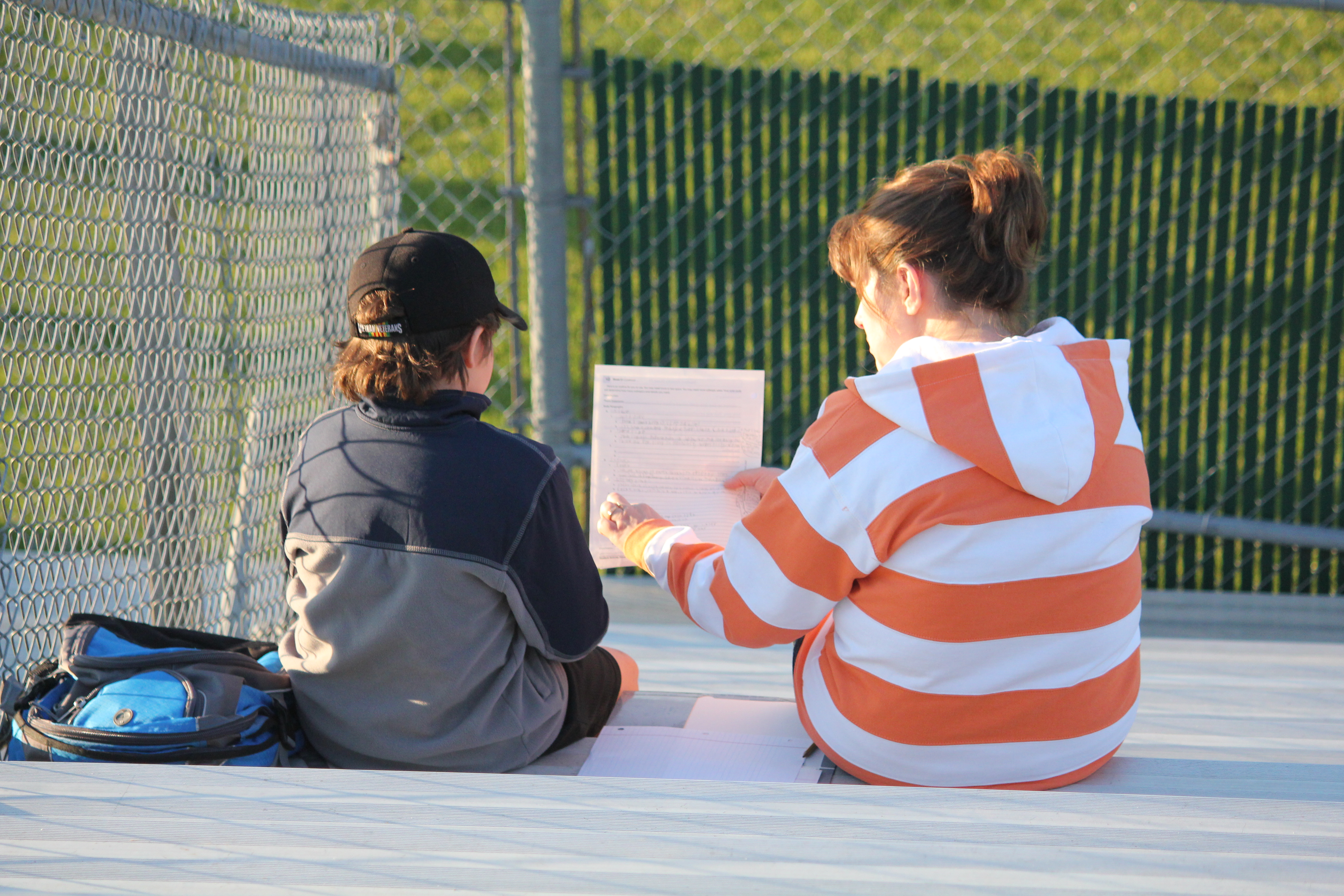
working on a research paper while ‘watching’ the ball game
We cringe sometimes when we are told how to do our jobs by those who do not reside in our schools and classrooms. Yet we often have no problem telling children and parents what to do with their precious time together. Are we robbing them of conversations around the dinner table, walks or bike rides together, family movie nights, read alouds of favorite books, hobbies or crafts they enjoy? Kids need unstructured time to explore, create, play, negotiate rules, solve boredom issues, get lost in a book, nap, hang out with siblings, or do whatever THAT particular family values.
Does Homework Work?
Does anyone have any hard evidence that assigning homework statistically increases that student’s learning? Are they thinking deeper? Are they computing faster? Are they problem solving more effectively? Are they more prolific writers? I think it is time we looked at the efficacy of our policies around homework and in particular assignments and projects at the END of the learning year. If we are cramming it in because we didn’t get something in the curriculum ‘covered’ or because we want them to ‘demonstrate’ a year’s worth of learning in a project are we fooling ourselves into thinking real learning is taking place?
What Are Some Alternatives?
As the year winds down, take time IN CLASS to reflect on the learning that has occurred. It is a great time to examine a students’ learning history with samples of work that demonstrated his/her abilities. It is a time for the students to reflect on themselves as learners. What do they do well? What do they enjoy learning? What did they overcome? Instead of piling on more tasks, it is important to take time to savor the learning that happened, to appreciate all the effort and commitment the students have put in. Recognizing achievements rather than cramming in more expectations will create a more satisfying ending to the school year. If you REALLY want homework, encourage those conversations to happen at home. Have them talk with their parents about their school year and reflect on how they have grown. Sure, you could create a template…or not.
Create a plan for battling ‘Summer Slide’ WITH the students. Have them take part in creating ideas, activities, book lists, games, etc that they might enjoy over the summer. Share with them information on the benefits of reading over the summer. SHOW, don’t TELL! Help them set some goals and some methods for accountability. If they don’t have ‘skin in the game’ there is very little chance they will follow through.
RELAX, REFLECT, REJOICE! You don’t have to stop teaching and learning, just don’t feel the need to do it all in the last few weeks! It has been a learning-packed school year. Take time to appreciate it. Take time to enjoy your students before they leave you. Take time to leave a positive impression of your time together. Your students will thank you. Their parents will thank you. You will thank yourself!!
What’s On My Book Radar?
Unless you have been living under a rock, or have no teens in your life, you may be unaware of a HUGE event happening this weekend…
If you have not yet read John Green’s The Fault in Our Stars, RUN, don’t walk to your nearest bookstore and get your hands on this brilliant book. Then grab your tissues and a teen and head to the theaters. It is not to be missed!
"How vain it is to sit down to write when you have not stood up to live! Methinks that the moment my legs begin to move my thoughts begin to flow..." -- Henry David Thoreau, August 19, 1851
In everything that my students and I do together, we strive to find ways to use reading and writing to make the world outside of our classroom a better place for all of us to be
 Challenge!
  OR A major concert artist gave a performance at a D.C. metro stop and the reaction was surprising!












 litcoachlady